
What does a front door sound like at midnight? To the person arriving, almost nothing — a key or a finger, a handle, a step. To the person asleep two rooms away, it can be a sequence of small events, each one just sharp enough to surface through sleep: the latch click, the beep, the deadbolt turning, the hallway light.
Quiet home entry late at night isn’t about tiptoeing. It’s about understanding that a door makes more sound than anyone notices until the house is sleeping — and that most of the noise is either mechanism, feedback, or light. Address those three, and a late arrival stops costing the household its sleep.
Where the noise actually comes from
Catalog a door’s midnight soundtrack and the sources separate cleanly into three families.
- Mechanism sounds. The latch sliding over the strike plate, the bolt turning, the door meeting the frame. These are physical and they get louder with age: a misaligned frame turns a smooth latch into a double-click, and a dry hinge adds a squeal to every late entrance.
- Feedback sounds. The electronic part of the door talking back — keypad tones, confirmation beeps, spoken prompts. Manufacturers include them because they solve a real problem: they tell the arriving person the door accepted the credential. At noon, that’s useful. At midnight, it’s a design consideration.
- Light. Not sound, but it wakes people just as reliably: keypad backlights, status LEDs, a porch light, a phone screen at the door. Light travels into bedrooms through door gaps and curtains in a way a soft latch click never does.
How much sound the hardware can actually control
Separate what hardware can change from what it can’t, because a household’s plan depends on that boundary.
The mechanism side is the easier one. A bolt that’s been lubricated, a strike plate that’s aligned, hinges that swing cleanly — these differences are audible immediately, and they’re maintenance tasks rather than design features. We covered the alignment half in door sag and lock alignment.
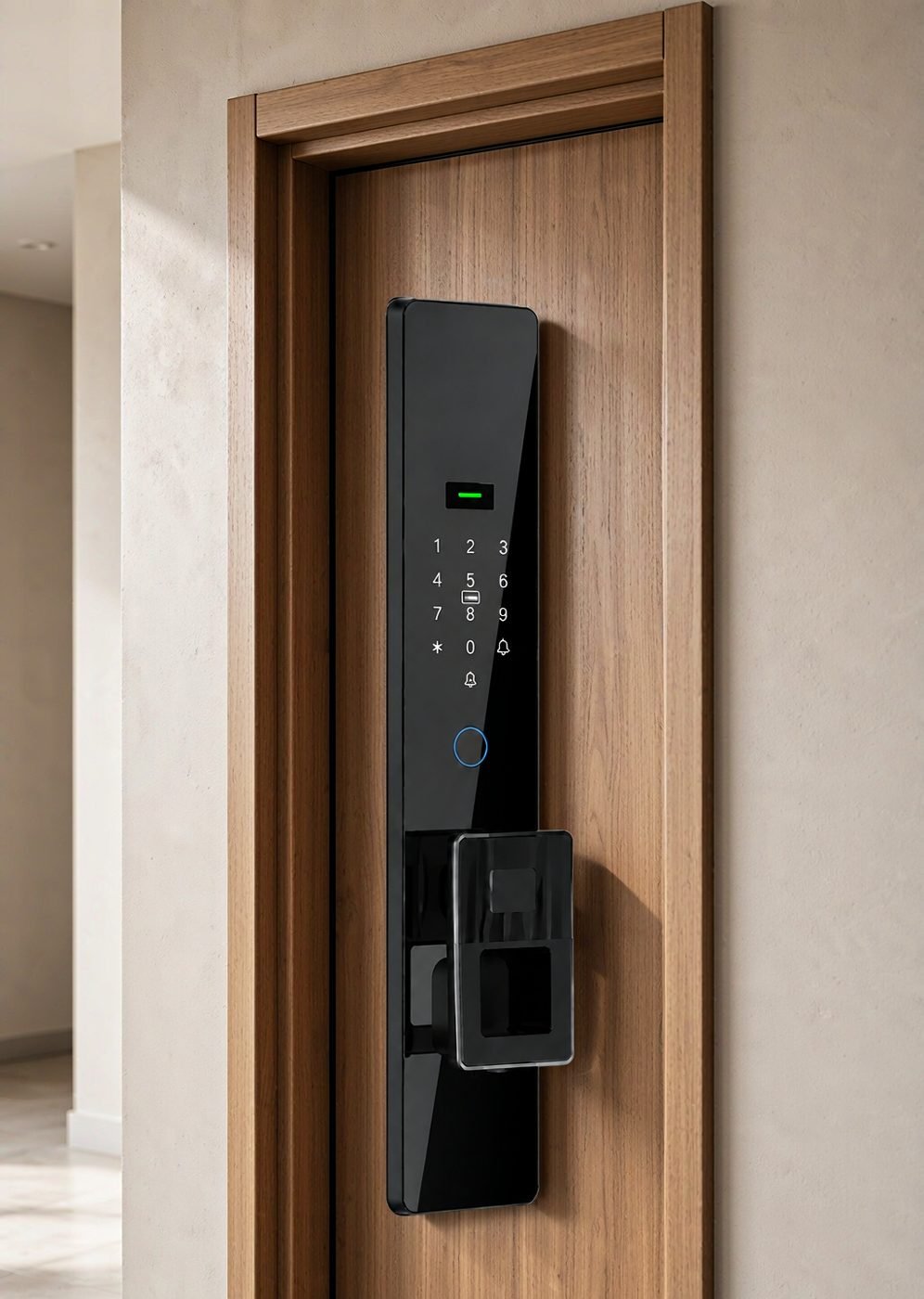
The feedback side depends on the platform and the model. A smart lock that presents prompts and tones may offer ways to adjust or reduce them, and the ability to quiet the door’s announcements is one of the more practical questions a family can ask. Ask it against the model’s documentation, not against a sales conversation: whether alerts are configurable, whether the door can indicate “accepted” with light instead of sound, and what the default behavior is out of the box. Our article on lock sounds and feedback walks through the way these signals work and why they exist in the first place. On our deadbolt models, the documented prompts are spoken in four languages, and the everyday approach is the same everywhere: the feedback should be enough for the arriving person and no more than the house needs.
The one-handed, no-light arrival
The quietest arrival is the one that doesn’t need to pause. A person who steps up, opens the door in one motion with a finger or a short code, and steps inside has no bag-dropping, no key-jangling, no phone flashlight. That’s a hardware property before it’s a habit: it comes from access methods that don’t require searching in the dark.
This is one of the quietest arguments for a fingerprint or a short code over a key ring. That is the core discipline of quiet home entry late at night: a method that needs no light, no search and no ceremony. A keychain in a pocket at midnight is a noise assembly — the search, the metallic shuffle, the wrong-key attempts. Our deadbolt models document fingerprint, password, IC card and mechanical key on DS01 and DS05; the first two are the ones that serve a midnight arrival without a single rustle. The same logic belongs in the teenager’s late arrival, where quiet entry and the household’s sleep are part of the same conversation about trust.
Household habits that make midnight quieter
The late-arrival kit
- One designated quiet method per person. Agree the method each family member uses after a certain hour, so nobody experiments with an unfamiliar setting at 1 a.m.
- A padded, aligned doorway. Check the latch, the alignment and the hinge swing — the two-minute pencil test and a drop of lubricant remove most midnight clicks.
- Soft-close into habit. The last centimeter of the door’s swing is the loudest. A hand on the door for that final inch is quieter than any hardware.
- Light discipline. A low-level hallway light left on beats a phone screen at the threshold; check whether the lock’s indicator LEDs are visible from sleeping areas, and cover the gap at the bottom of bedroom doors if a sliver of light is what actually wakes people.
- One check, not many. The habit of jiggling the handle twice “to be sure” doubles the noise of every entry. Modern locks confirm with their own feedback; trust it once.
When the whole house is light sleepers
Some households — a newborn, a night-shift worker, an older resident who wakes easily — need more than habits. At that point, quiet home entry late at night stops being about politeness and becomes part of how the household functions. Three structural moves help:
- Separate the arrival path from the sleeping zone. If the floor plan allows, use an entrance that doesn’t pass bedroom doors. A second entrance isn’t always available, but when it is, this is its best use; our two-entrance article covers making both doors work as a system.
- Move the announcement to the phone. Instead of the door announcing to the hallway, an arriving member’s arrival can be communicated silently — a message that says “home, don’t wait up.” The door itself doesn’t need to narrate.
- Absorb the sound with soft material. A rug inside and outside the door, a felt pad under the strike plate, softer footwear stored near the entrance. These are small changes with disproportionate effect on how much of an arrival reaches a bedroom.
Late-arrival questions families ask
Can the lock’s chime or prompt be turned off completely?
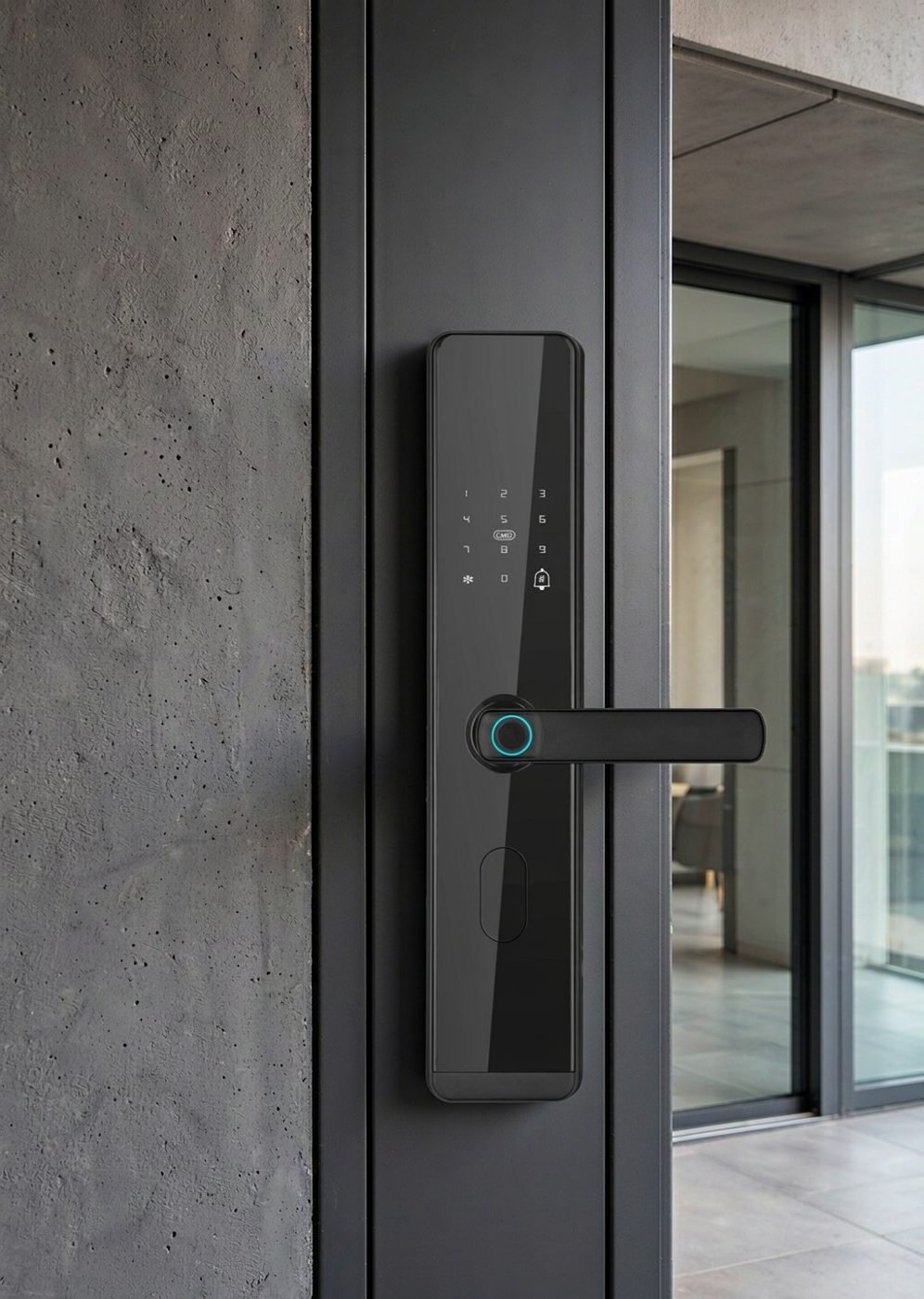
It depends on the model and its platform configuration — some feedback settings are managed in the lock, some in the companion app, and some are fixed. That’s why we suggest making feedback settings a question during purchase rather than after: ask what the arriving person hears, what the inside of the house hears, and how each can be adjusted in the documentation. If audible confirmation matters less to your household than silence, that preference belongs in the product conversation.
Is a quieter door less secure?
No — the opposite is closer to the truth. Most door noise is misalignment and looseness, which are security negatives, not features. A well-fitted door that closes with a solid, low click is both quieter and more secure than a rattling one that requires a shove. Quiet, done properly, is a symptom of good fit.
What should the last person home actually do?
Keep it to one motion and one check. Close the door with a hand controlling the last inch, listen for the bolt, and walk away. Households that add extra checks — pushing the door, re-latching it, checking twice — reintroduce the noise the plan just removed.
Serving households where entry timing matters?
CaremLock supplies deadbolt, room-door and glass-door ranges to distributors, installers and project buyers. Tell us the household or project profile — we will outline the models and access methods that fit the routine.
Or explore the deadbolt smart lock range and contact the team.