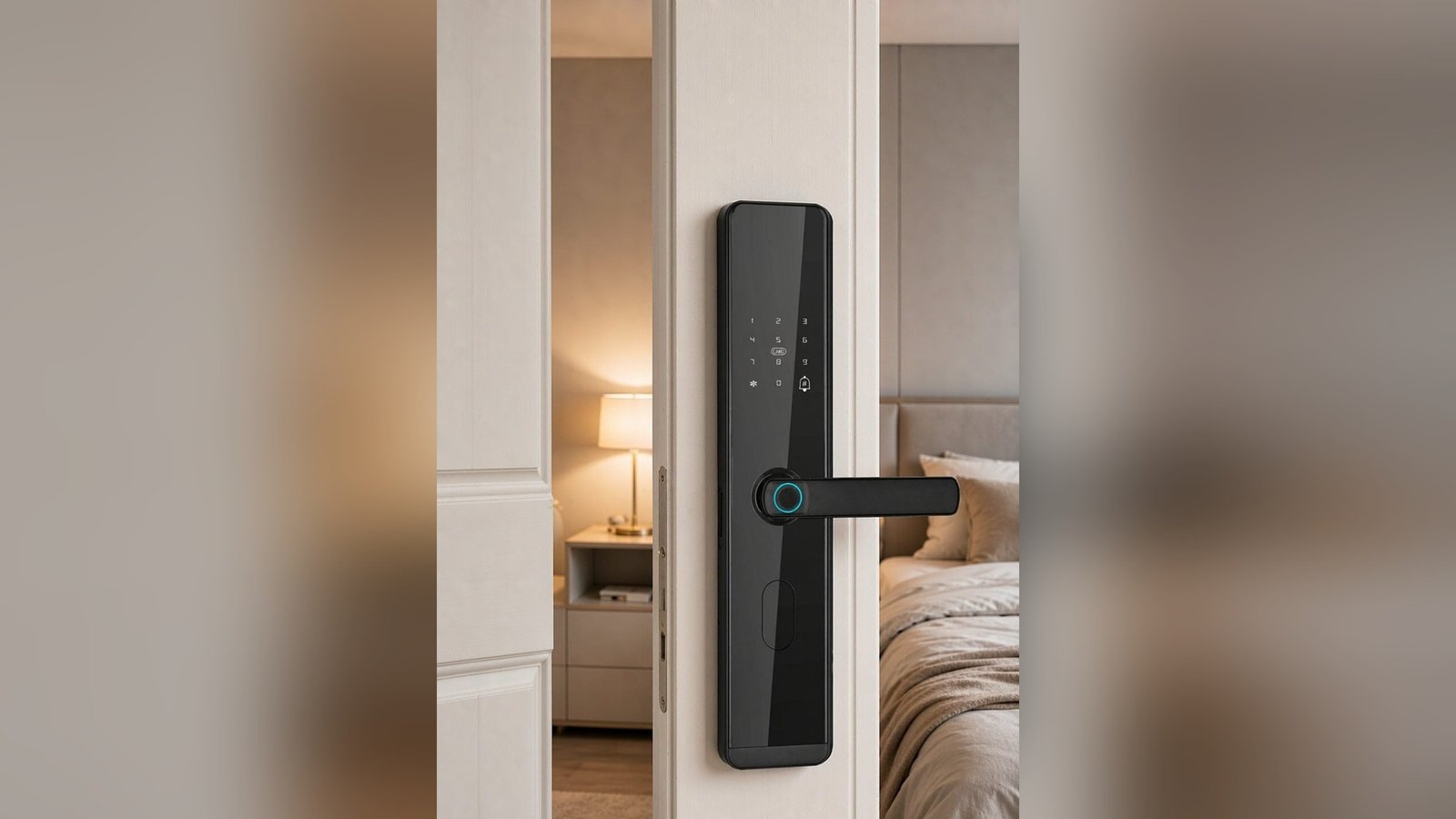
A door that latches perfectly on installation day can be a fight three summers later. Doors move — they swell with humidity, shrink in dry air, drop on worn hinges and drift when the building settles. None of that is a lock’s fault, but the lock takes the blame.
Understanding the difference between a door problem and a lock problem is one of the most useful pieces of homeowner and installer knowledge there is. It saves service calls, prevents warranty confusion, and explains why “the lock worked fine until last month” is usually a sentence about the building, not the product.
How doors actually move
Three mechanisms account for most of the movement you’ll ever feel at a door:
- Seasonal expansion. Timber absorbs and releases moisture with the seasons. A wooden door that fits loosely in dry winter air can bind against its frame in a humid summer — the same door, a different size in the places that matter.
- Hinge wear and settling. Hinges carry the whole weight of the door, and they wear. A hinge that has dropped a couple of millimeters at the top translates into a door whose lower corner sags and whose latch no longer lines up with the strike. Buildings settle too — foundations, frames, and walls drift over years.
- Frame movement. The frame around the door isn’t fixed geometry either, especially in older buildings or after structural work. Any change on the strike side shifts where the bolt must land.
The lock-related symptoms these cause
When a door moves, smart locks and mechanical locks experience it in almost identical ways:
Common symptoms and what they usually mean
- Door won’t close without a push or a lift — the latch is meeting a strike that has drifted out of alignment. A door issue that will eventually strain any lock.
- The lock beeps, unlocks, but the door doesn’t open — the electronic part worked; the bolt or latch is binding in the frame. Resistance on the mechanism, not a failure of the reader or motor.
- Auto-locking feels sluggish or unreliable — a motorized or auto-lock system pushing a bolt into a misaligned strike is fighting the frame on every cycle. The lock sounds lazy; the door is actually stiff.
- Battery drains faster than expected — if every lock operation fights extra mechanical resistance, the energy cost of each cycle rises. A sudden appetite for batteries is sometimes a door telling you it has moved.
The five-minute separation test: open the door so it’s clear of the frame, and operate the lock. If the lock cycles smoothly in open air but fights when the door is closed, the problem is alignment between the door and its frame — not the device. Take that test before calling anyone about the lock.
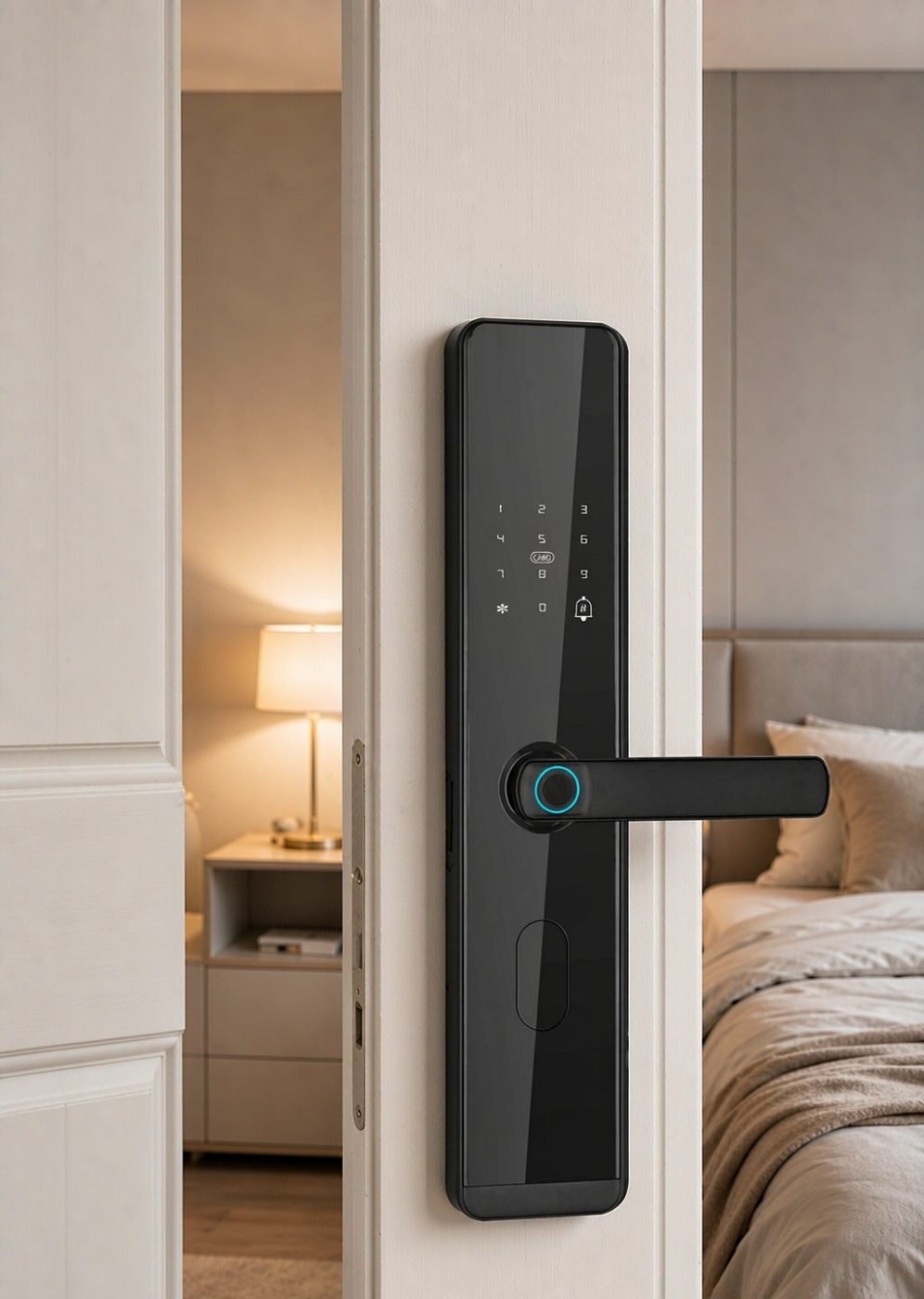
Why misalignment is worse for electronic locks
Here’s the technical part worth knowing: a mechanical deadbolt is operated by hand, and a human hand adapts instinctively — you feel the friction and push a little harder, lift the door half a centimeter, and the bolt slides home. The feedback loop is you.
An electronic lock — especially an automatic one — pushes its bolt with a fixed amount of force and no human feedback. If the strike has wandered, that force lands against the frame on every single operation. The lock doesn’t know the door moved; it just does its job with more resistance than it was designed to meet. Over months, that means accelerated wear, depressed battery performance, and eventually a lock that “keeps failing,” when the honest description is a door that keeps binding.
This is also why installers treat alignment as a first-class part of the job. In our own installation context, the notes that ship with the deadbolt models describe the standard door preparation and fit checks precisely so that the mechanical baseline is right before the electronics are even considered — a lock can only be as convenient as the door underneath it allows.
What to check, in order
- Open-door test. As above — separate lock behavior from door behavior in five minutes.
- Look at the strike line. With the door closed, examine where the latch or bolt meets the strike plate. A telltale arc of scratched metal, or a latch sitting high or low against the plate opening, confirms drift.
- Check the hinges. Open the door 90 degrees and sight the gaps along the top and side. An uneven gap that tapers from top to bottom signals a hinge that has dropped. Tighten or replace hinge screws before doing anything at the lock.
- Seasonal pattern check. If the door only fights in certain months, you’re seeing moisture movement. That’s normal physics — the fix is alignment adjustment (strike or hinge), repeated as needed, not a new lock.
- Then call for adjustment. Strike plate adjustment is routine maintenance in many older homes — a small repositioning of the plate or the latch component, done with a screwdriver and a few minutes. It’s a door job, and no lock upgrade replaces it.
For installers and project buyers: alignment as a line item
If you install locks professionally, the alignment conversation belongs in the survey, not the complaint log. Two habits pay for themselves:
- Test the swing during every survey. A door that doesn’t latch cleanly today will be blamed on tomorrow’s lock. Note it, quote the adjustment if needed, and the warranty conversation later becomes much shorter.
- After installation, cycle the lock with the door closed — repeatedly. The last five minutes of any install should confirm the bolt travels without drag. Fixing alignment on installation day costs minutes; fixing it after a complaint costs a second visit.
On multi-door projects, the same logic scales: a door schedule that records which doors needed alignment work identifies the building stock that will need attention again — useful for maintenance planning and for sparing the locks the blame. We wrote the wider project context in installation preparation, and the fit fundamentals in the door compatibility guide.
Common questions
My lock suddenly stopped latching. Is it failing?
Run the open-door test before assuming a device fault. If the bolt cycles cleanly in open air, the lock is fine and the door has moved — seasonal swelling is the classic cause, and a strike alignment adjustment is the fix. If the bolt struggles even in open air, then it’s a lock conversation and a good moment to check the documentation with your supplier.
Will an automatic lock make alignment problems better or worse?
It makes them more visible. A fully automatic or auto-locking model removes the human adaptation — you no longer stretch or lift unconsciously — so misalignment becomes a symptom you notice rather than a friction you silently compensate for. That’s diagnostic, not damage: the message it’s sending is “adjust the door.”
How often should doors be checked?
Twice a year is a good rhythm — the seasonal transition points when humidity changes are most likely to have moved the door. The check takes two minutes per door: close it, feel the latch, look at the strike line. Houses on the coast or in extreme climates might benefit from checking more often; new buildings tend to move most in their first year or two.
Specifying locks for doors that move?
CaremLock supplies documented deadbolt, aluminum, glass and room-door ranges with fit statements that make alignment and preparation part of the conversation from day one. Tell us your project’s door mix.
Or review installation preparation and contact the team.