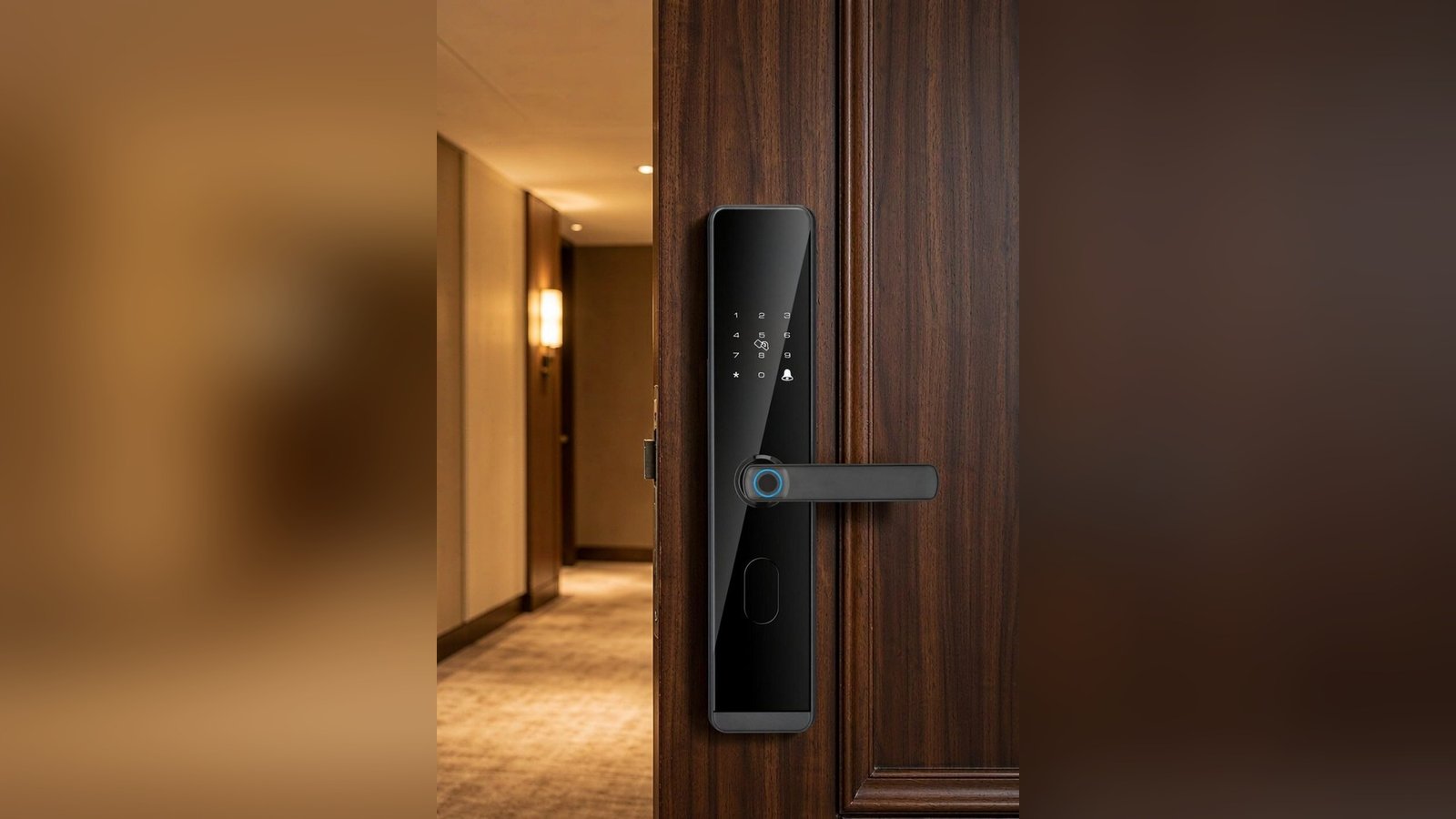
Teenagers come home on a different clock than everyone else in the house. Rehearsals run late, study groups overrun, a friend’s house turns into two friends’ houses. And every parent of a teenager knows the specific arithmetic of the evening: the door is expected to open at some hour, the phone is supposed to say “home,” and there’s a difference between being a parent who tracks their child and a parent who’s simply answered the question “did they get in?”
This article is about designing the door for that stage — when the child has their own schedule, their own approach to responsibility, and the family needs access arrangements that respect both the growing independence and the quiet parental need to know the day ended safely.
Why teenagers are the hardest family profile to design for
Children’s door design, discussed in our first-one-home guide, is mostly about routine: the same entry, the same method, week after week. Teenagers warp that pattern in three directions at once:
- The schedule becomes genuinely irregular. Practice, work shifts, social plans — the arrival time stops being a fact of the calendar and becomes a message. Any access arrangement that assumed 4 PM will be wrong by Thursday.
- The stakes rise with the independence. A ten-year-old arriving to an empty house is practicing; a fifteen-year-old arriving at 10 PM after a friend’s ride dropped them off is operating. Both want the same thing at the door — an entry that works instantly and closes the day — but the design margin for error is different.
- The controls migrate to their hands. This is the age when the child starts carrying their own credentials: their own code, their own card, eventually their own app access. That transition should be designed, not accidental.
What the door should do for a teenager
The functional requirements, without the surveillance framing
- Work at every possible arrival hour. The method has to be constant across the child’s schedule — a biometric or code that performs the same at 4 PM and 10 PM. This is also an argument for methods that don’t need a phone: a teenager’s phone is the most likely thing in the household to be dead at exactly the wrong moment.
- Confirm the entry without anyone needing to watch. The house itself should be able to show that a door opened — whether the family needs that signal is their decision, but the capability belongs in the design of a household with unaccompanied teen arrivals.
- Let the entry be personal. A teen who enters on their own credential has their own relationship with the door — which also means the entry can be granted and revoked per situation, rather than the household sharing one code the way you’d share a phone password.
- Leave no room for the “locked out” drama. The one experience no teenager should have on a regular basis is standing outside at night because something changed. The fixed backup — a method that always works, tested regularly — is worth more at this age than any feature.
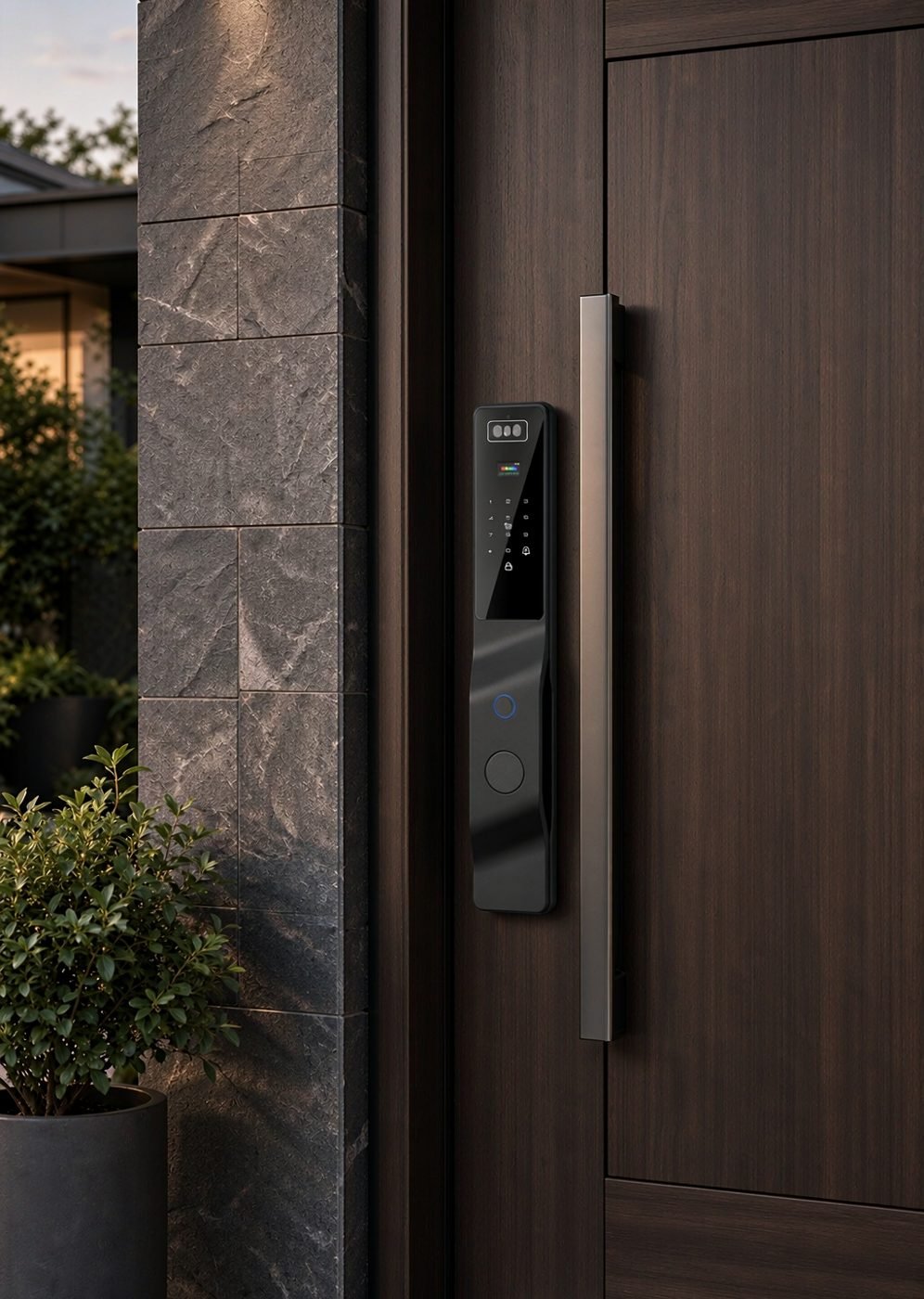
The check-in question, answered without surveillance
The family conversation that actually happens is “I just want to know you got home.” It’s usually resolved by a text — and texts fail in predictable ways: phone dead, “forgot”, asleep. The door can quietly solve the mechanical part of this if the lock’s platform supports entry records.
Here we draw the family’s own comfort line, not ours. Access logs exist on platform-connected locks — including our deadbolt models in their app-connected versions — and families differ on how to use them. The pattern that seems to age best: use the log to answer the safety question (“did the last arrival happen?”) and agree explicitly about what it isn’t for (“we don’t check how many times you came and went”). The capability is the same; the household rule is what makes it a relationship tool rather than a tracking device.
The single sentence to agree on: “The door tells us the house got locked; you tell us about your day.” Arranged that way, the log answers the parent’s real question, and the teenager’s life stays theirs to narrate. Households that have this conversation once — before the first late night — rarely have it again.
Handing over credentials: a rehearsal, not a ceremony
When a teenager gets their own credential — code, card, fingerprint — the transaction should be treated as a small driving lesson: skills before autonomy.
- Set it up together and rehearse the route once. Not on a busy evening — on a calm afternoon. Enter, exit, re-enter the full sequence, exactly as reality will run it.
- Cover the exception branches. What if the code is forgotten (the backup method — where the mechanical key lives, tested); what if the door misbehaves (the one number to call); what the family’s rule is for arriving with friends (not a door feature, but the day the question will be asked, the answer should already exist).
- Graduate the access as the responsibility grows. An early credential might be one code shared with the household; later, it becomes the teenager’s own fingerprint or card. When the arrangement changes — and it will — the credentials change with it; that’s the model working, not a failure.
Households with more than one teenager
Multiple teens means multiple schedules, and the design moves fully into access-management territory: each child their own credential, each entry individually manageable, and the household’s main door capacity comfortably exceeding a family’s count. Our deadbolt models document room for up to 100 fingerprints, 100 passwords and 100 IC cards — far past any family’s needs, which is the point: household politics stay out of credential math. Each person’s access is theirs, changes are private, and the “who has the code these days?” confusion that a shared secret produces never gets to start.
For families whose older teens use a back door, garage door or side entrance, the same logic applies per door: whatever the main household pattern is, secondary doors should share it, as covered in our entry routines for children and the wider property context.
Common questions
Should we give a teenager their own code instead of a family code?
Yes — and this is one of the clearest household recommendations in this article. A shared code has no revocation story: when circumstances change, the only way to retire it is to change the code for everyone, which punishes the orderly users to catch the problem. Individual credentials let the arrangement change at the speed of the household’s actual conversation.
Are entry notifications a good idea for teens?
Notifications are practical for one thing: confirming that the expected arrival happened. The misstep is deploying them as a general monitoring feed, which trades a small safety benefit for a large trust cost, and eventually gets worked around (phones left behind, entries arranged elsewhere) — the age-old fate of over-monitoring. The technology doesn’t decide this; the family’s agreement does.
What if the teenager loses their card or forgets the code?
The answer stack is method redundancy: two enrolled credentials (a fingerprint and a card, or a card and a code), plus the mechanical key as the property’s fixed fallback. That arrangement means a single loss is never a lockout. It’s also worth a quarterly five-minute test with the teen present — the point where the household discovers a dead card battery or a forgotten code is a calm Sunday, not a 10 PM phone call.
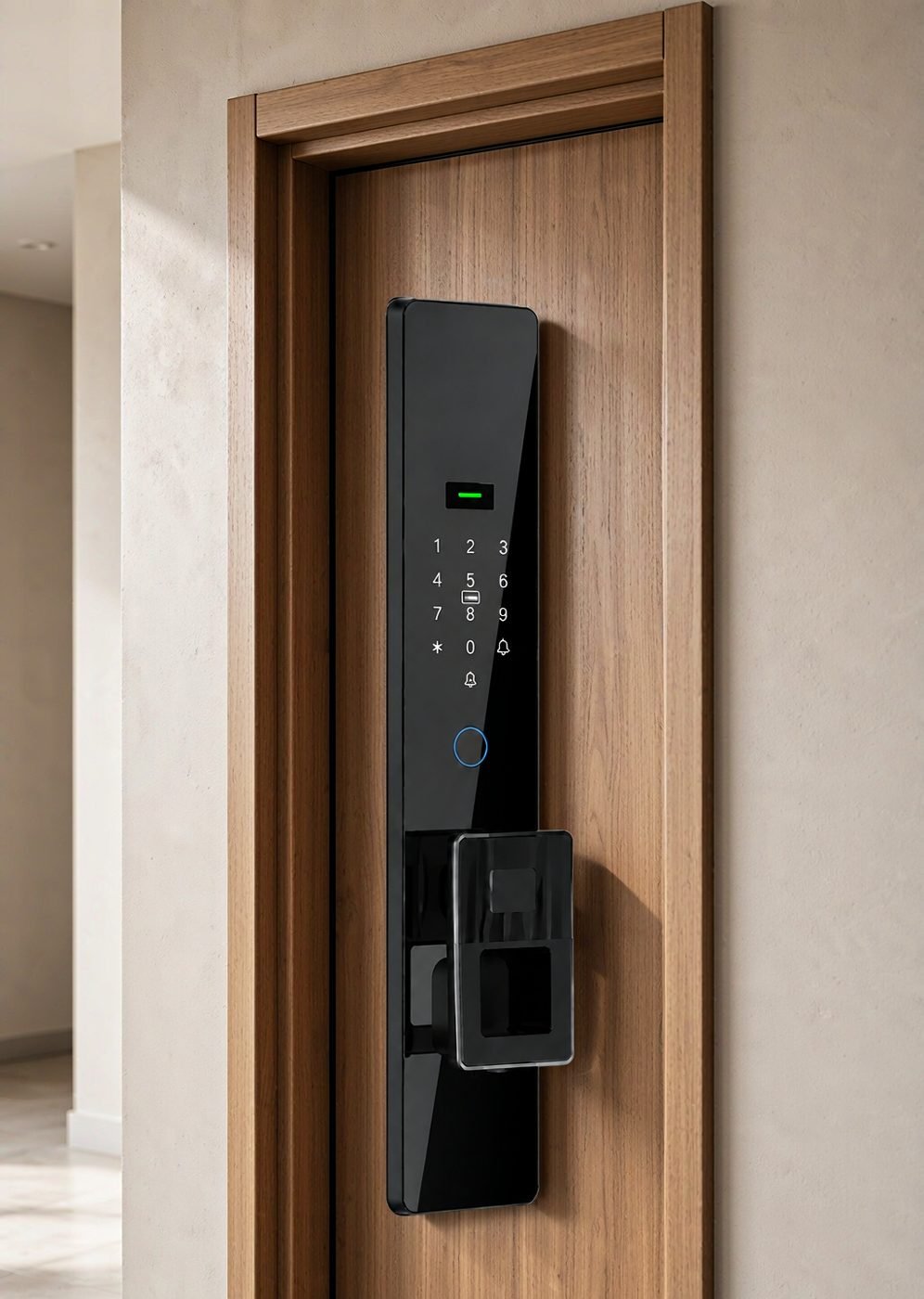
Equipping family homes in your market?
CaremLock supplies documented deadbolt and smart ranges for distributors, installers and project buyers — with the credential capacity and management options that households with growing children depend on.
Or explore the deadbolt range and contact the team.