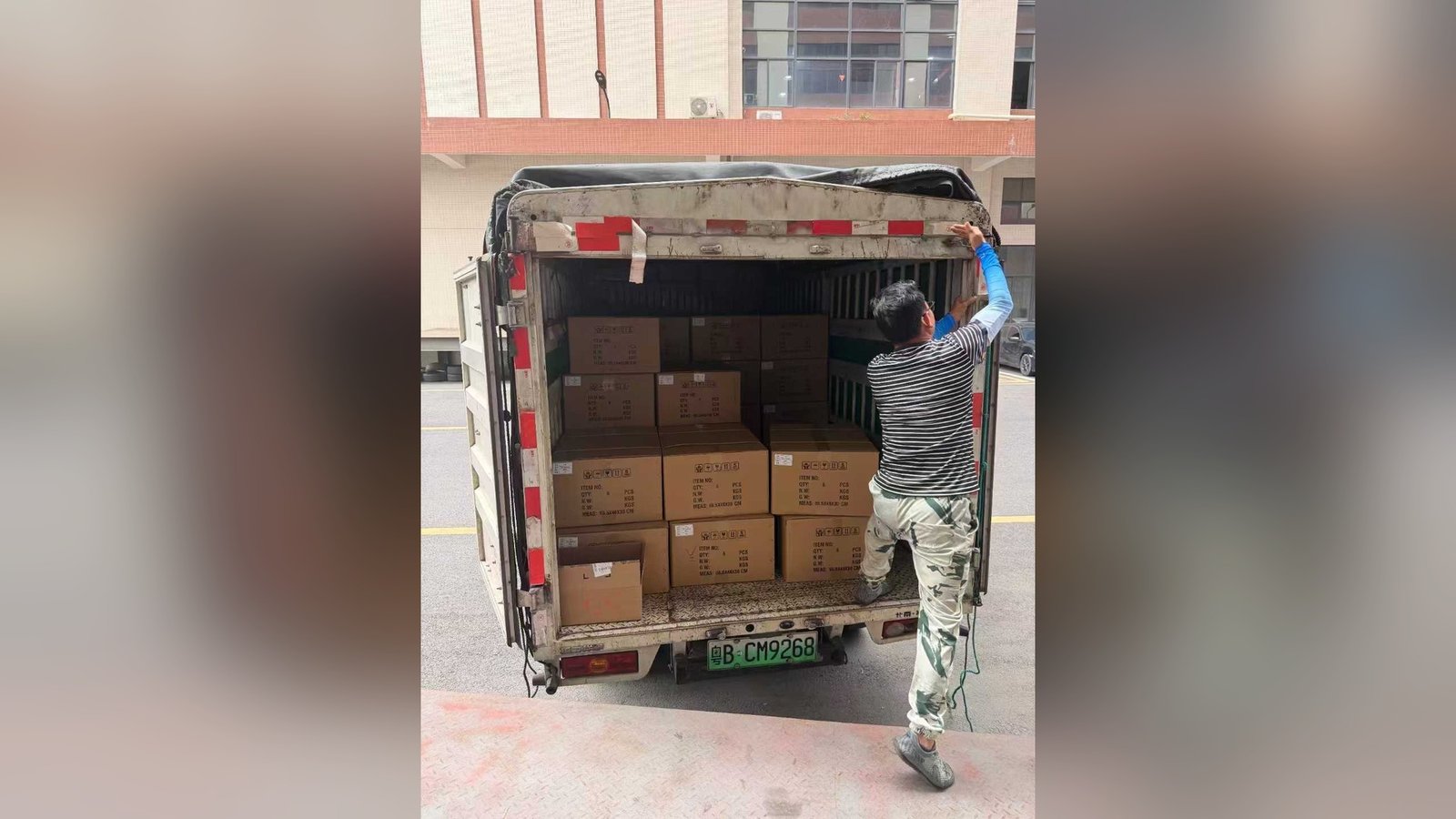
The first time a distributor opens a sample box from a new supplier, they’re not just checking a product — they’re reading a system. What’s in the box, how it’s arranged, what the label says, what the manual explains: all of it is evidence of how that supplier runs production, and how smoothly the next thousand boxes will arrive.
This article is about that moment: opening one unit’s retail box and knowing what to check. It’s the unit-level companion to our container receiving guide — the same evidence discipline, applied to a single box on a desk instead of a pallet at the dock.
Why the unit box deserves its own inspection
A carton count at the dock tells you the shipment is complete. It doesn’t tell you whether the box a customer will open next month contains everything the customer will need. The two failures that slip past container-level checks:
- The “almost right” box. The lock is there, but an accessory — screws for a particular door thickness, a gasket, a card — is missing or substituted. At container level, everything weighs roughly right. At the unit level, the box is incomplete.
- The mismatched label. Model, color, or specification printed on the box doesn’t match what’s inside. If this gets caught at receiving, it’s a sorting task; if it gets caught at the customer’s door, it’s a return.
Both failures are cheapest to catch with one opened box per carton — which is why “open one, check everything against the packing list” is a receiving habit worth building into the process, not a one-time sample ritual.
What a retail box contains — the categories
Regardless of brand, a complete smart lock box has the same functional categories. When you open a box, you’re checking that each category is genuinely covered:
The five categories in any complete box
- 1. The lock itself — front and rear panels, and the mechanism class the box claims (deadbolt, mortise, rim, glass-door fitting). Confirm the front panel’s stated model and finish against the box label and your order.
- 2. The mounting hardware — screws, bolts, strike components, and any spacers or gaskets the model’s documentation lists. These are door-dependent items: a box that ships without the right hardware for its documented door-thickness range is incomplete even if all the big parts are present.
- 3. The mechanical override — the physical key(s) or override mechanism, plus its instructions. This is the layer that carries the entire “what if the battery dies” story; a box without it is a warranty conversation waiting to happen.
- 4. Documentation — installation instructions and user manual. The language coverage matters for your market (a box for an English-market distributor should not be manual-only in Chinese), and the presence of installation drawings is what makes installer scheduling possible.
- 5. Packaging protection — how the unit is held in place inside the box. Foam, molded trays, or equivalent protection during transit; a heavy lock body rattling loosely in its box is visible damage waiting to happen.
One habit that catches the most: check the box against the packing list item by item, with the box still flat on the table, before the lock is installed anywhere. Five minutes at the desk saves a second visit to a door that’s missing a strike plate.
What our own documentation records about the box
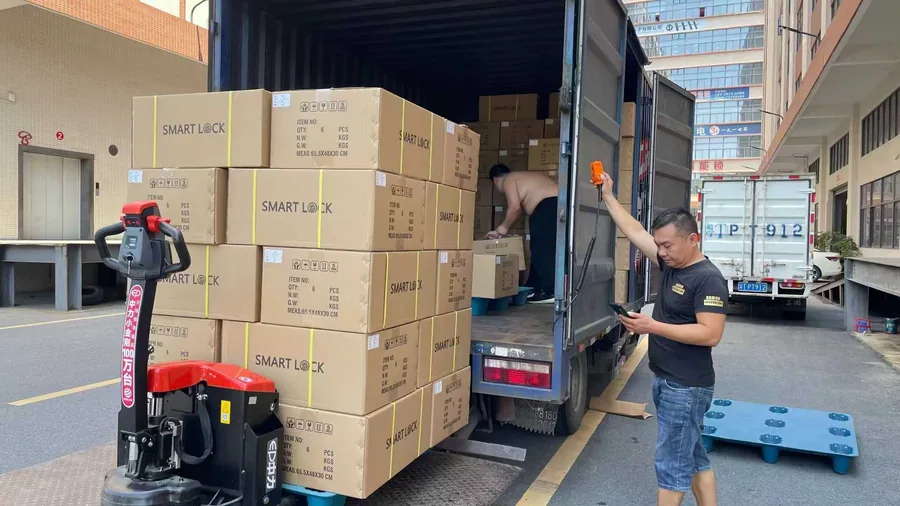
Here’s what we can state from our own records rather than generic advice — the DS deadbolt pair’s documented shipping data: each unit packs in a color box measuring 225 × 162 × 85 mm with a unit weight of 0.91 kg (DS01) / 0.83 kg (DS05), and master cartons of 470 × 340 × 445 mm carrying 20 pieces at 18.4 kg (DS01) / 17.0 kg (DS05). Those figures matter practically for importers: they’re the numbers you use for carton-count planning before the container is loaded, and the numbers a receiving team can weigh against.
And that shipping data points at something honest about unit boxes generally: a complete lock assembly in its packaging is only a few centimeters thick and under a kilogram — which means small omissions (a gasket, a card, a manual) don’t show up on a scale at all. Only opening the box does.
For distributors: making box-checking a process, not a feeling
The suppliers who run this best do it the same way warehouses run inventory: sampling plus records.
- First article inspection, before mass production. For a new model or a new packaging change, inspect a full unit box at the factory stage — check every category above against the documentation — and photograph the opened box as the reference standard for that shipment.
- Sampled unit checks at receiving. One box opened per carton, or per pallet for very large shipments, checked against the packing list, with any discrepancy logged per the same evidence rules as container receiving.
- A documented accessory list per model. The packing list is your ground truth — if a model’s accessory list isn’t documented, that’s the first thing to request. Without it, “complete” is a matter of opinion.
If you want the wider process context, our quality inspection guide covers where unit checks sit in pre-shipment inspection, and the Download Center is where product documentation for orders is collected.
Common questions
Should I open every box at receiving?
No — that’s what sampling is for. The practical line: open enough boxes to detect a systematic problem (a missing accessory type, a label mismatch affecting a whole run), not so many that you rebuild the packaging. One per carton, or a rate you define in your supply agreement, catches both failure types from earlier.
What if the manual’s language doesn’t match my market?
This is a pre-production conversation, not a receiving discovery. Manual language is documented per order in any serious supply relationship — for our range, for example, product documentation is collected for buyers through the Download Center, and market-specific documentation should be confirmed at the quotation stage. If the boxes that arrive don’t match what was agreed, that’s a documented discrepancy, handled like any other.
Can packaging differences between production runs indicate a problem?
Sometimes — a changed foam insert or a different tray can signal a silent revision, which is exactly what a first-article check before mass production exists to pin down. If you see packaging changes between shipments, ask for the revision note; if there isn’t one, that itself is information about how the supplier manages change.
Want receiving documentation organized before your next order?
Tell us your models and markets. CaremLock supplies distributors and project buyers with documented box and carton data, product documentation, and a clear channel for discrepancy reports.
Or review the DS01 model page for documented packing data, and contact the team.