
For importers and distributors, a smart lock order is only as good as what arrives at the port. Defects found after shipment turn into returns, chargebacks, and damaged reputation — costs that dwarf the price of catching the problem earlier. A clear inspection checklist is the cheapest insurance you can build into procurement.
This guide lays out a practical quality-inspection checklist for smart lock importers and distributors: where inspection fits in the sourcing process, what to check at each stage, how sampling works, the documents to request, and how to handle defects when they appear.
1. Where Inspection Fits in the Sourcing Process
Inspection is not a single step at the end. It is a sequence of gates, each catching a different class of problem while it is still cheap to fix.
The three gates
- Pre-Production Inspection (PPI) — verify materials, components, and first samples against your purchase order before mass production starts.
- During Production (DUPRO) — check a sample of units coming off the line to catch process drift early.
- Pre-Shipment Inspection (PSI) — the main gate, performed on finished, packaged goods before they leave the factory.
Decide with your supplier up front which gates apply to your order. For a first-time program or a new model, all three are worth it; for a repeat order of a proven SKU, PSI alone may be enough.
2. Pre-Production Inspection
PPI confirms the factory will build what you specified, not what is easiest for them. Bring your PO, your approved sample, and your spec sheet to the table.
What to verify
Match the actual materials and key components to the bill of materials: lock body alloy, finish, battery type, sensor modules, and any custom parts. Confirm the firmware version and feature set match the agreed scope. If you approved a golden sample, this is the moment to compare against it.
Why it pays off
Catching a wrong material or wrong module here costs a rework, not a container of unsellable stock. It is also the right time to lock the inspection criteria you will reuse at PSI.
3. During Production (DUPRO)
DUPRO is optional but valuable on longer runs and new models. It catches problems that only show up once a line is running at volume.
What to monitor
Check a pull of in-process and finished units for consistent finish, correct assembly, and stable function. Watch for signs of process change — a different component batch, a tweaked jig, a new operator on a critical station. Consistent units across the run matter more than a few good ones.
4. Pre-Shipment Inspection (PSI)
PSI is the gate most importers rely on. It happens after production and packaging, before the goods are sealed in the container.
What to check
- Function — unlock methods work (fingerprint, code, card, key, app where applicable); motor and latch operate smoothly.
- Finish and build — no scratches, uneven coating, misalignment, or loose parts.
- Packaging — correct carton, inner protection, labeling, and quantity per carton match the packing list.
- Accessories — screws, strike plate, manual, batteries, and badges are present and correct.
- Documentation — model, quantity, and markings on the carton match the order.
Sampling and AQL
Sampling and AQL
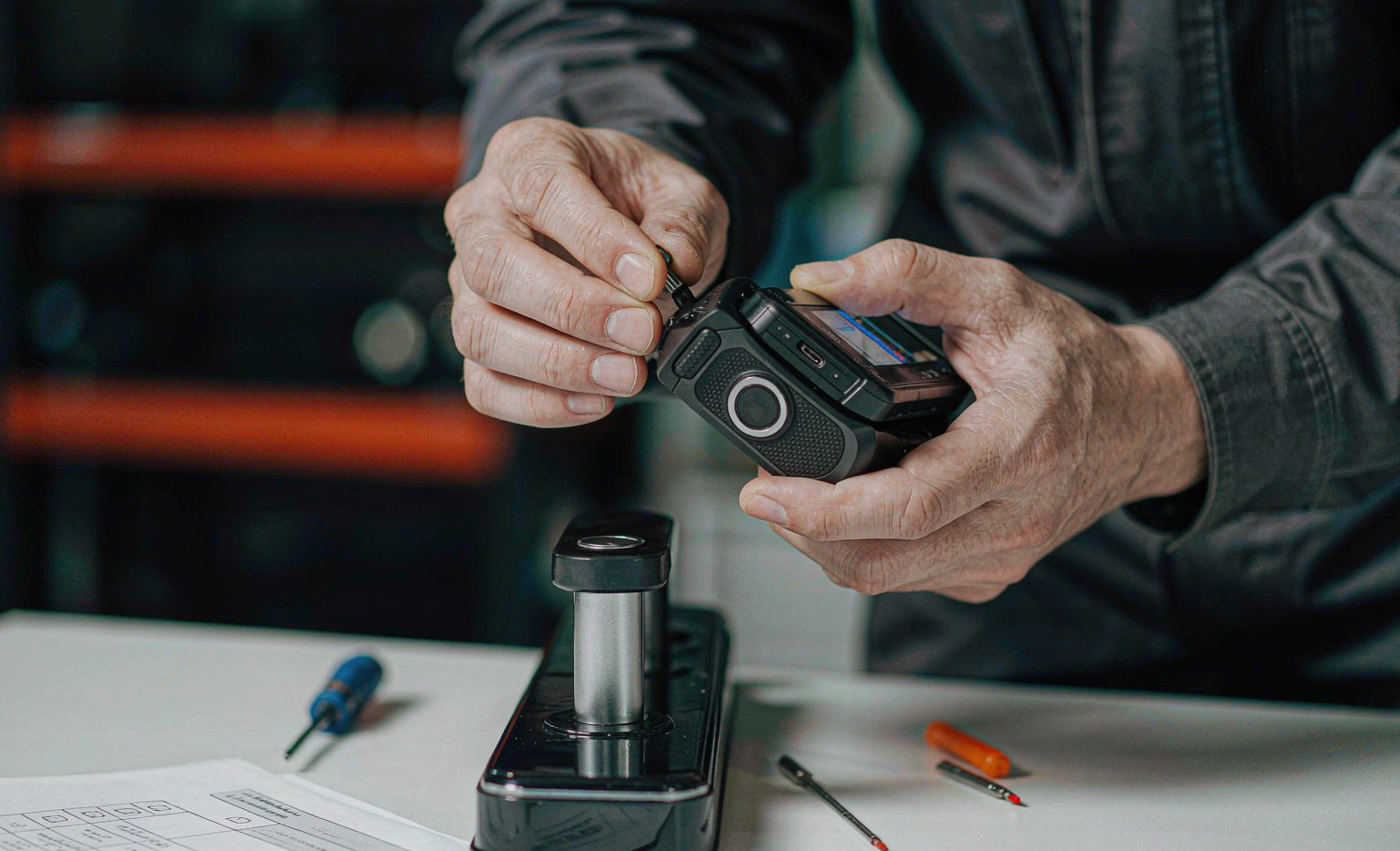
Inspection is normally done on a statistical sample, not every unit. Agree an AQL (Acceptance Quality Limit) level with your supplier before production — a tighter AQL means more units inspected and a lower tolerance for defects. The right level depends on your market and how visible the defect would be to your customer.
Common defects to look for
In smart locks, the recurring issues are finish blemishes, sticky or noisy mechanisms, inconsistent fingerprint recognition, weak battery contacts, and packaging that does not survive transit. A short defect catalogue, built from your own returns data, makes each inspection faster and more consistent.
5. Documents and Certificates to Request
Inspection confirms the product; documents confirm it is legal to sell in your market. Request the certificates relevant to your destination — exactly which ones depend on the country and the product category.
6. Using Third-Party Inspection
You do not have to be on site to inspect. Independent inspection companies can perform PPI, DUPRO, and PSI against your checklist and send a report with photos. This is especially useful when the factory is far away or you are running several suppliers at once. Confirm early whether your supplier supports third-party inspection and how access to the line is arranged.
7. When Defects Are Found
Agree the defect-handling rule before you order, not after. Clarify with your supplier what happens at PSI if the result is outside the agreed AQL: rework, replacement, a price adjustment, or a split decision on the shipment. Writing this into the contract removes the most common source of post-shipment disputes.
8. Build Your Own Order Checklist
A reusable checklist turns inspection from a one-off scramble into a standard step. For every order, record: the approved sample reference, the spec points to verify, the AQL level, the documents required, and the defect-handling rule. Over time this becomes the fastest way to brief any new inspector or supplier.
Our manufacturing and QA overview and OEM/ODM program pages describe how production and quality control are structured; confirm the specifics that matter to your market directly with the team. For model-level fit, see the fully automatic smart lock series and our smart lock solutions.
9. FAQ
How much inspection is enough for a first order?
For a new model or a new supplier, plan PPI plus PSI at minimum. Add DUPRO if the run is long or the model is complex.
Can I inspect only a few units instead of sampling?
Sampling against an agreed AQL is the standard approach and balances cost against risk. For high-value or safety-critical units you can agree to inspect a larger share.
Who pays for third-party inspection?
This is a commercial term to confirm with your supplier. Some programs include it; others bill it separately. Settle it in the quotation stage.
Need a QC-aligned quotation?
Tell us your market, target models, and inspection expectations — we will outline how production and quality control can be structured for your order.
Or talk to the team directly: Contact us