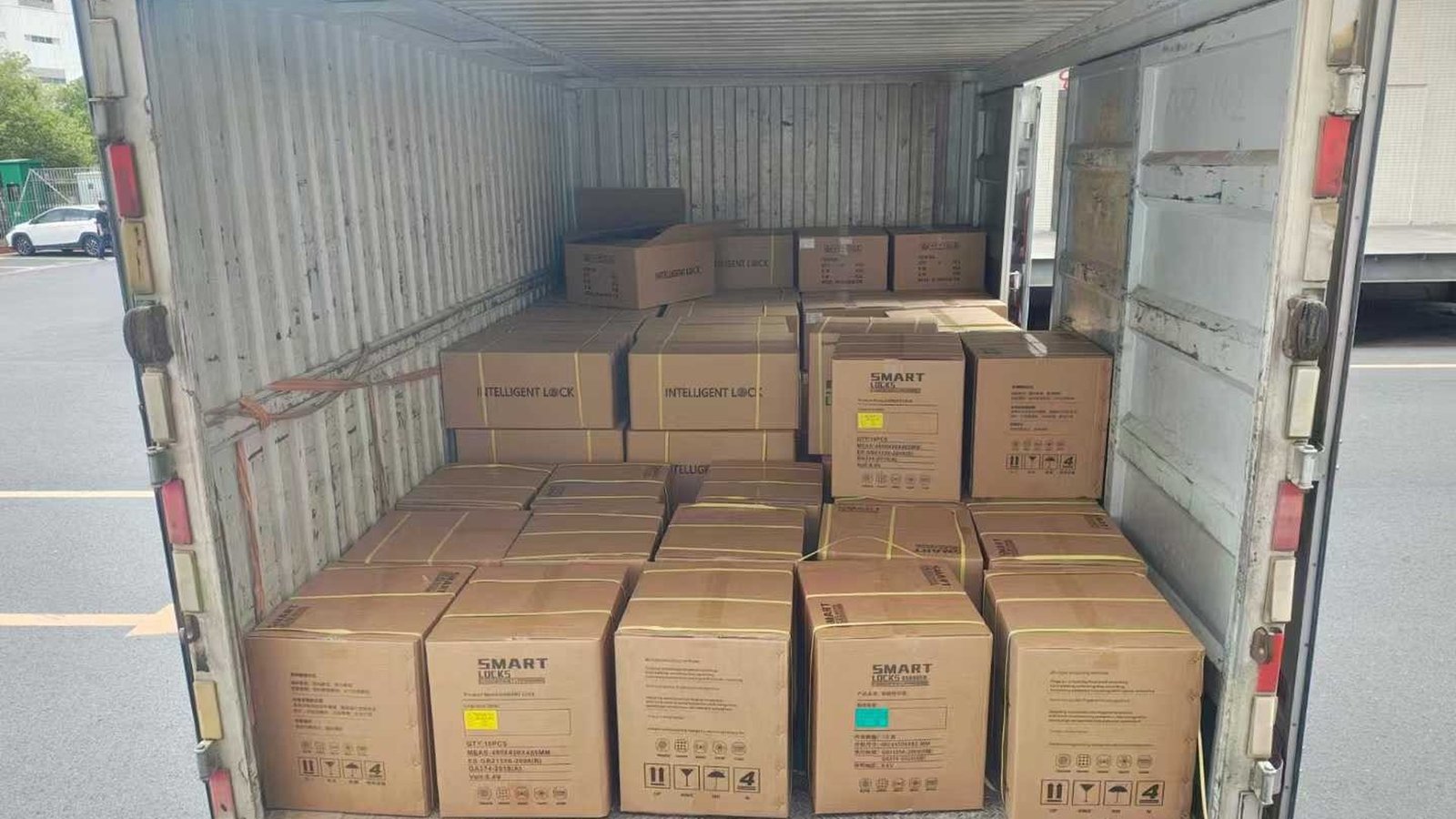
A master carton of twenty DS01 deadbolts weighs 18.4 kg and measures 470 × 340 × 445 mm. In a container full of mixed models, those numbers printed on the carton are what let a warehouse, a forwarder and a project store each identify the same box without opening it.
Labels and marks are the unglamorous system that keeps a shipment countable. They are also the first thing to fail when a supplier treats packaging as an afterthought — and when they fail, the cost lands at the receiving dock, in someone else’s warehouse, far from where the mistake was made.
Three layers of identification
A lock shipment identifies itself at three levels. The product itself carries the model identity. The color box — 225 × 162 × 85 mm for the DS01 — carries the retail-facing model and variant information. The master carton carries the shipping layer: quantity, weight, dimensions and the references that tie the box to an order.
Each layer answers a different question. The product answers “what is this?” The color box answers “which variant?” The master carton answers “which order, and which carton of how many?” A shipment where all three layers agree is a shipment that can be received by someone who has never spoken to the factory.
What a working shipping mark includes
The fields that earn their place on a carton
- Consignee and delivery reference. Who the carton is for, in the version the buyer’s own system recognizes.
- Order or PO number. The thread that leads back to the paperwork when something needs checking.
- Model and quantity. Which lock, how many units — printed, not handwritten at the last minute.
- Carton number in sequence. “3 of 8” lets a receiver know at a glance whether the full set has arrived.
- Gross weight and dimensions. The values a forwarder and a store-room planner actually use.
- Handling symbols. The standard marks for fragile goods and dry storage, understood in every warehouse.
None of this is glamorous, and that is the point. Shipping marks and carton labels work when they are boring: consistent placement, legible print, and the same fields on every carton of every order.
Why mixed shipments are the real test
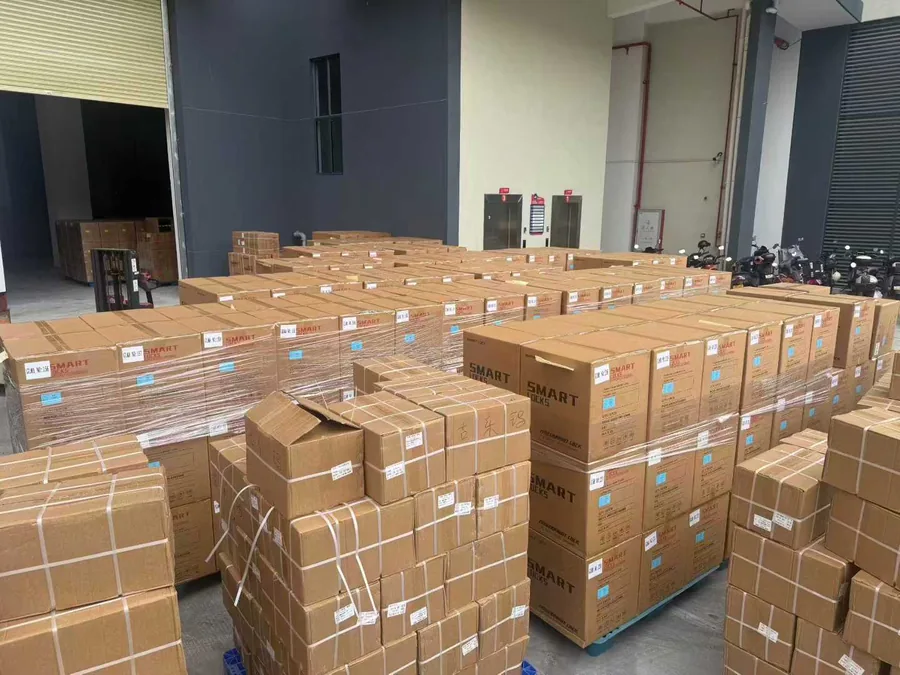
A single-model order is forgiving. When one pallet holds deadbolts, room-door locks and glass-door locks headed to the same project store, marks stop being decoration and become the sorting system. The store allocates by carton, the receiver checks the count without counting units, and a missing box can be identified by number instead of by guesswork.
Documented carton data supports exactly that check. DS01 master cartons ship 20 pcs at 18.4 kg; DS05 master cartons ship 20 pcs at 17.0 kg, with unit weights of 0.91 kg and 0.83 kg respectively. A receiving team can weigh a carton and compare it against the documented value before it is even opened — a one-minute sanity check that catches problems while the truck is still at the dock.
Marks that survive the trip
A label is read in bad light, at arm’s length, by someone wearing gloves. Marks that respect that reality are printed rather than scribbled, placed on a flat carton face rather than across a seam that flexes in transit, and free of abbreviations that only make sense inside one factory.
There is also a rule about re-packing. If a carton is opened for inspection or consolidated with others, the marks must be regenerated to match the new contents and the new carton count. An old mark on a new box is worse than no mark at all, because it is confidently wrong.
The receiving side of the same system
Labels only work if the receiving end reads them the same way. The practical sequence is a three-way match: the marks on the carton against the packing list, and both against the physical count. Discrepancies get photographed and logged the same day, while the shipment is still intact and the evidence is fresh.
We keep the full sequence in a dedicated guide: the smart lock shipment receiving checklist. Buyers who want to see how the cartons are prepared on the factory side can start with how export orders get packed.
When buyers want their own marks
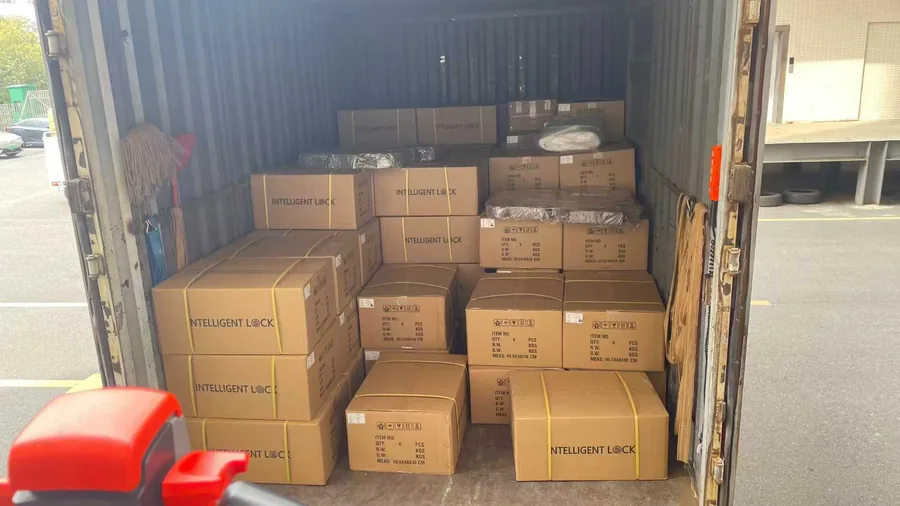
Custom marks are routine in export work. A distributor may want their own order references, their own carton numbering, or their own handling instructions in a local language. Logo customization is available on approved orders in our range, and the mark specification should be agreed before production — in the same round as the packaging artwork, not after the cartons are printed.
For buyers building a private-label program, the process is part of the wider conversation we outline in CaremLock’s OEM/ODM work. The rule of thumb stays the same: the more specific the marks, the earlier they need to be fixed in writing.
Questions from receiving teams
Can shipping marks be customized to our numbering?
Yes, where the details are agreed before production. Standard marks follow the documented carton data; custom marks — your references, your sequence, your language — are part of a private-label or approved-order arrangement. Bring the field list you need and the format your warehouse recognizes.
What if a carton arrives with a damaged label?
Photograph it before opening, note the carton’s position in the sequence, and match it against the packing list and the adjacent cartons. Then log the discrepancy the same day. The receiving checklist above walks through the full evidence routine; the principle is that a damaged mark is still information.
Why do the printed weights differ between models?
Because the hardware differs. DS01 cartons are documented at 18.4 kg and DS05 cartons at 17.0 kg for the same 20-pc count, reflecting unit weights of 0.91 kg and 0.83 kg. The printed values are the reference for receiving checks — and a useful signal when a carton’s weight does not match its label. For container-level planning, the same numbers feed directly into the carton data importers rely on.
Shipping locks into mixed-carton projects?
CaremLock supplies documented carton data and agreed mark formats for distributors, importers and project buyers. Tell us how your warehouse identifies shipments — we will match the paperwork to it.
Or review the receiving checklist and contact the team.