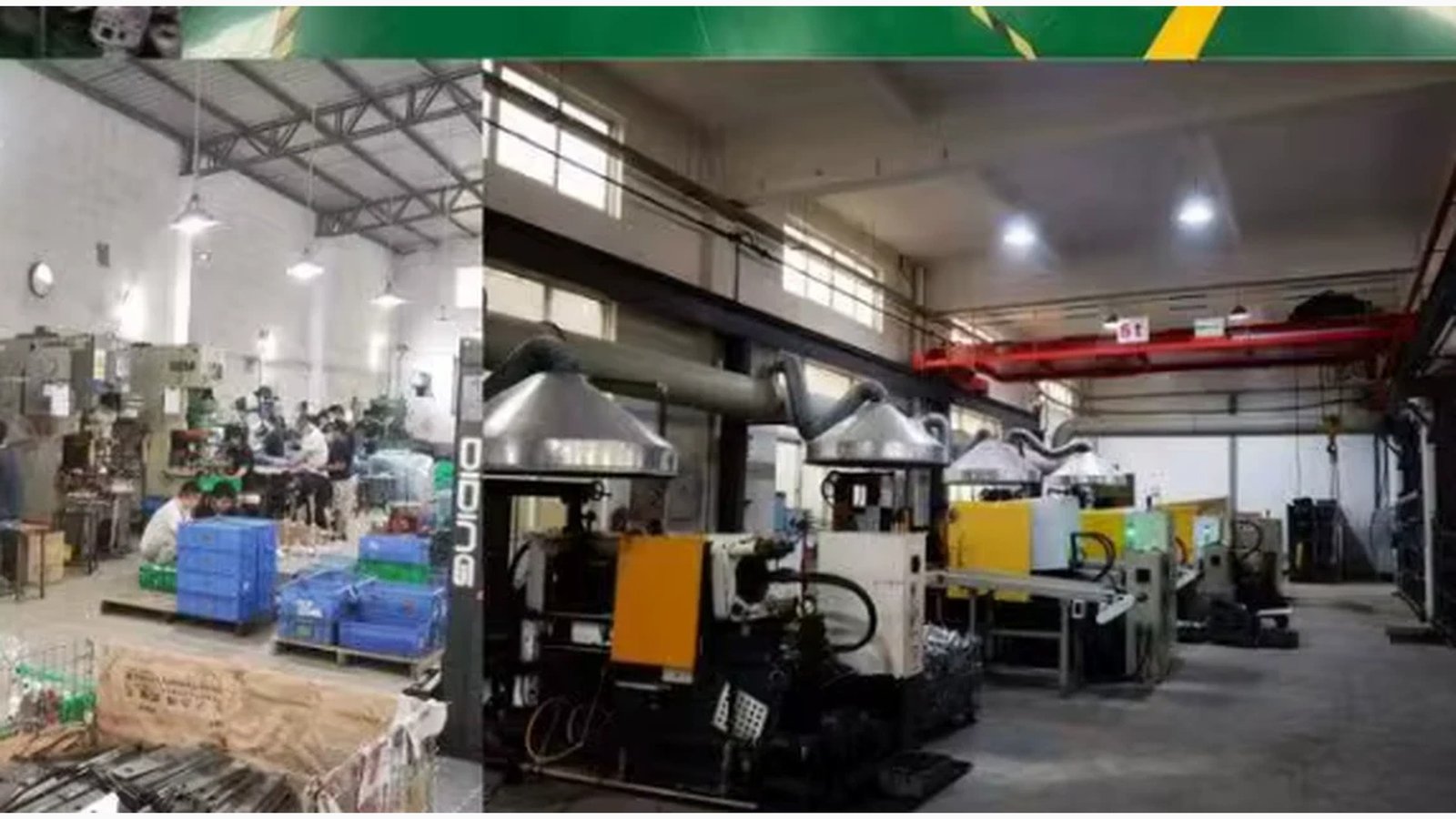
A smart lock that arrives at a warehouse with a cracked panel or a scratched face plate isn’t just one damaged unit — it’s a claim, a replacement request, a customer waiting, and a small margin quietly disappearing. And it usually traces back to something that happened in the packing line, weeks earlier.
Packing an export order is one of the least glamorous and most consequential steps in the whole supply chain. Done well, it’s invisible. Done badly, every stage after it pays for the mistake. Here’s how a careful factory actually packs locks for an ocean container — and what buyers should expect to see on the other end.
What a lock actually is, in shipping terms
Before you can pack a product, you have to understand what it is physically: several dense metal assemblies — front panel, rear panel, mortise or latch body, handle and accessories — plus electronics, a display panel, and often a battery. That mixture creates three hazards the packing line is designed around:
- Impact and compression. A metal lock body is heavy relative to its size. In a stack, cartons carry load, and a crushed box transfers force to the product inside.
- Surface damage. Painted and brushed finishes scratch against their own hardware or neighboring units if they’re allowed to contact each other in transit.
- Moisture. Sea freight crosses climates. Humidity, condensation and rain during handling are normal parts of the journey, not exceptions.
The packing sequence, layer by layer
From the end of the assembly line to a sealed carton
- 1. Unit-level protection. The lock components are settled into their inner packaging — molded trays, foam, or fitted inserts — so nothing shifts inside the box. Accessories (mounting hardware, keys, documentation) each have their own place; loose screws rattling in open space is how panels get scratched.
- 2. The retail/inner box. The product’s own presentation box, sealed and labeled. For most B2B orders this is where customization lives — brand, model, language of the documentation.
- 3. Accessory separation. Anything that could abrade the finish — the mechanical key, tools, additional hardware bags — is separated from the panel surfaces. This is a small detail that decides how the unboxing looks for your customer.
- 4. Master carton packing. Units go into a double-wall (or appropriately rated) corrugated master carton, usually with a layer or divider structure between rows. The carton is filled to avoid internal movement but not over-stuffed; a carton that bulges is a carton that stacks badly.
- 5. The product’s paper trail. Carton marking, quantity, weight, item number — the carton identifies itself. If you’ve read our receiving guide, you know these marks are the receiver’s first line of verification; here is where they’re applied.
- 6. Sealing and marking. Strapping tape on the seams — often on two axes — plus shipping marks and any regional compliance labels your market requires.
What the carton data means to you as a buyer
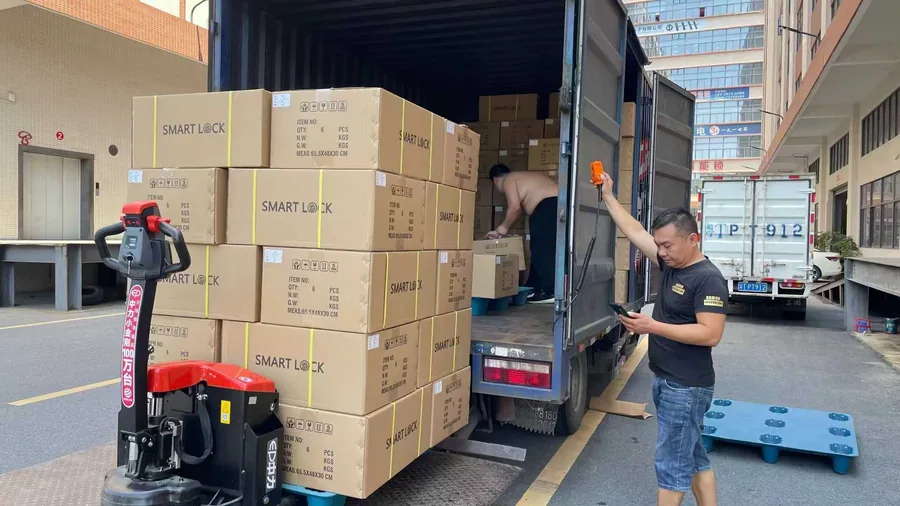
Every properly packed order comes with numbers attached — and those numbers are not decoration. Take our DS01 deadbolt as a concrete example of what documented packing data looks like: each unit packs in a color box of 225 × 162 × 85 mm, weighing 0.91 kg; master cartons of 470 × 340 × 445 mm carry 20 pieces at 18.4 kg per carton. The DS05 variant lists 0.83 kg per unit and 17.0 kg per carton of 20.
These figures are what let a buyer do real math before the container is booked:
- Container planning. Carton dimensions and weights decide how many master cartons fit per pallet, and how many pallets fit per container type.
- Handling safety. An 18-to-19 kg carton is a two-person lift in most warehouse safety regimes — knowing the weight means planning the labor, or requesting a different carton configuration before production.
- Customs and freight. Declared weights and measures are tied to the commercial invoice and packing list; when they match reality exactly, clearance is boring — which is the goal.
- Receiving verification. A receiver who knows each carton should weigh about 18.4 kg can spot a shortage at the dock by scale alone, before opening anything.
Ask for the packing configuration before the quote, not after. Some of the most expensive words in import logistics are “we assumed 20 per carton.” Carton size, units per carton and per-pallet configuration are design decisions — and they’re free to specify at the quotation stage.
Export packing: the parts buyers don’t see
Beyond the retail carton, an export order gets a second skin that most buyers never inspect but always depend on:
- Moisture protection. Depending on the destination climate and shipping duration, parts of a shipment may be wrapped with moisture barriers, and cartons may be palletized with stretch film that also keeps the stack coherent.
- Corner and edge protection. Carton corners are where compression damage begins. Corner protectors and good palletizing practice spread the load.
- Pallet configuration. Where pallets are used, the stacking pattern is chosen so the load is stable and container space isn’t wasted. Where cartons are floor-loaded, the pattern does double duty: stability plus cube efficiency.
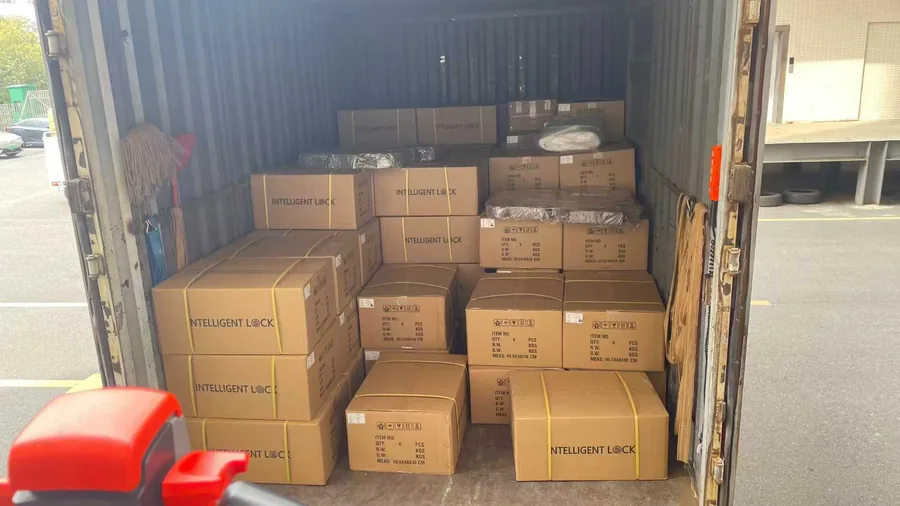
- The loading itself. How cartons are placed into the container — floor-loaded versus palletized, how gaps are filled, how the door-end is secured — is the last chance to prevent transit damage. Pictures of this stage are worth asking your supplier for, and worth keeping.
For distributors: what to verify before the first large order
If you’re placing a first major order, three packing-related items are worth settling in writing before production starts:
- The packing specification. Carton dimensions, units per carton, pallet configuration, and marking requirements — the paper version of everything above. First-article inspection should confirm the physical shipment matches it.
- The custom-labeling scope. If the order carries your brand or your market’s language requirements, confirm exactly what’s printed, what’s stickered, and where. Boxes are cheap to fix before they’re printed and expensive to fix afterward.
- The photographic record. Ask for photos of the packed cartons and the container loading for the first order. It costs the factory minutes and gives you a documented starting point for every future shipment — and a reference for any claim.
The receiving-side counterpart to all of this — what to check when the container arrives — is covered in our receiving checklist; between the two articles, the whole factory-to-warehouse loop is documented.
Common questions
Why do unit boxes sometimes differ between shipments?
Small packaging revisions are normal over a product’s life — a reinforced insert, updated artwork, a language change. What matters is that changes are communicated: a revision note with the shipment. Silent changes in packaging are worth a question, because they suggest other uncommunicated changes may exist too.
Can packing be customized for my market?
Packaging customization is a standard private-label conversation — brand artwork, labeling, manual language. Our range supports logo customization on approved orders, and the full scope of what can be customized per order is exactly the kind of thing to define at the quotation stage rather than assume. The OEM/ODM overview covers the general framework.
What if a carton arrives damaged?
Document it precisely — carton number, description of damage, photos, whether contents appear affected — and report it with the same discipline as any receiving discrepancy. A report that names the carton and shows the damage is resolved in one exchange; “some boxes were crushed” is resolved in ten.
Planning an export order?
Tell us your market, models and expected volumes. CaremLock supplies documented packing data for every model — carton dimensions, unit and master carton weights — so your freight and receiving planning starts from facts.
Or explore how orders are assembled and packed on the factory page, and contact the team.