The first year of a lock’s life is when it tells you what it will be like to live with. Not the first week — that’s still the installation settling in. The first year is the arc: month one when habits form, month six when the first real test arrives, month twelve when the entry has been through every season once.
This is a maintenance schedule for that year, separate from the weather-care routine most guides cover. It’s about catching the three things that quietly degrade: mechanical settling, credential drift, and the family’s own habits around the door.
Month 1: the settling period
What to check 30 days after installation
- The swing and the latch. This is the same alignment test from installation day, repeated once with fresh eyes: does the door still close with the same effort, does the latch land cleanly? Doors and new hardware settle together in the first weeks; a quarter-turn of adjustment now is worth more than one in month eight.
- Every credential used at least once. The fingerprint enrolled “for emergencies,” the code for the grandparent, the card in the drawer — all should have been exercised in month one, while the installer’s habits are fresh and fixes are easy. An access method’s first use should never be the emergency it was reserved for.
- The household’s real habits vs. assumed ones. Watch what people actually do: does anyone still carry the key out of habit? Does the child use the method assigned, or a different one? Month one is the window where adjusting the setup is cosmetic; later it’s disruptive.
Month 6: the first real test
The six-month visit isn’t about the lock’s internals so much as the household’s systems around it:
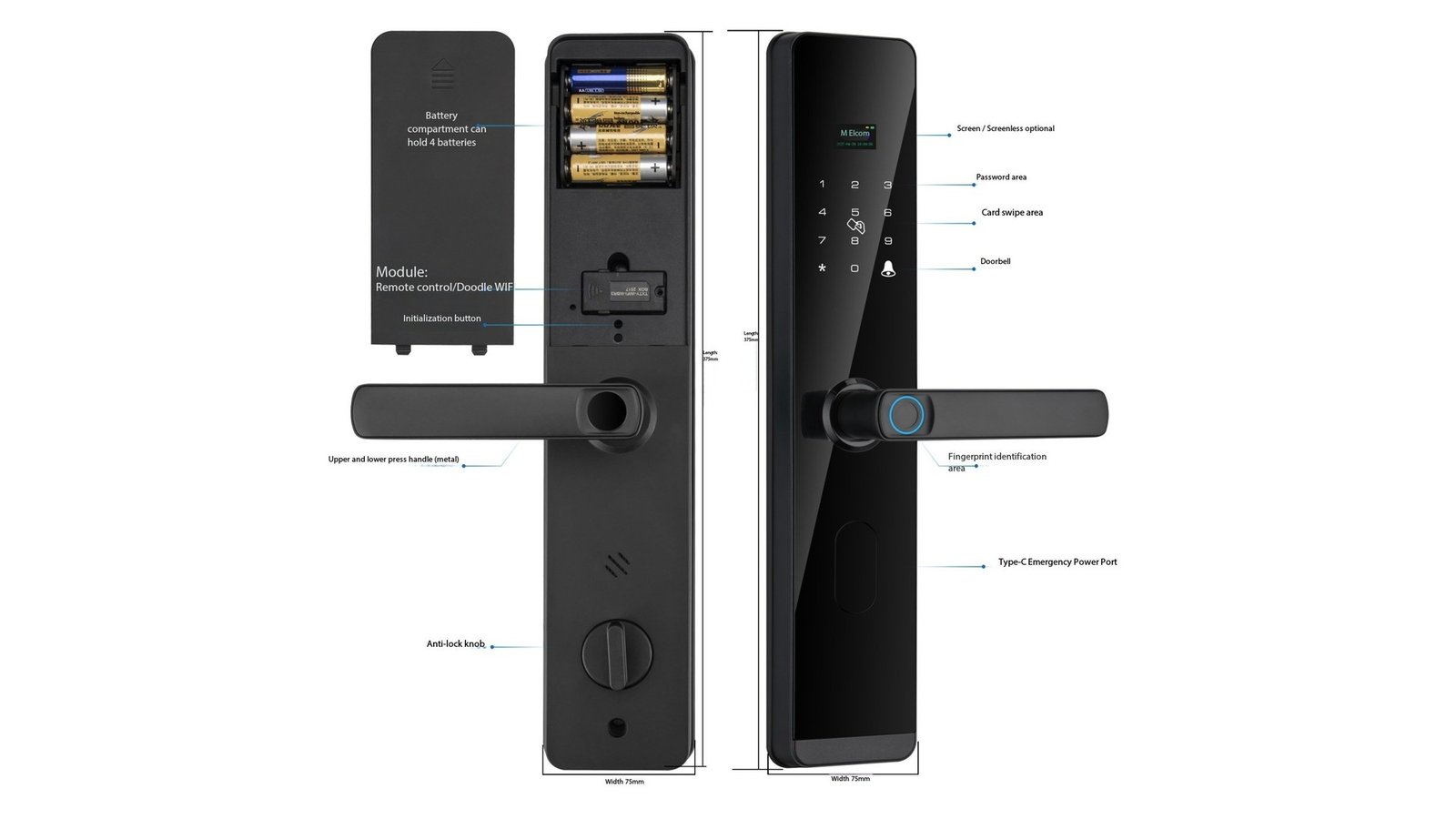
- The battery conversation, by model. Half a year of real use is enough to know the pattern: replaceable cells like our deadbolts’ four AA batteries (6V) get a fresh set and a spares check; rechargeable designs like the DDL1’s 4200mAh pack get their first scheduled top-up rather than an emergency charge. The point isn’t a universal rule — it’s that by month six, the household knows its pattern.
- The access register review. The list of who holds what: has anyone left the household’s orbit — a cleaner who stopped, a sitter who moved? Mid-year is the natural sweep. It takes minutes against a written list and is impossible against memory.
- The full-method test. Once every six months, open the door with every method the household has: primary, secondary, and the mechanical key — the last one while the sun is up, so the family knows the key still works before the evening it’s needed.
Month 12: the first full cycle
Twelve months means the entrance has seen every season — which makes it the natural moment for the annual pass:
- The seasonal pair of checks. The pre-cold and pre-heat routine run as scheduled maintenance for a year; by its end, the household knows which of them its climate actually demands and which parts can be skipped.
- Fingerprint re-enrollment where lives have changed. Growing children’s prints shift; older family members’ skin changes with the years; anyone whose method has started taking two tries deserves a fresh enrollment rather than months of quiet frustration. A five-minute re-enrollment per person, now, is the annual version of the reader-diagnosis steps in our troubleshooting guide.
- The years-of-service conversation. One year is also the first honest moment to ask whether the entry setup matches the household it now serves: new members, new routines, new arrivals. If it does, the annual pass is maintenance. If it doesn’t, that’s a real finding — and a better one than a failure would have been.
The annual card: write the year’s findings on one page — battery dates, any adjustments made, who was added or removed, which method each person settled on. Next year’s pass starts from it, and if the house is ever sold or rented, it’s the most useful document the next household will never think to ask for.
What does NOT need doing
Maintenance guides often inflate. Three things this schedule deliberately leaves alone:
- No routine of “re-pairing” or re-adding devices. A lock that works doesn’t need its connection refreshed for its own sake; platform maintenance is handled through normal app updates and the instructions that ship with your model.
- No internal cleaning beyond the reader surface. A soft dry cloth on the reader and panel is the household’s entire physical responsibility; deeper intervention belongs to the product documentation and, if ever needed, the support path for your model.
- No annual replacement of hardware “just in case.” Locks don’t benefit from being changed out on a calendar. The schedule above is about verification — the hardware itself waits for an actual reason.
For installers: the first-year handoff
If you install entries professionally, this schedule contains the customer-education list worth leaving behind: the month-one check as a phone call or visit, the six-month register review as a reminder, the annual pass as an offer. Installers who schedule the first-year touchpoints find their second-year service calls leave before they arrive — because the household learned the entrance instead of discovering it.
Common questions
Do I really need a maintenance schedule for a lock?
For the hardware itself, no — it asks almost nothing. What decays quietly is the surrounding system: the door’s alignment, the credential list, and the family’s habit match. The schedule is really for those three; the lock benefits by association.
What’s the single most important item on this list?
The full-method test in month six — specifically the mechanical key, in daylight. Households almost never use the backup until the emergency proves whether it works. Five minutes once every six months retires that entire category of surprise.
How does this relate to the seasonal routine?
They’re layers, not alternatives: the seasonal pair handles weather and the building; this first-year schedule handles settling, credentials and habits. Our family entry guide covers the daily-routine side of the same theme — the entrance works best when its maintenance is boring.
Supporting installers and households through year one?
Tell us your market and customer profile. CaremLock supplies documented ranges across deadbolt, aluminum, glass and room-door families, with the battery, credential and fit facts your handover materials need.
Or review the DS01 and DDL1 model pages and contact the team.