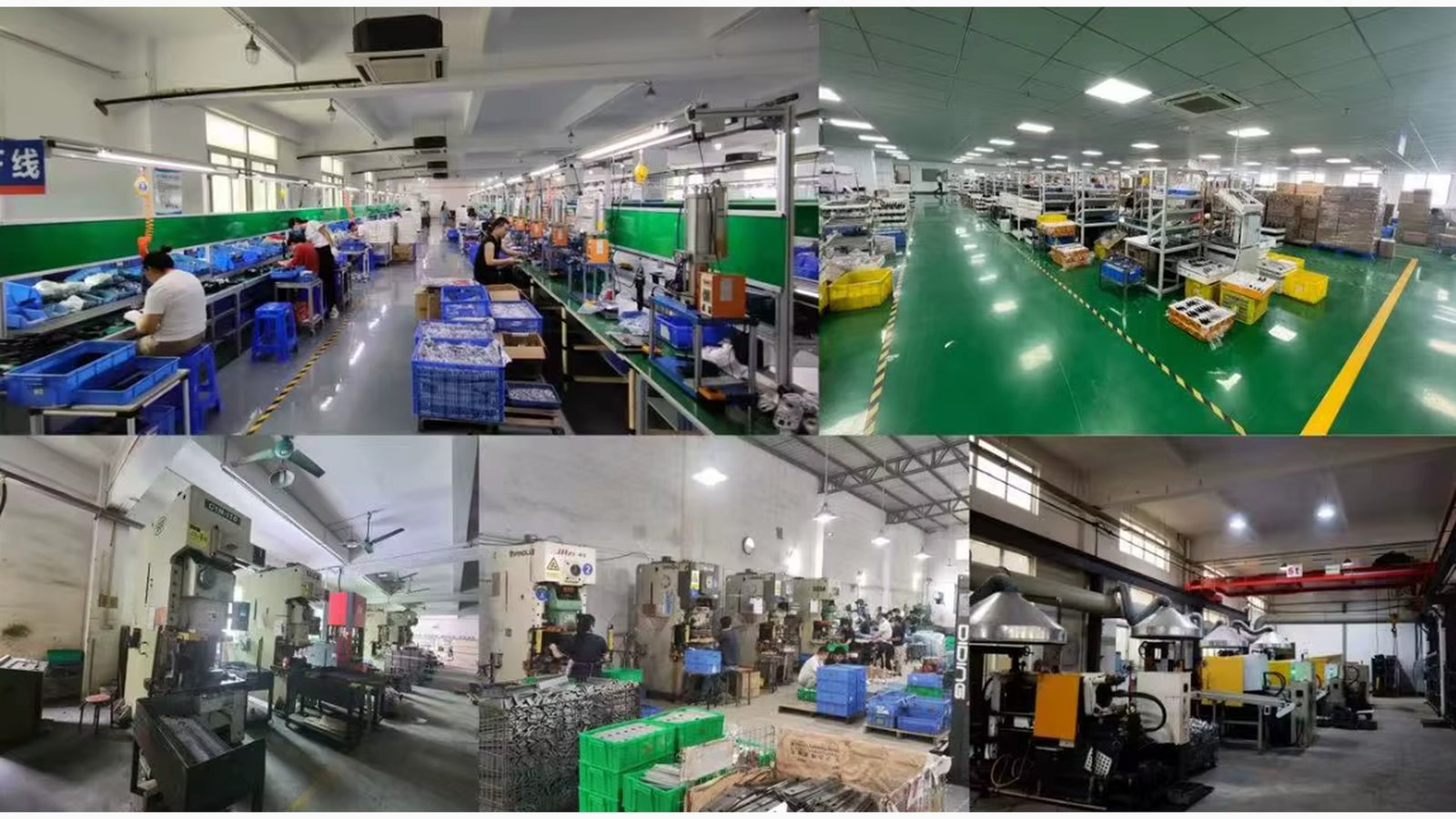
Just after half past seven on an assembly morning, the first sound on the floor is not a machine. It is a cart of machined lock bodies arriving at the first bench — and the day’s rhythm starts with a count, not a switch.
Most people meet a smart lock as a finished object in a box, so the work behind it stays invisible. This is a walk through the smart lock assembly process as it actually runs: the stations a lock passes, the checks that catch what eyes miss, and the moment a product stops being parts and starts being ready to ship.
The smart lock assembly process, station by station
No two suppliers run identical lines, but the shape of a lock line is consistent. Material arrives and is checked against specifications. Mechanical sub-assemblies come together first, because the body — the part that has to survive a thousand openings — sets the tolerances everything else lives inside. Electronics are prepared and married to the mechanics at a dedicated station. Then testing, appearance, and packing.
In our own supply process, manufacturing, assembly and product testing sit inside one operation, which matters more than it sounds: when the people assembling a lock and the people testing it share a floor, a fault found at the end of the line can be traced to the station that caused it before the shift ends.

Where electronics meet machined metal
The hardest station on any line is the marriage of electronic and mechanical parts, because the two come from different worlds. Machined aluminum is measured in tight tolerances; a reader or display is measured in behavior. The interface between them is where products earn their reputation:
- Sensor alignment: a fingerprint reader sits behind a cover or glass panel, and a fraction of a millimeter of misalignment changes how reliably a finger is read.
- Cable routing: every wire has to survive the motion of a handle, a latch or a battery door without chafing against a metal edge.
- Panel fit: on a model like the DDL1 — CNC aluminum alloy with a tempered glass panel and a 4.5-inch IPS screen — the glass has to sit flush without stress points, because glass does not forgive an uneven surface.
- Fastener discipline: correct screws, correct torque, correct order. A loose screw is a future service call; an over-tightened one is a cracked housing.
The checks a finished unit passes
Testing is not one event but a series of short, stubborn questions asked of every unit. On a typical line, that series covers:
- Mechanical action: does the latch or bolt move cleanly, by hand and by motor, every time it is called?
- Reader response: do fingerprint, card or keypad inputs register as documented, and does the lock reject what it should reject?
- The human interface: screen, prompts, indicator lights and sounds — tested as a user would experience them, not only as a signal path.
- Power and charge: battery contacts seated, charging port sound, and a power path free of intermittent faults.
- Appearance: a final pass for scratches, panel gaps and finish defects before the unit is allowed into a carton.
None of this is glamorous work, and that is the point. A lock’s quality is mostly the accumulation of small refusals — the units that get pulled off the line before a buyer ever sees them.
What the line sounds like
Assembly floors have a distinctive acoustic signature: the low chatter of torque drivers, the metallic tick of latch mechanisms being cycled at test benches, the occasional chime of a reader accepting a test finger, and the unmistakable rip of packing tape at the far end. Experienced workers navigate by sound. A bench that goes quiet is usually a bench inspecting something, and a bench that repeats the same mechanical sound in an irregular rhythm is a bench finding a problem.
Packaging: the last station is a logistics decision
Packing is where the line hands off to the supply chain, so its numbers are travel numbers. A DS01 leaves the floor in a color box measuring 225 × 162 × 85 mm at a unit weight of 0.91 kg. Twenty of those pieces go into a master carton of 470 × 340 × 445 mm weighing 18.4 kg; the DS05’s carton, on the same twenty-piece count, is documented at 17.0 kg.
Those figures are chosen for reasons that matter far from the factory: carton weight has to be liftable by one person at a receiving dock, box dimensions have to stack efficiently on a pallet, and a clean twenty-piece count lets a warehouse confirm a shipment by counting cartons instead of opening them. If your team is preparing for the first delivery, the guide to how export orders get packed follows the whole journey.
Why buyers walk the floor before they order
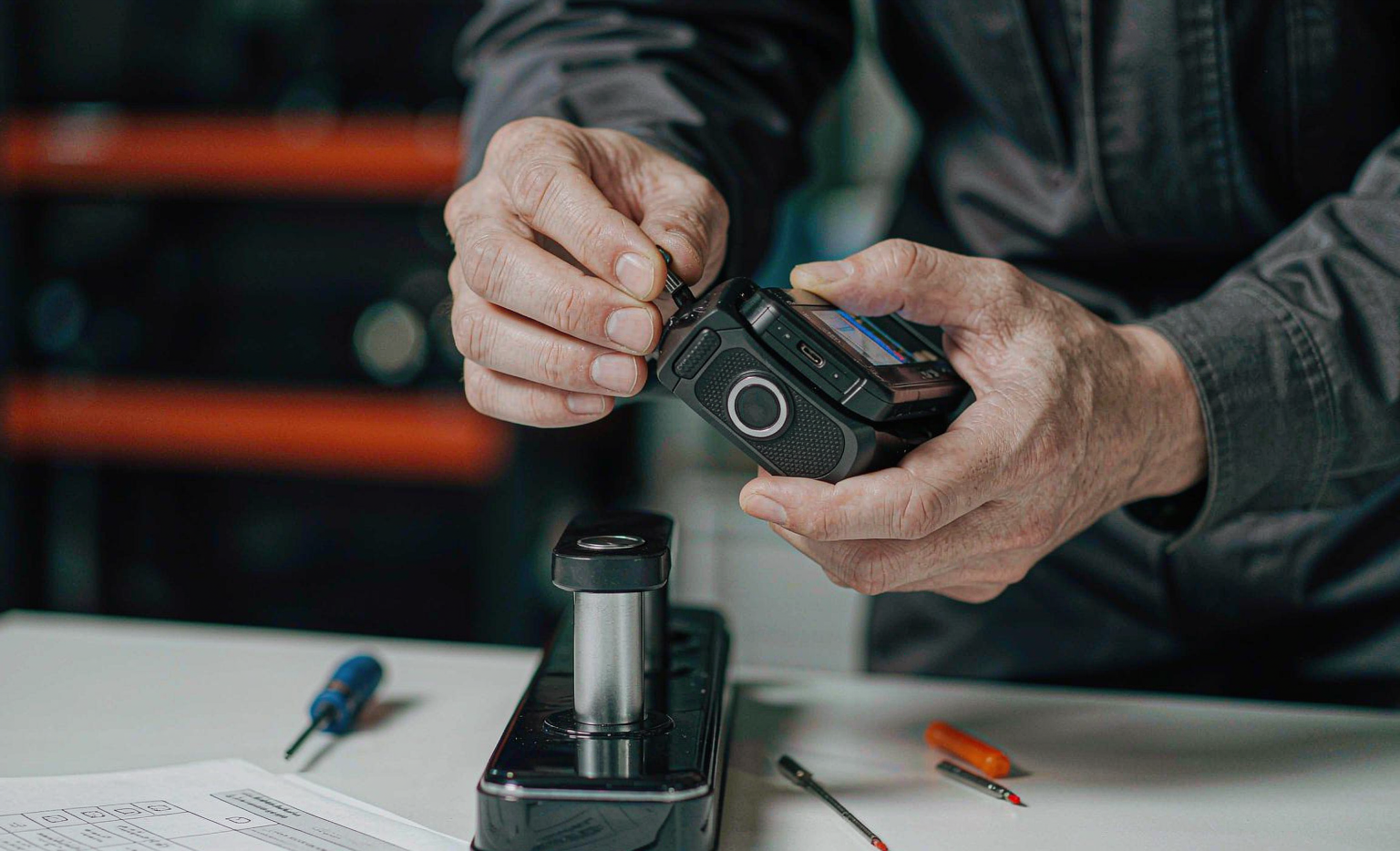
A catalog page can describe a lock, but it cannot show a line. That is why serious buyers ask for a floor walk, a sample order, or both — not to watch machines, but to see what happens when something goes wrong at station four. Do units get set aside and investigated, or nudged along? Is the checklist signed at the bench or reconstructed at the end of the week? The answers predict the containers to come.
For the buyer’s side of that visit, our article on the smart lock quality inspection checklist maps what to look at, while the piece on evaluating a sample order explains how to rehearse a full order with a small one. Both start from the same premise: the smart lock assembly process is easier to trust once you have watched it answer a problem.
If you want to see how the floor connects to finished models, start with the DDL1 fully automatic smart lock or browse the broader product range; a visit to the factory page covers how manufacturing, assembly and product testing are organized.
Common questions
What decides quality on a lock line — machines or people?
Both, in sequence. Machines hold tolerances a hand cannot; people decide whether an anomaly gets investigated or ignored. The lines worth buying from are the ones where the second answer is obvious the moment you stand at a bench.
Can a model be customized on the line?
Within the documented options, yes. Logo customization is available on approved orders, and OEM/ODM programs exist for buyers who need the product under their own brand. The practical questions are which finish, packaging and platform versions your market needs — settled before the order, not after.
How are finished locks protected between the line and the port?
Through packaging and handling rules that treat the carton as part of the product: inner boxes for the finish, master cartons sized for pallets, and counts that make receiving verification quick. The specifics per model travel with the freight documents your forwarder receives.
Sourcing from a manufacturer you can audit?
CaremLock runs manufacturing, assembly and product testing in one supply process, and welcomes buyers who want to see it before they order. Send us your market and target models — we will arrange samples and documentation.
Or explore the factory and contact the team.