Most quote delays do not happen at the supplier’s factory. They happen in the gap between what a buyer sends and what a supplier needs — a two-paragraph inquiry about “smart locks for a new residential building” that has to be answered with questions before it can be answered with numbers. The brief, not the factory, is usually the bottleneck.
CaremLock supplies smart locks for distributors, installers, integrators and project buyers, and sees briefs at every level of completeness. This article sets out what a complete project brief contains, why measurements and customization belong in the first message rather than the fifth, and what to do when some details genuinely are not known yet.
The ten-line brief
A brief does not need to be a document. Ten lines of specifics outperform two pages of context, and each line maps to a decision the supplier has to make:
Ten lines that turn an inquiry into a quotation
- 1. Project type. New build, retrofit, renovation or recurring trade supply — the category changes what is assumed about everything else.
- 2. Door types. Wood, steel, aluminum, glass: the material and construction decide which lock families are candidates at all.
- 3. Quantities. The total and the split — ten of one model is a different conversation from five and five.
- 4. Measurements. Thickness, backsets and preparation details, one row per door type; the next section covers the numbers that matter most.
- 5. Credentials and access. Who opens the door and how — codes, cards, fingerprints, keys — and whether different groups need different access.
- 6. Power preferences. Battery expectations, any door-side wiring, and whether entry must work during power interruptions.
- 7. Environment. Interior or exterior, the climate the locks will live in, and anything unusual: coastal air, heavy traffic, public access.
- 8. Destination. Where the goods ship and where they will be installed, so logistics and market-specific needs are visible from the start.
- 9. Customization. Branding, finish or packaging expectations — raised early, before artwork and application questions get expensive.
- 10. Documentation needs. What you must pass on — spec sheets, packing data, installation information — usually defined by your own customer, not by the supplier.
Written out, that is twenty minutes of work; sent as a one-line inquiry, it becomes a week of correspondence. Different buyer types can even trim the list: a distributor reordering an established model may need lines 1, 3, 8 and 10, while a project buyer sending a first inquiry needs all ten.
Measurements and the door schedule
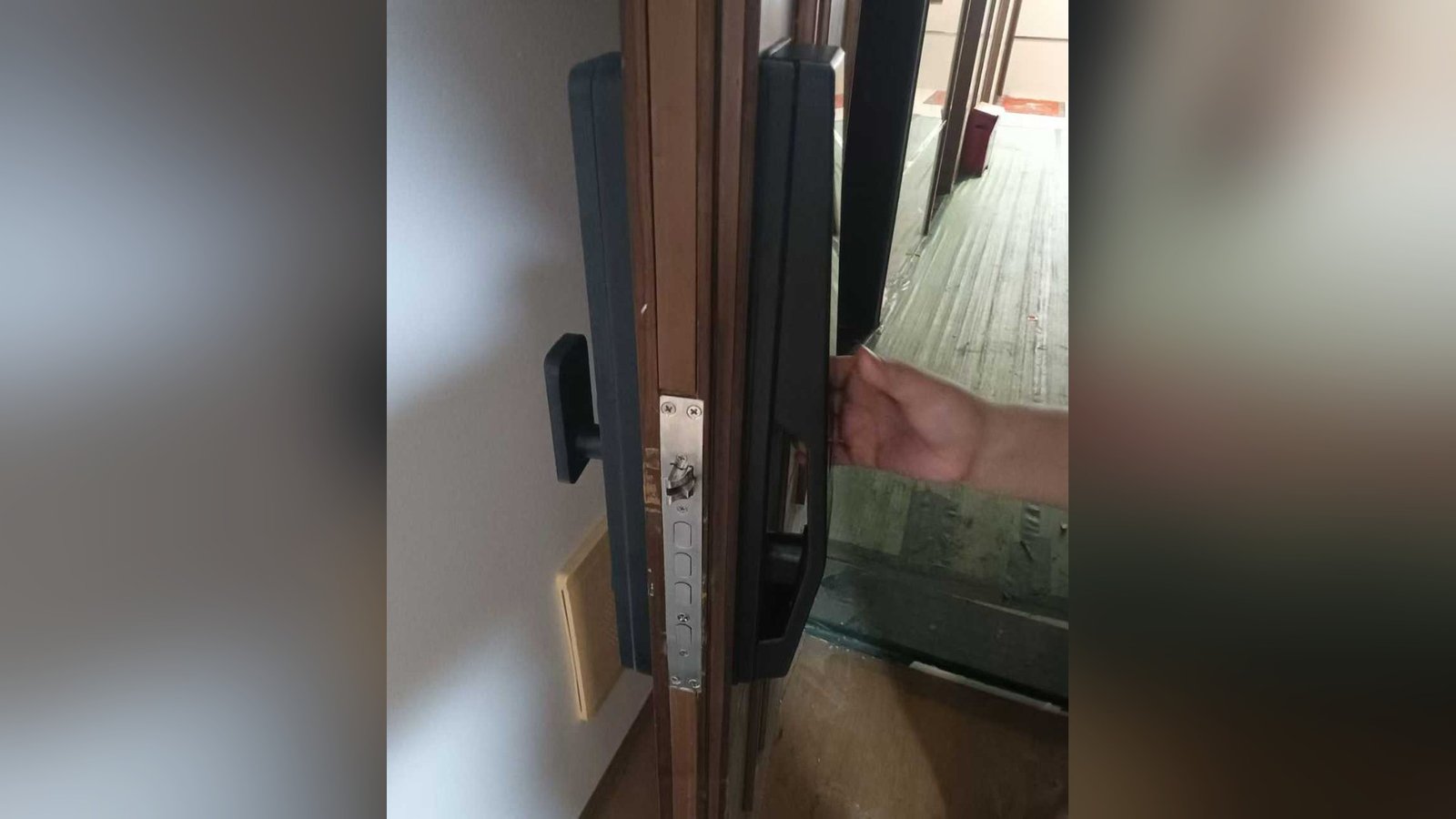
Measurements are where projects are won or lost in the paperwork. Two numbers dominate: door thickness and backset. In our own documentation, the CaremLock DS-series deadbolt range is documented for door thickness from 35 mm to 55 mm and backsets of 60 mm and 70 mm — the kind of figures a supplier needs per door type, not as an average across a building.
The recurring theme is one row per door. A schedule reading “assorted interior doors, standard” produces questions; a schedule with one row per door type — material, thickness, backset, handing, quantity — produces a quotation. If handing is not yet a column in your schedule, it is the one most worth adding.
Keep units explicit and consistent, too. A schedule that mixes inches and millimeters, or gives a thickness range wide enough to span two model families, invites a clarifying email that costs a day. Write the unit on every line, and let the range be as narrow as the doors allow.
When thickness or backset falls outside the documented range, that is not necessarily a dead end — it is a signal that the door needs an earlier compatibility check, which our five-measurement smart lock door compatibility guide covers.
Customization: what to say early
Logo customization is available on approved orders, and the orders that go smoothly are the ones where branding was in the brief. Two question categories decide how much time customization adds:
- Artwork. What the mark is, in what usable format it can be supplied, and where it is meant to appear — product face, packaging or both. The brief does not need answers here; it needs to say that branding is in scope, so the questions can be asked in parallel with pricing.
- Application. How the mark is applied, on which finishes and which models, and what approval looks like before production. Raising this early is what keeps customization from becoming a separate project with its own schedule.
The practical rule: if branding is possible on this order, say so in the first message. Discovered after the quote, it means the quote gets rebuilt and the project absorbs a second conversation. Once branding is in scope, our notes on quality control for custom branded orders cover what comes next.
What good documentation looks like
Documentation belongs in the brief because the buyer is rarely its final user: distributors pass specifications to installers, project buyers pass them to consultants, integrators pass them into system documentation. Three categories cover most needs:
- Spec sheets. Model-level figures — dimensions, operating ranges, battery configuration — the numbers that go into a specification or a submittal.
- Packing data. How the order arrives: carton contents, dimensions and marking, so warehouse and site teams can receive and store it without guesswork.
- Installation information. What the installer needs at the door: preparation requirements, fitting sequence, and the documented limits of the model.
CaremLock documentation such as spec sheets and packing data is available on request. Putting the documentation need in the brief means it is asked for once, in the same message as everything else, rather than chased after the order is placed. It also lets the supplier answer the questions your downstream customer will ask — before they ask them.
Send it incomplete if you must
There is a kind of completeness that delays projects: waiting two weeks to send the brief because one quantity is still unconfirmed. The better trade is to send it with the unknowns marked as unknowns.
Mark the gaps, do not hide them. “Quantities: 40 confirmed, 12 pending final unit count” is a workable line; “quantities TBC” is not, because it gives the supplier nothing to plan against. Seven solid lines and three open questions can be quoted with stated assumptions; a vague brief cannot be quoted at all without a round of correspondence first. Unknown beats wrong: a marked unknown can be resolved, while a guess presented as fact becomes a change order later.
Partial briefs also tell the supplier which questions matter. Three clearly named unknowns can be answered in one reply; a one-line inquiry can only be met with a questionnaire, because the supplier has no way to know which details you have already settled internally.
For new-build projects, handover timing is one more line worth adding early — our guide to locks for new-build handover shows why that stage rewards a complete brief more than any other.
Ready to turn a brief into a quotation?
CaremLock supplies smart locks factory-direct for distributors, installers, integrators and project buyers, with in-house assembly and product testing, and logo customization available on approved orders. Model selection and supply support are available for residential and commercial projects — send the brief in whatever state it is in.
Or review the product range and contact the team.