A custom-branded order adds one line to the purchase — your logo — and one entire category of risk to the project. The product still works or fails on the same mechanical facts as ever, but now every unit also carries a promise about your brand: the artwork is right, the marking wears, and a thousand cartons agree with each other.
This is the QC checkpoint list for private-label lock orders, written for buyers whose name is going on the product. It assumes the standard inspection discipline — the production gates, sampling, and document checks covered elsewhere in our guides — and adds the layer that only applies when the branding is yours.
Why branded orders fail differently
A standard order fails in ways the factory can fix: a batch of parts, a misaligned assembly, a carton count. A branded order couples every one of those failures to your identity, and it also introduces failure modes that don’t exist in standard production:
- Artwork errors are permanent. A misspelled brand name or a wrong logo version isn’t a defect that a service visit repairs; it’s on every unit, and at scale it becomes a recall-shaped conversation. Artwork files, exact versions, and approval records matter more here than in any other part of sourcing.
- Application method decides durability. A logo that’s printed, laser-etched, or applied as a label will age differently across handling, installation, cleaning and years of use. The right method depends on the surface and the intended life of the mark — and it’s a specification item, not a production detail.
- Consistency becomes an issue at volume. Two units with slightly different logo positions read as two products. Consistency across a carton, a pallet and a container is where branded QC earns its keep.
The checkpoint list
Artwork and approval, before production
- Exact artwork versions, locked. One file, one version number, one approval record. Not “the logo we sent in March” — a dated file with a checksum or version marker that both sides hold.
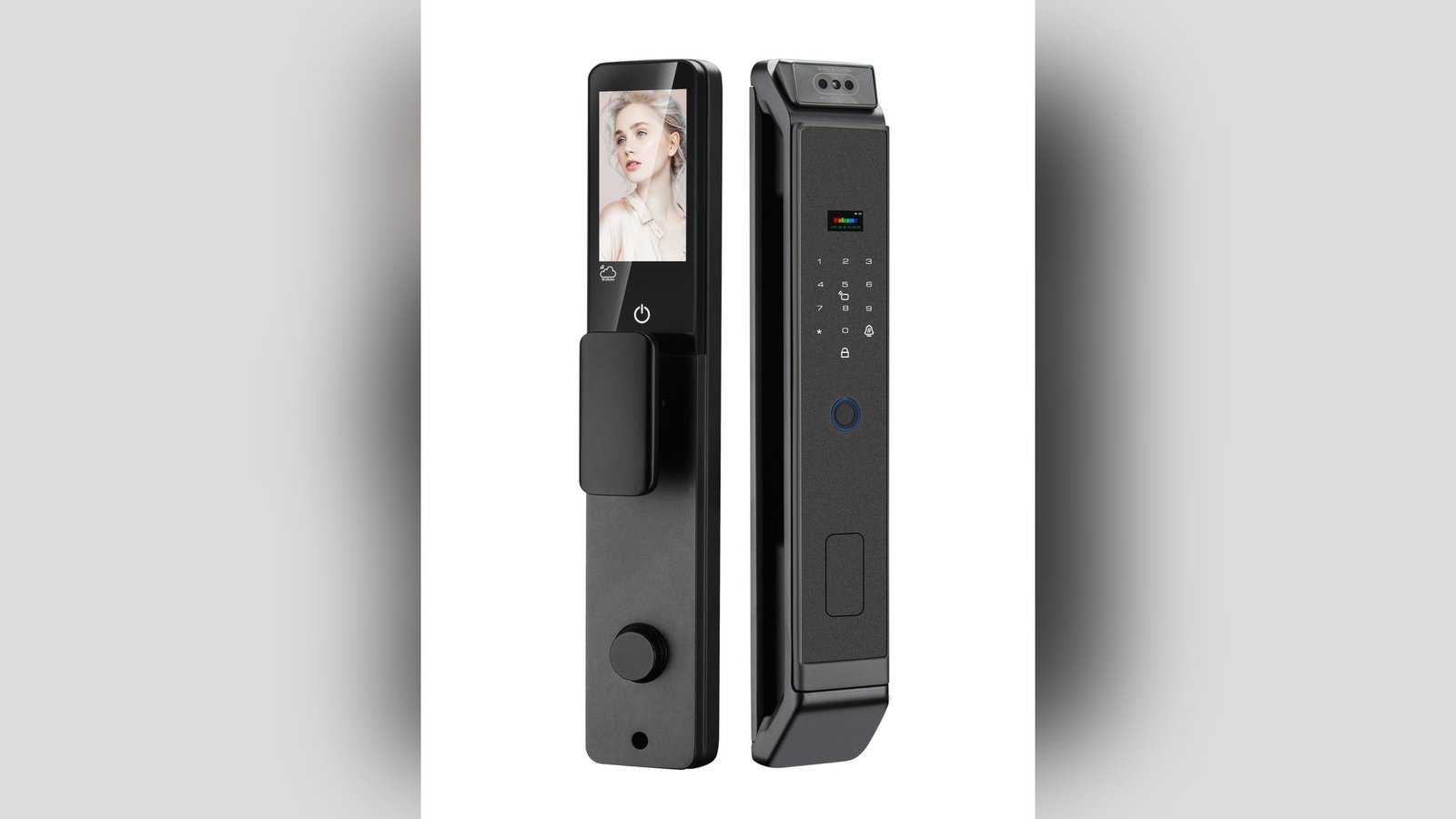
- Placement drawings. Where does the mark go, on which face, at what size, relative to edges and features. On a lock body, placement competes with readers, keypads and curves; a drawing prevents the logo landing over a sensor.
- Color and finish reference. Brand colors on a matte black body behave differently from the same colors on white — if color fidelity matters, agree the reference standard before production rather than after a batch.
- Surface treatment compatibility. The mark must be right for the material. Smooth aluminum, textured finishes and tempered glass panels each take different application methods; the conversation belongs at specification, not at first shipment.
- Approval of the physical sample. Screens and proofs lie. A sample unit with the actual applied marking — signed, photographed, kept — is the reference every subsequent batch is checked against, and the single most valuable artifact of a branded order.
Production and inspection
- First-article check with branding. Before the run, one complete unit with the applied marking is inspected against the approved sample — placement, size, color, adhesion, and everything standard QC already covers.
- Adhesion and wear testing. Where the marking method allows it, simple checks — a rub test, a solvent-typical-of-cleaning test — catch the failure that would otherwise first appear in a customer’s hands.
- Sampling with the branding dimension. When the pre-shipment inspection samples units, the marking gets checked on each sampled unit, not on “a unit”: drift between the first and last cartons is exactly what sampling exists to find.
- Carton and labeling consistency. Your brand identity extends to the box. Where the order carries custom packaging, the packaging QC adopts the same discipline: approved sample, checked application, consistent across the shipment.
- Documentation package. Manuals, cards and labels in the agreed languages, matching the approved versions — the branded order’s paper trail is part of the product.
The pre-production conversation that prevents most problems
Three items settled before production starts eliminate the majority of branded-order disputes:
- Scope, in writing. What exactly is customized: the lock body marking, the packaging, the manual, the card design — each is a separate scope line. Our supply conversations set logo customization on approved orders as the baseline; anything beyond that baseline is a defined scope item, not an assumption on either side.
- Change control. Once artwork is approved and production begins, changes become their own project. Agreeing this rule at order placement turns a difficult mid-production request into a planned follow-up order.
- The exception path. What happens if the inspection finds marking defects? Repair, replace, or accept with a documented note — decided in advance, so the decision on inspection day is a procedure rather than a negotiation.
The sample box that travels: keep two approved sample units — one at your end, one sent back with the production order. When a future batch is questioned, the pair becomes the reference standard, and “does this match what we approved?” is answered by objects rather than by memory.
For distributors: branding as a service line
Private-label supply is one of the clearest differentiators a distributor can offer — and the QC discipline above is what makes it safe to sell. A distributor who can speak confidently about artwork control, application methods and the inspection of the mark is selling a process, not just a product with a logo. The practical preparation is the same list above turned into a short standard operating procedure, applied identically to every branded order. Our OEM/ODM overview covers the wider framework; the checkpoints here are the quality core of it.
Common questions
Which marking method should we choose?
It depends on the surface and the intended life of the mark — a question for the product documentation plus a physical sample, not for a general rule. The working method: take the sample with the proposed marking, review it against where the product will live (installation handling, cleaning, years of touch), and approve what survives that review. If the marking method can’t be confirmed for a specific surface, that’s a conversation to have before production, not after.
Can we change the logo on a later order?
Yes, as a new order with its own artwork approval — which is the change-control rule doing its job. Revision requests inside a running production batch are where schedules and quality both suffer; a follow-up order with fresh approval keeps both clean.
What about mixed orders — same lock, two markets, two brands?
Increasingly common, and manageable when the marking and packaging differences are treated as what they are: two configurations of one product. The QC implications are simple as long as the separation is physical (separate cartons, separate labels, ideally separate pallets), because mixed configurations in one carton are the classic source of wrong-brand deliveries.
Planning a private-label lock order?
Tell us the models, volumes and the scope of customization you have in mind. CaremLock supports logo customization on approved orders and will confirm the documentation, samples and inspection standards that apply to your project.
Or review the inspection guide and contact the team.