Who holds your spare key right now — and did the two of you ever say out loud what that key is for? Neighbor spare key access is one of the kindest arrangements on a residential street and one of the least defined.
Most households settle it by implication: the key is with the neighbor, the neighbor is a good person, and asking detailed questions feels unneighborly. The arrangement works until the first situation nobody discussed — a burst pipe, a lost pet, a changed relationship — and then everyone improvises.
What a spare key quietly promises
A key in a neighbor’s drawer is an open-ended invitation. It cannot express “only if we’re away,” or “only for the dog,” or “only until my mother is back on her feet.” Whatever limits exist live in the relationship, not in the object, and the object never forgets.
That is not an argument against neighbor keys. It is an argument for being honest about what the arrangement is. A household that knows it has granted a standing invitation can manage that; a household that believes it granted emergency access has a gap between belief and fact.
Three shapes of neighbor access
Neighbor access comes in three shapes, and the first job is choosing one deliberately.
- Emergency-only. The neighbor acts when the household cannot — a lockout, a flood, a pet in distress. This should be the most common shape and the one with the shortest leash.
- Scheduled. The neighbor helps on a rhythm: school pickups, packages on delivery days, the dog on late office days. Shared, ordinary, and worth reviewing when the rhythm changes. The pattern is the same one behind access for regular visitors.
- Standing. The neighbor may come and go without being asked. It fits the closest relationships — and it should be named as what it is, not left implicit.
Choosing the shape before choosing the tool prevents most of the awkwardness. It is one sentence in a doorway: “We’d love you to have a way in if something goes wrong.”
Making emergency-only mean emergency-only
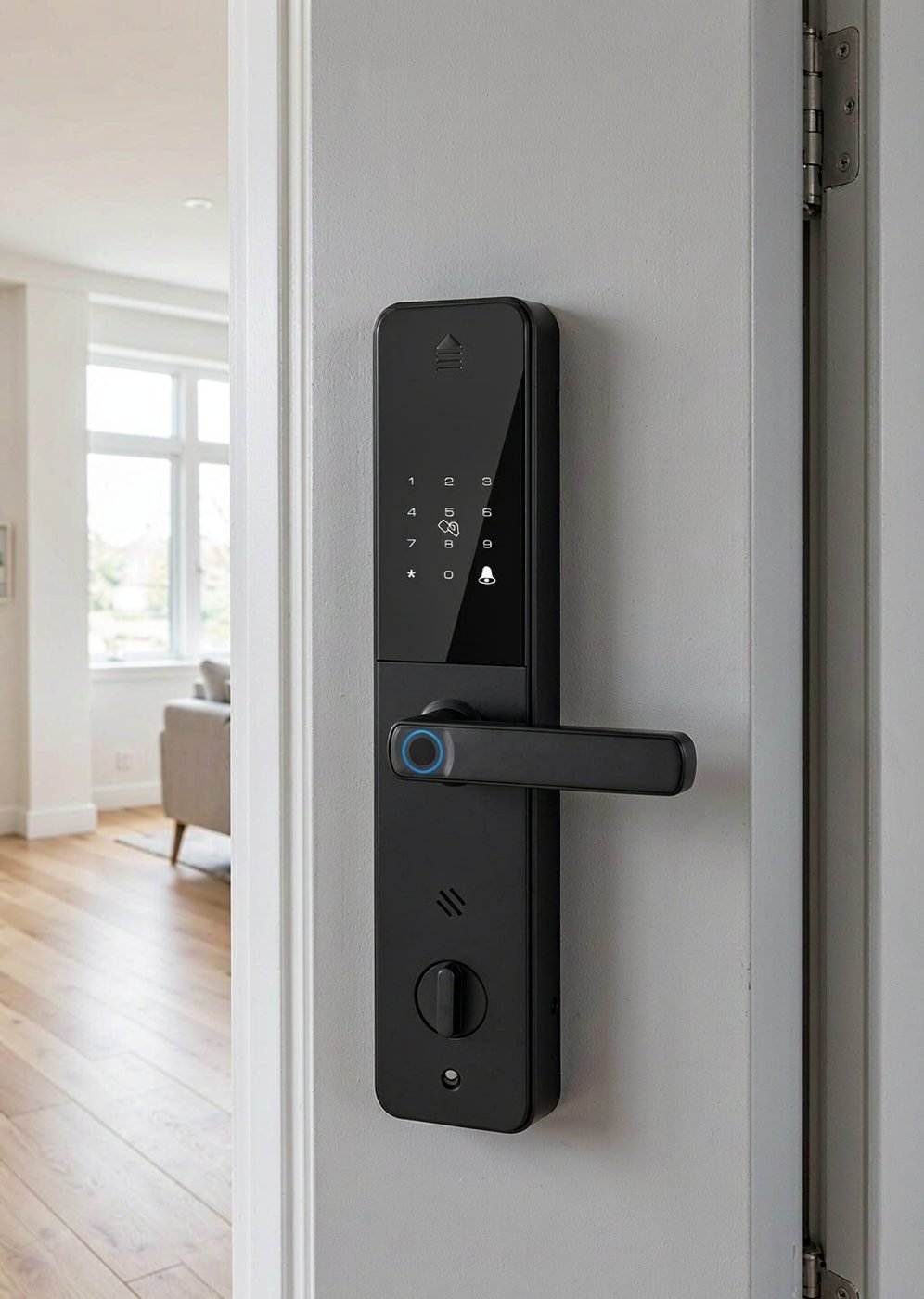
Here is where a credential model quietly outperforms a key. A key says “this opens the door, whenever.” A per-person code can be issued to the neighbor alone, used once in a crisis, and deleted or changed afterward. The favor ends when the emergency does, without a conversation about trust.
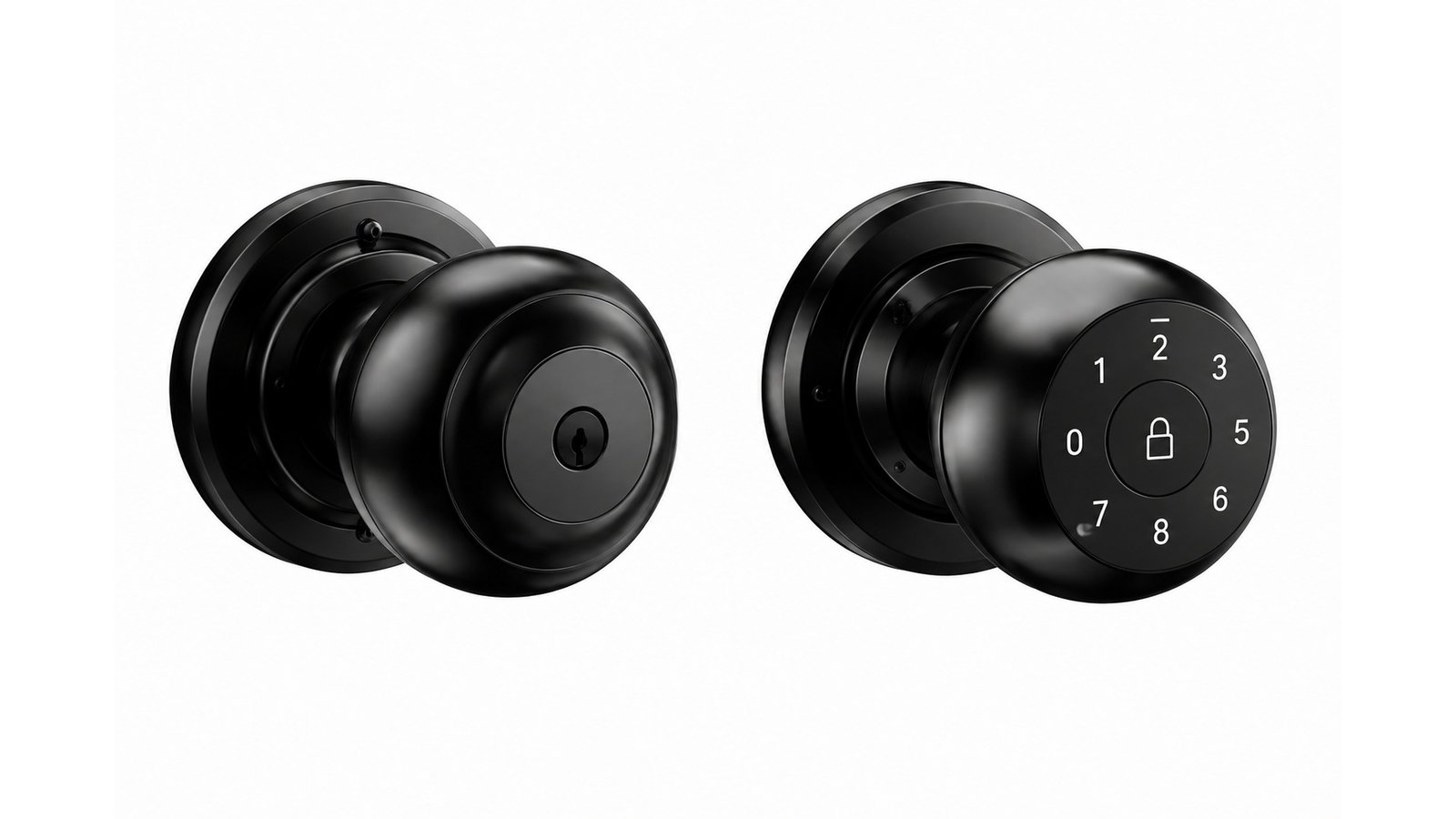
Our deadbolt models support this pattern directly: DS01 and DS05 document capacity for 100 passwords and 100 IC cards, so a neighbor’s credential never has to borrow the family’s own. The mechanical key stays where the household keeps its own backup. If the platform version you choose records entries, that is worth agreeing with the neighbor openly — the point of an emergency credential is certainty, not surveillance.
The conversation: short, kind, specific
Five sentences that make the ask easy
- Ask directly. “Would you be willing to keep a way into our house, just for emergencies?”
- Name the shape. “Only if we can’t get here — never a standing invitation.”
- Give it a duration. “Let’s say until the end of the year, and we’ll revisit it.”
- Explain how it ends. “When it’s no longer needed, we’ll take it back — that’s the plan, not an insult.”
- Don’t ask for secrecy. The neighbor should be free to tell their household; secrets between doors are how misunderstandings start.
Most neighbors say yes to a bounded favor and feel uneasy about an open one, because the open version is harder to carry. Specificity is the courtesy.
Ending an arrangement without awkwardness
Households change. A parent recovers, a child starts coming home on time, a neighbor’s own life fills up. Ending the arrangement is the favor completing, not a rupture — and the logistics are easier when they were planned at the start.
A code is deleted in seconds. A card is collected or deactivated. If a physical key was the only path, its return is the event, and the household decides whether a new lock or a keyed change follows. The cleanest households keep a written register for exactly this reason: the day the arrangement ends, the record already exists. We set out that habit in keeping family door codes tidy over years, and it applies double to a credential that lives across the street.
In apartments: when neighbors share a building
Building living adds a layer. The lobby door, the garage gate and the corridor may already be managed by the building, while only the apartment door is truly yours. Neighbor access in that setting usually means a personal favor inside a shared system — which is fine, as long as everyone knows which door the favor touches. The wider pattern is covered in entry in shared buildings.
For households coordinating care from a distance, the neighbor is often the first responder. Families arranging support for an aging parent should treat the neighbor credential as part of the care plan — the same way we describe in making entry work for older parents — with the resident’s own method untouched and the neighbor’s scope written down.
Questions households ask
Is it rude to ask a neighbor to hold a spare?
It is more comfortable than most people expect, provided the ask comes with a scope. A favor with edges is easier to accept than a vague obligation. Framing it as “emergencies only, and here’s when we’ll end it” turns a potential imposition into a clear arrangement.
Should a neighbor get a code instead of a key?
In most cases, yes — a per-person code or card expresses the boundary that a key cannot. Where the lock supports multiple passwords, as the deadbolt models do with documented capacity for 100, the neighbor holds a credential that can be removed alone. Keep a key for the household’s own backup; give the neighbor something revocable.
What if the relationship changes?
Treat it as a removal event, not a confrontation. Remove the credential the same week, rotate or delete it, and if a physical key was held, make the clean close explicit. The households that handle this best are the ones that agreed the ending at the beginning — the awkwardness shrinks to a sentence.
Supporting households that lend access carefully?
CaremLock supplies deadbolt and room-door ranges with per-person credentials and documented capacity — hardware built for favors with edges. Tell us your market and the access patterns your buyers describe.
Or explore the deadbolt smart lock range and contact the team.