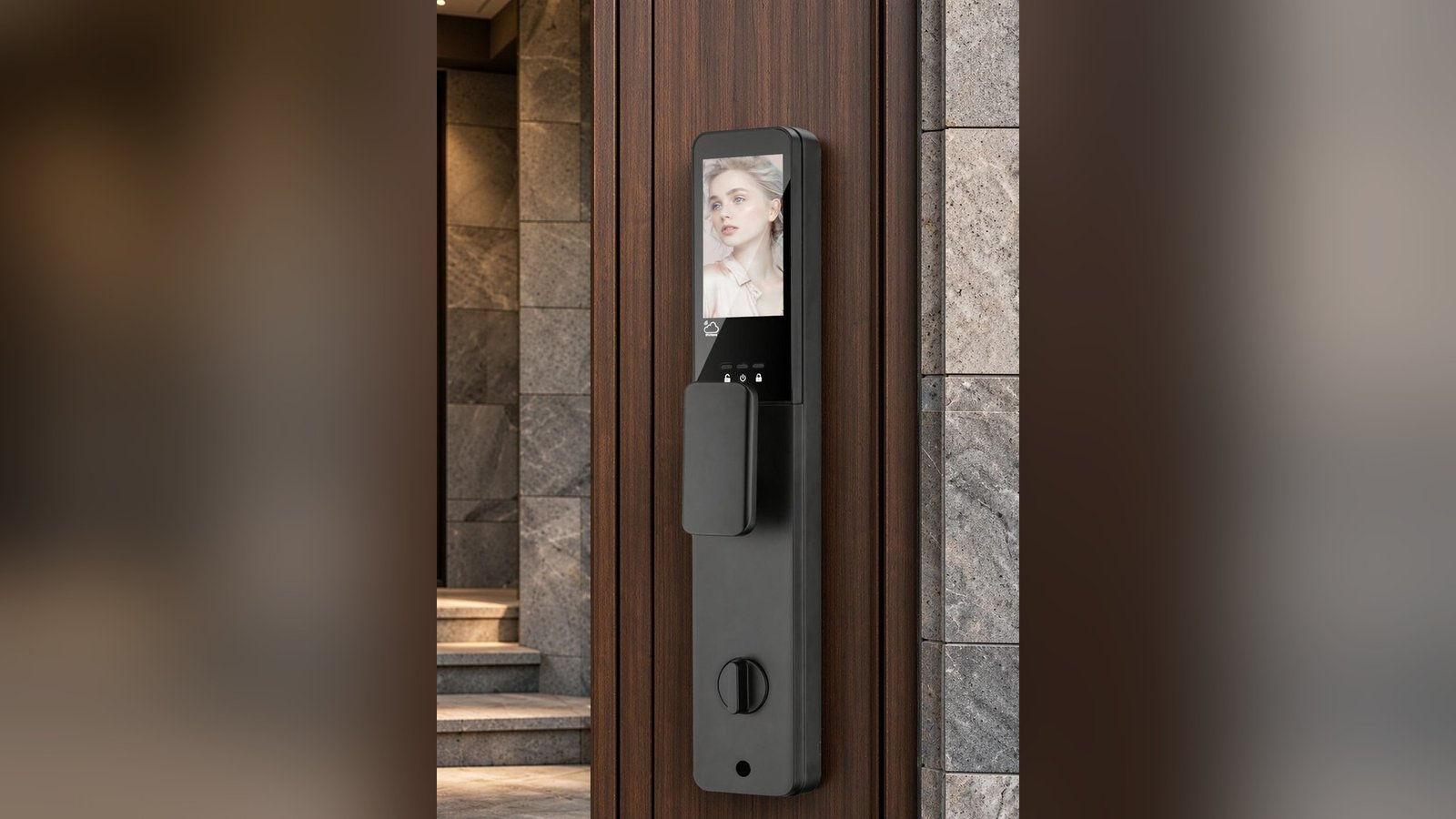
The guests text that they are twenty minutes away, and you are still in the supermarket — this is the moment key handoffs have always resolved badly, with a spare key under a flowerpot and a promise that “someone will be home.” Then the guests want to take a walk before dinner, you are not back yet, and the spare key is now travelling around the neighbourhood in someone’s coat pocket.
Weekend hosting asks the door to be generous and temporary at the same time: generous enough that visitors feel expected, temporary enough that the welcome ends when the weekend does. A guest access smart lock is simply the tool that makes those two requirements coexist, and doing it well is as much about social design as about hardware.
Why the spare key fails at hospitality
The spare key works for one visiting pattern — guests arriving while someone is home — and struggles with every other. It cannot be handed over in advance. It cannot be revoked at the end of the stay without asking for it back. It turns from welcome gift into household risk the moment a guest forgets it in a jacket, and it forces the awkward question of how much access a visitor should really have: does the spare key open the bedroom door, the side gate, the garage?
A guest credential fixes the social problem before the technical one. It exists for the visit, opens the door the visit needs, and disappears when the visit ends — no request for return, no forgotten key, no conversation about trust.
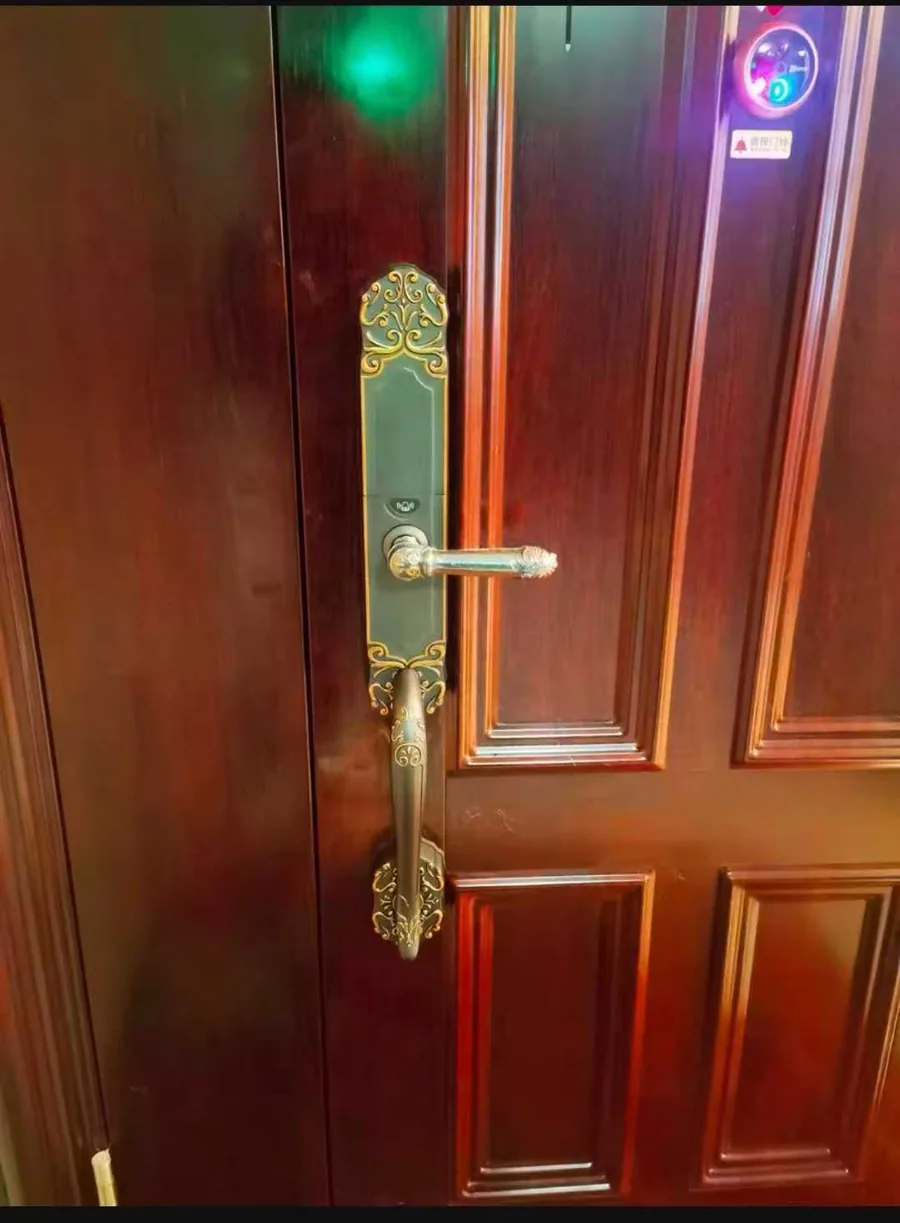
Designing the welcome before arrival
The best guest arrangements are set up hours before the doorbell — or before there is any doorbell, because the guests arrive while you are out. Three decisions cover it:
- Choose the credential to match the guest. A code works for almost everyone and can be sent in the same message as the address; a fingerprint suits repeat visitors and long stays; an IC card is the nearest thing to a key for someone who wants a physical object in their pocket. Our deadbolt models document all four — fingerprint, password, IC card and mechanical key — so the choice is a household preference rather than a constraint.
- Write the arrival instructions like a small recipe. Which door, where the reader or keypad sits, how the lock signals success, and what to do if it doesn’t. First-time visitors shouldn’t have to improvise at a doorstep; our guide to the entry ritual walks through what a calm first arrival includes.
- Decide the boundary in advance. Interior rooms, side gates and storage areas are separate decisions from the front door. The guest credential should open the front door and nothing else unless you explicitly intend otherwise.
When guests go out without you
The mid-stay departure is the classic hosting snag: a walk, a dinner, a wedding — and the guests need to come back to a locked house. With a spare key, that means either staying home, lending the key (and its access), or leaving the door open. With their own credential, it means nothing at all: the door stays locked, the guests’ code or fingerprint still works, and the household’s habits don’t change for the weekend.
This is where capacity stops being a spec-sheet abstraction. DS01 and DS05 deadbolts document capacity for up to 100 fingerprints, 100 passwords and 100 IC cards each, so a full house plus next month’s visitors all fit comfortably inside the lock’s user list — each as a separate credential that can be removed independently. The practical value isn’t the number; it’s that nobody ever needs to share.
Ending the stay stays clean
The visit ends and the welcome should end with it. Delete the guest code in the same session as the post-weekend tidy-up, remove the fingerprint enrolled for the long-stay guest, and return the loaned card to the drawer. This small habit keeps the lock’s user list truthful, and it means the answer to “who can open this door?” is always current. A seasonal review is enough for most households, but the tidy-up after hosting is the natural moment to do it.
Remember also what a credential does not include: a code gives entry to the front door, not a share of the household. House rules still apply to the rooms, gates and cupboards behind it. Guests understand this instinctively; it’s hosts who sometimes forget to define it.
A visitor note for the fridge door: a short sheet with the Wi-Fi name, the door instructions, and one line on how to lock up at night. Five minutes of writing replaces a dozen text messages across a weekend, and it tells guests exactly how much access they have.
Long-stay guests and repeated visits
A weekend visitor and a relative staying a month are different access problems. For longer stays, a fingerprint enrolled at the start of the visit — and removed at the end — gives the guest the same everyday ease as the household, with no code to remember or write down. For the regular visitor pattern across the year — the in-laws every school holiday, the friend who housesits in summer — the arrangement can be rebuilt in minutes each time, or left in place if the household prefers and the guest’s own habits justify it.
For a guest access smart lock, the deciding question is simple: does this person’s access need to outlive this visit? If yes, keep the credential and add it to the household’s written list; if no, remove it during the tidy-up. Both answers are fine; leaving the question unanswered is what creates clutter.
What hospitality does at scale
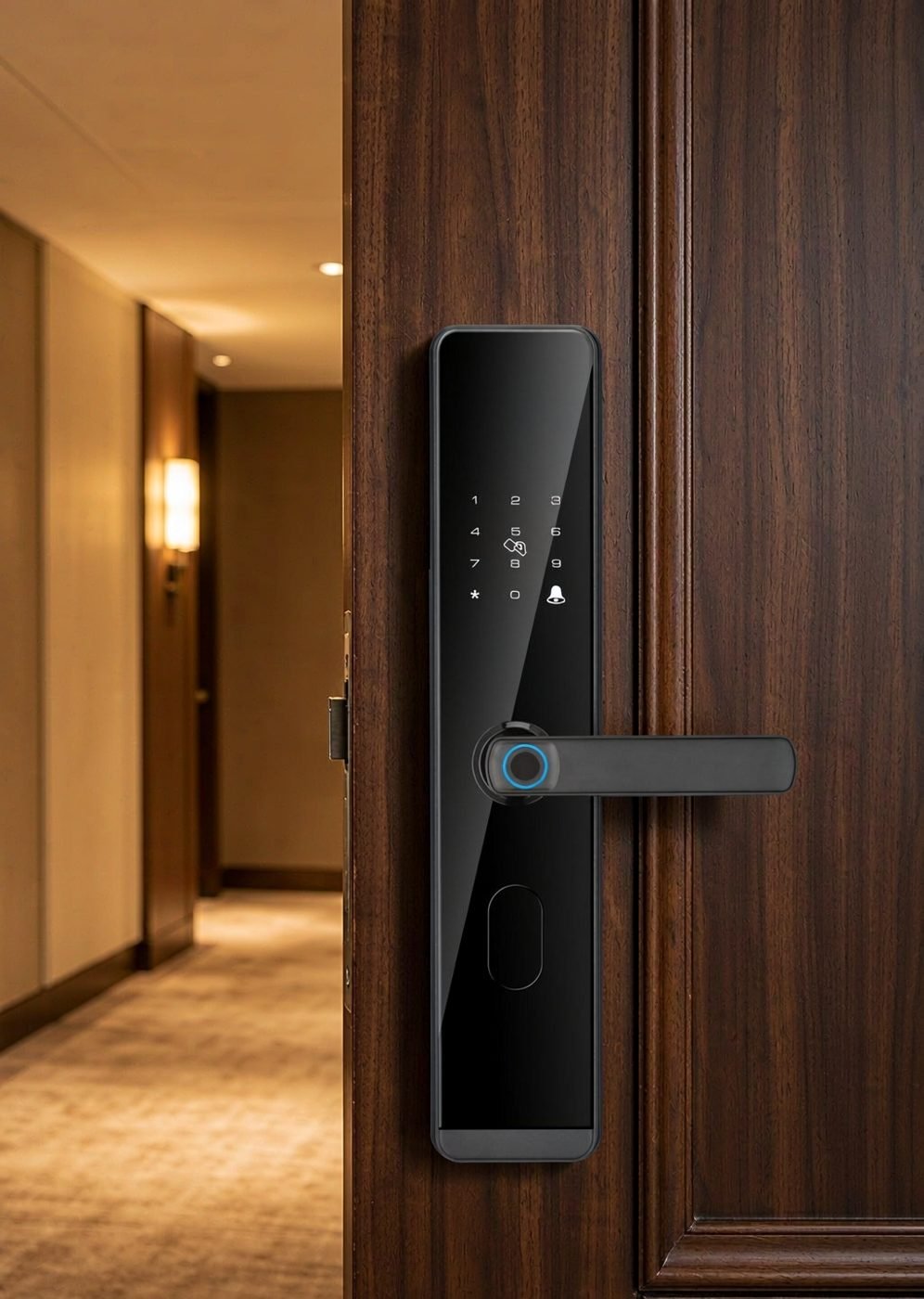
The hospitality industry runs exactly this problem in industrial quantities: hundreds of guests, each needing short-lived access to one room. The systems that fit there are the same in kind as a home arrangement — temporary credentials that expire at checkout, per-door access, and no physical key to return. Our DDZ17 room-door model documents temporary password support as part of its positioning for hotel rooms, serviced apartments and rental units, which is the capability a home host borrows conceptually when setting up weekend access. When a stay shifts from a home to a guest room, the balance between access and privacy shifts with it — a line we examine in guest room door privacy.
For property managers, that makes the guest-access question an operating requirement rather than a nicety: can credentials be issued per visit, and can they be removed cleanly at the end? The same checklist shapes the household version — which is why the managed-property guides on this site keep returning to it.
Common questions
What is the safest way to let guests in when we are away?
Give them their own temporary credential rather than any permanent method, and set it up before you leave. A code sent alongside the address, a card left for them, or a fingerprint enrolled at their last visit all keep the household’s own methods untouched — and all can be removed when they leave.
Can a code be limited to certain days?
Where the lock’s platform supports time-limited access, yes, and that is worth checking against your model’s documentation before the visit rather than after. If scheduled access matters for your hosting pattern, make it a requirement when you buy the lock.
Should guests get a fingerprint or a code?
Repeat guests and longer stays suit a fingerprint — nothing to memorize, nothing to lose. One-off weekend guests suit a code, which travels in a message and can be deleted later the same day. Either way, a guest access smart lock is only as clean as its exit routine — treat removal as part of the goodbye ritual, not an optional extra.
Planning guest access for homes or managed properties?
CaremLock supplies smart lock ranges with documented credential capacities and temporary-access support to distributors, installers and project buyers. Tell us your hosting or rental scenario — we will match the model and the access approach from the documentation.
Or explore our DDZ17 room-door model and contact the team.