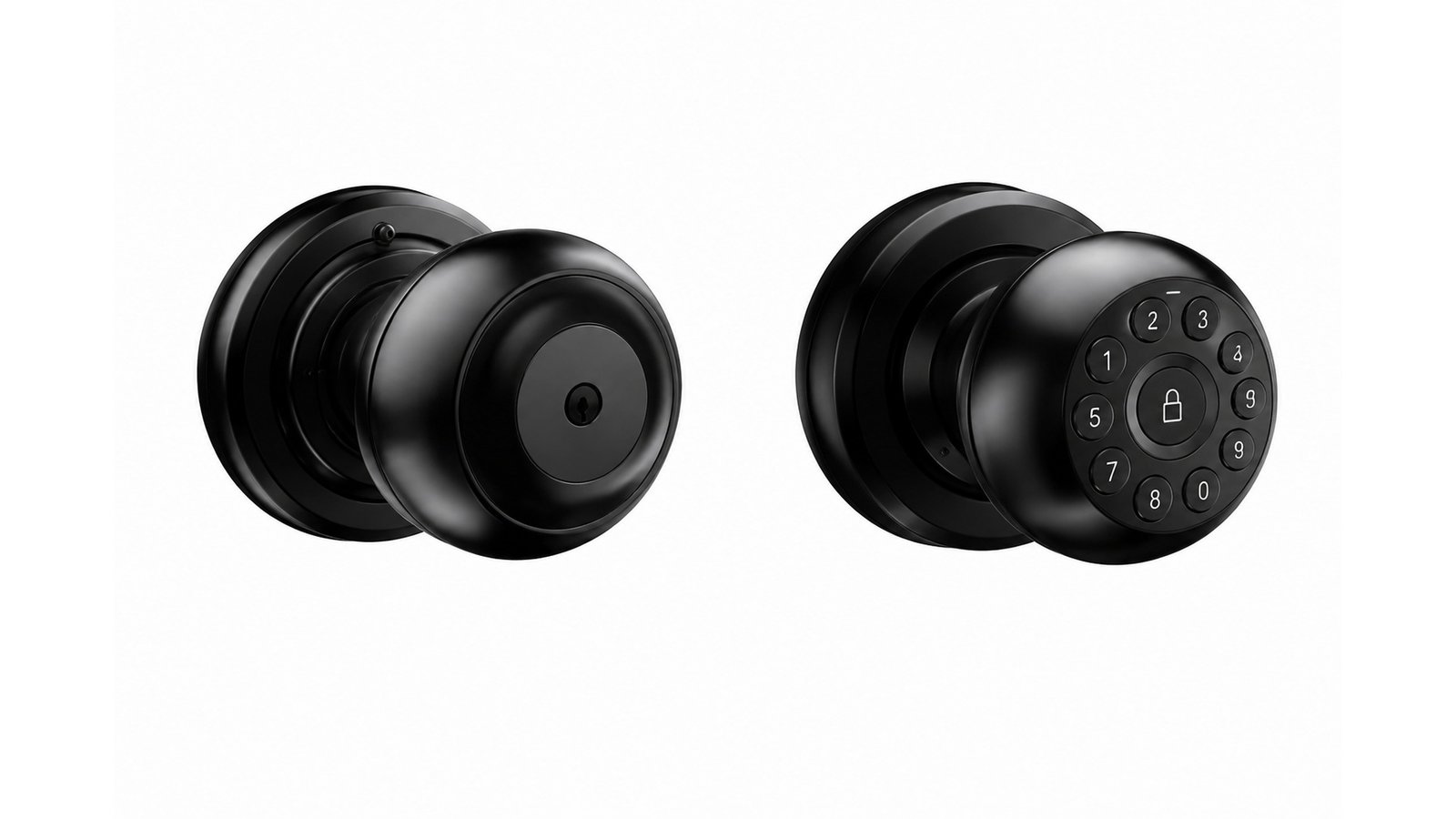
An interior door is not a smaller front door. The front door defends a boundary between a household and the world; a bedroom or guest room door manages privacy inside a home that shares a kitchen, a hallway and a bathroom schedule. Treating the two as the same problem produces locks nobody wants.
That difference has practical consequences: who must always be able to get in, what a closed door should mean at night, and how someone who stays for three nights gets access without joining the family’s credential list forever.
What interior access is actually for
Front-door hardware optimizes for keeping the wrong people out. Inside-door hardware optimizes for something subtler: giving the right people privacy without creating rooms nobody can enter when it matters. A guest room lock is not there to defeat a burglar; it is there to let a visitor close a door that stays closed.
Four needs drive the design. Privacy, so a room can be truly private. Routine, so the nightly and morning flows are not disrupted. Temporary users, because interior rooms host people who are not household members. And low ceremony, because an inside door is opened dozens of times a day and should never feel like a checkpoint.
Privacy with a household rule attached
Any lock creates a private space, and every private space needs a rule about emergencies. Who may enter if something goes wrong, how they enter, and where the override is kept — those three answers should exist before the hardware is chosen, not after. The rule can be as simple as “the household adults hold a mechanical key, and it lives in the entry cabinet.”
The order matters. Decide the rule, choose the lock that fits the rule, then teach the rule to everyone it touches. A lock installed before the household has had that conversation tends to get unofficially disabled — propped latches, taped bolt holes — which is worse than no lock at all.
Guests and temporary users
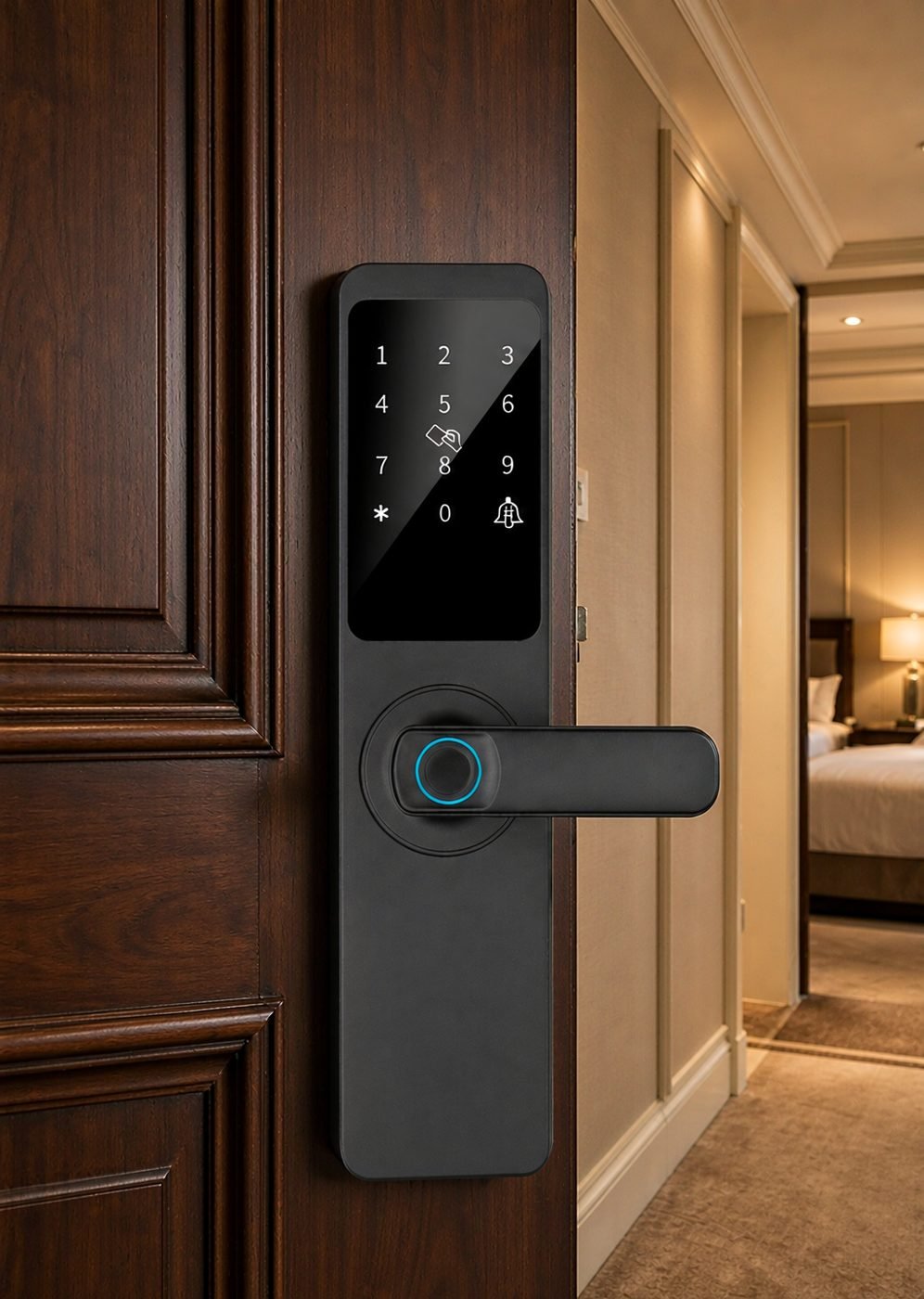
Interior rooms are exactly where temporary credentials earn their keep. A guest should arrive to a working code and leave without a key exchange. The DDZ17 room door smart lock documents this capability directly: temporary password support, a 300-user capacity and seven access methods, positioned for residential rooms, hotel rooms and serviced apartments.
The pattern to copy is simple. Issue a code for the stay, not for the relationship. Delete it at checkout or departure. If the platform supports time-limited access, use it, so the credential expires even if everyone forgets. The guest gets privacy and convenience; the household keeps a list that stays accurate without effort.
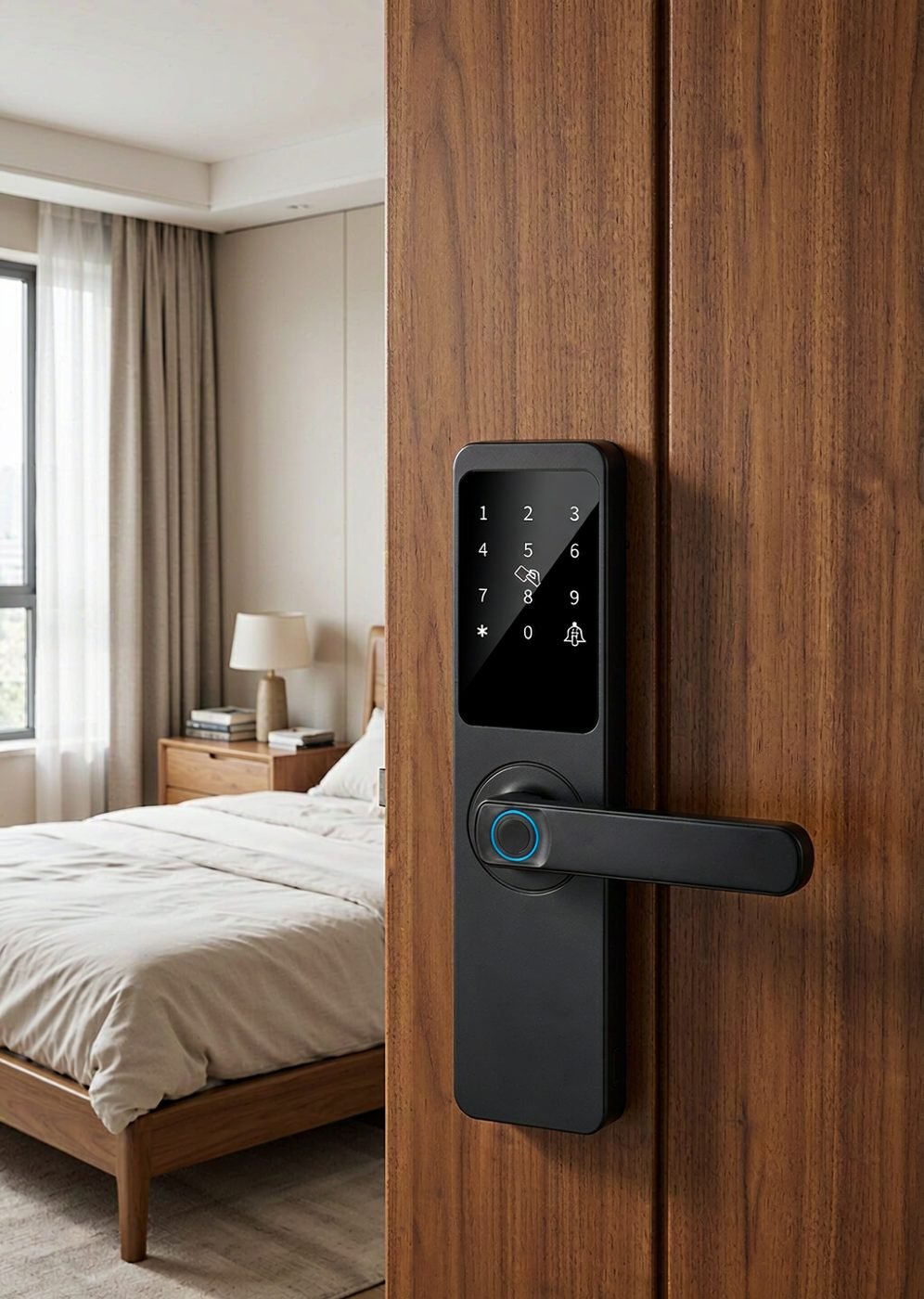
Where a room-door lock fits — and where it doesn’t
- Guest rooms. The clearest fit: visitors get privacy, the household keeps a manageable list, and no key changes hands at midnight.
- Home offices and studios. Rooms holding documents, equipment or simply work that should not be interrupted benefit from a door that can be closed on purpose.
- Multi-generational homes. An adult family member’s suite with its own entry method supports independence without friction.
- Shared apartments and rental rooms. Each room gets its own access logic while the common door stays under building or landlord management.
- Where it does not fit: doors that must never impede a fast exit, and rooms in care settings where the priority is unrestricted access. There, a latch or an unlocked door is the right answer.
For property managers weighing where room-level hardware belongs across a portfolio, the property-type guide maps the decision the same way.
Light, sound and the night
Interior locks live their hardest hours after dark. A keypad that lights when touched, a confirmation that is audible but not loud, and a mechanism that does not announce itself through a quiet hallway — these are the details guests notice and never mention.
When comparing models, put those questions to the documentation: how the lock signals acceptance, how brightly it lights, whether spoken prompts are available and in which languages. Voice prompts are a documented feature on several CaremLock models, with Chinese, English, Spanish and Portuguese listed for the deadbolt range — an underrated item for households where a guest and the resident do not share a first language.
Choosing for a rental or homestay
Turnover is the design constraint in short-stay properties. Every change of guest needs an access change, and the system should make that a thirty-second task rather than a visit. Temporary passwords and per-user credentials turn checkout into a deletion, and a documented 300-user capacity means the list has room for guests, cleaners and maintenance without anyone sharing.
Hosts who want the fuller operational picture — what a room-door lock changes day to day in a serviced apartment — can follow the story in a room-door deployment, told from the hallway. The maintenance logic also follows the front door’s lesson: keep the backup path known.
Questions guests and hosts ask
Is a lock on an interior door a safety problem?
The hardware question is simpler than the household question. Any interior lock should sit inside a clear rule about emergency entry — who holds the override, where it is kept, and who knows about it. Agree the rule first, and the lock serves privacy instead of creating a sealed room.
Can a guest code expire when the stay ends?
Yes, where the model documents temporary passwords, as the DDZ17 does. Use a temporary credential for the stay and delete it at departure; where the platform supports time-limited access, the expiry happens even if nobody remembers to act. Guests should never carry access into a season they are not part of.
Do room-door locks need the same battery care as a front door?
Maintenance depends on the model’s power design, and for models where those values are not published — as with DDZ17 — the documentation is available on request. Whatever the model, the habit is universal: know the backup path, keep it accessible, and review it when the seasons change. The routines in our battery guide apply to any door in the house.
Specifying room-level access for a property?
CaremLock supplies room-door and interior-access ranges with documented temporary-password support for hosts, landlords and project buyers. Tell us your property type and turnover pattern.
Or explore the DDZ17 room-door model and contact the team.