Every entrance upgrade starts with a list longer than the budget: new lock, new handles, maybe hinges, maybe a repaint, possibly the door itself. When the money covers everything, sequencing is easy. When it covers half — which is almost always — the order you spend in decides whether the entrance gets better as a system or just newer in patches.
Here’s a build order that holds up across most homes and light-commercial doors: what to replace first, what genuinely can wait, and the two items that should never be last.
The order, explained
| Priority | What | Why here |
|---|---|---|
| 1 | Door mechanics: frame repair, hinge tightness, alignment | Everything downstream — every lock, every handle — operates through this layer. A wandering door makes new hardware feel broken. |
| 2 | The lock (and its access model) | The daily interaction, and the one upgrade that keeps paying: keyless access changes the routine, security posture and guest handling at once. |
| 3 | Handle and hardware finish as one set | Sold as a group, they read as one design decision. Split across two purchases, they read as two. |
| 4 | Weather sealing and the threshold | Cheap, invisible, and the difference between an entrance that ages well and one that lets water write the maintenance log. |
| 5 | Lighting and appearance (paint, trim, house number) | The visible polish — best done after the mechanical work has stopped putting holes in things. |
Why the door comes before the lock
It’s the least intuitive item and the most important. A door that sticks, drags or misaligns isn’t merely annoying — it’s a load every lock has to fight. Mechanical locks mask it (the hand adapts); electronic locks surface it (the mechanism pushes with fixed force against misaligned strikes, as we covered in the alignment guide). Spending on a new lock over an unrepaired door means paying for an upgrade you’ll experience as friction.
The survey that precedes any purchase should therefore start at the door, not the product: swing, latch line, hinge play, and the five measurements in our compatibility guide. That data routes everything after — including which lock family is even a candidate.

The lock decision is the access decision
When the lock’s turn comes, buy the access model, not the metal. Three questions sort the field faster than any feature comparison:
What the lock is really for
- Daily routine. Who enters how, and with what? Households land on different answers — comfort and per-person methods for families; robustness and simple credentials for rentals; quiet standardisation for offices. On our deadbolt pair, that’s the fingerprint/password/card/key mix with capacity for 100 of each; on the fully automatic DDL1, a wider method set including palm vein and face for homes that want the entry itself to do the work.
- Door fit, per the survey. 35–55 mm thickness for our DDL1 and DS01/DS05 deadbolt documentation; documented mortise standards for aluminum doors (LK0161’s standard 3585); purpose-built glass-door designs (A20, for framed glass) — the candidates were decided by the survey’s numbers, not by taste.
- The backup layer. Every serious upgrade keeps a mechanical override in the system. If the plan for it is vague in the quotation, the plan is what needs fixing before the hardware is chosen.
What can genuinely wait
Cheerfully deferrable, in most cases: the door itself (unless structurally failing), the repaint, the upgraded house number, and the smart-doorbell-style extras. These are real improvements, but none of them change how the entrance works, and several of them are easier and cheaper after the mechanical phase is dust-free.
Two things should never wait, however: the alignment work (because it defines whether anything else is allowed to function) and the backup access path (because an entrance upgrade is exactly when a household loses its old spare-key habits — and becomes the moment those habits need replacing, not the moment they need trusting. Our recovery guide covers the plan side.).
The two-receipt rule: whatever the sequence, buy the entrance in no more than two receipts — mechanics hardware in one, entry hardware set in the other. Households that spread the upgrade across six small purchases spend more money, own a patchwork, and still finish with the door that fights. The budget discipline is the sequence; the sequence is the design.
For installers and specifiers
This order is also the sales order that works. An installer who surveys first, quotes the door-mechanics line separately, then prices the entry hardware against the survey’s actual measurements sells upgrades that stay sold — because the customer experiences the result in that same order: the door finally closes right, and then everything else is a pleasure. Specifiers writing it for projects get the same result by putting the mechanics on the main contractor’s scope and the entry hardware on their own, rather than mingling them into a change order nobody owns.
Common questions
Can I upgrade the lock before repairing the door?
You can, but the new lock will be graded on the old door’s behavior. If the survey shows more than minor misalignment, fix the mechanics first. If the door’s mechanics are sound, the order collapses — the lock can go first, and often should, because it’s the upgrade with the daily payoff.
Should I replace the handle when I replace the lock?
If the finish pairing matters to the design (and it usually does), yes — bought together as one set, same finish family. If the existing handle is in good condition and matching, keeping it is a legitimate budget move; just verify it works with the new lock’s mechanism rather than assuming, which is a question for the model documentation and the installer’s hands, not for photos.
How do I phase this across years?
Mechanics now; lock when the budget allows (the door being healthy means no rush); the cosmetic layer whenever the household is ready. What shouldn’t stretch across years: any deferred maintenance on the frame or hinges, because those degrade with use — a “next year” alignment problem can become a “new door” problem on a long enough timeline.
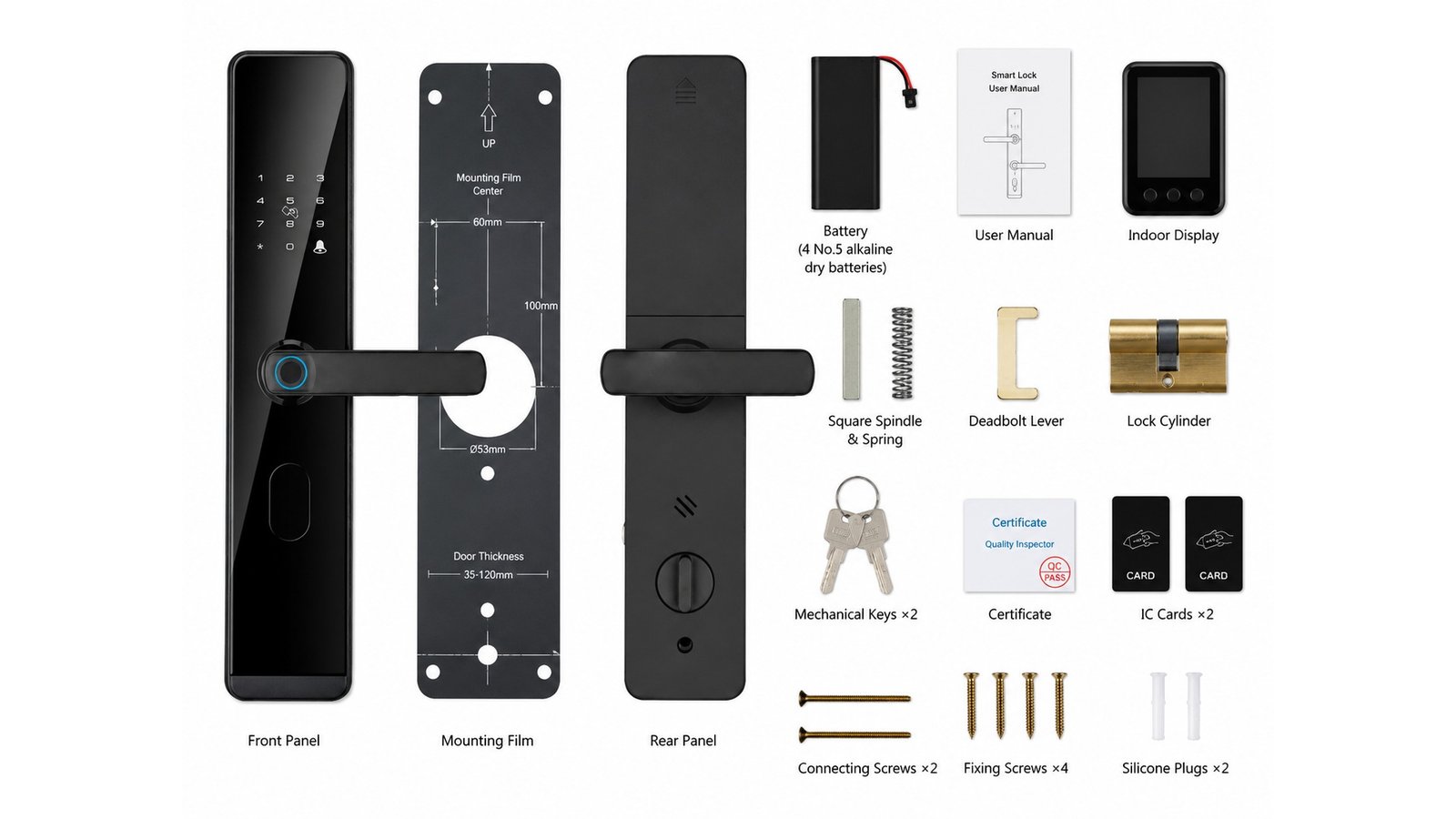
Planning entrance upgrades for homes or projects?
Tell us your door types and budget shape. CaremLock supplies documented lock ranges across deadbolt, aluminum, glass and room-door families — so the sequence above can be priced against real fit statements instead of guesses.
Or review the product range and contact the team.