Freight surprises are carton surprises. A container quote that moves between quotation and invoice rarely moves because of the product; it moves because of packing — how many pieces go in a carton, what the carton weighs, and how the cartons stack. The last stretch of a landed cost hides in data that is easy to request and easy to forget to request.
This article works through the numbers a bulk buyer actually negotiates: what a documented carton contains, how weight and volume pull freight rates in different directions, and what to verify when the truck arrives. The arithmetic stays inside CaremLock’s documented packing figures for the DS deadbolt line; the freight logic applies to any supplier you compare.
The mathematics of one carton
Everything starts with one documented data point: on the CaremLock DS deadbolt line, a carton holds 20 pieces. The two documented variants carry unit weights in the 0.9 kg class — 0.91 kg and 0.83 kg — with cartons documented at 18.4 kg and 17.0 kg gross.
Multiply it out and the shipment takes shape. Twenty units at the documented unit weights come to roughly 16.6 kg and 18.2 kg of product, against documented gross carton weights of 17.0 kg and 18.4 kg — which puts the carton and packing materials in the range of a few hundred grams per box. In practice that is a one-person box under many manual-handling rules, and still a box to stack and strap rather than hand-carry up a site stair. Local worker-protection thresholds differ, and the figure your receiving team needs is gross weight — the number that lands on the scale.
One carton matters because it is the unit everyone counts in. The factory packs by carton, the forwarder consolidates cartons and pallets, the receiving team counts cartons, and the installation crew breaks cartons into pieces. An order quoted as “2,000 locks” has not been planned yet. An order described as 2,000 pieces, 100 cartons, with gross weight per carton stated, has been.
Weight versus volume: what freight actually bills
Freight providers price on one of two measures, and neither is the unit count. Sea freight typically bills by volume; air and courier services typically bill by chargeable weight, the greater of actual weight and a volumetric figure calculated from dimensions. A light, bulky carton can cost more than its scale weight suggests; a dense one travels more cheaply per kilo than its size implies.
That is why “how much does a lock weigh?” is the wrong first question, and “what are the carton dimensions, and how many cartons per pallet?” is the right one. CaremLock documents 20 pieces per carton and gross weights of 18.4 kg and 17.0 kg on the DS line; carton dimensions belong on the same packing list, alongside net weight and cartons per pallet. With both weight and size in hand, your forwarder quotes from data instead of assumptions, and competing suppliers can be compared on identical terms.
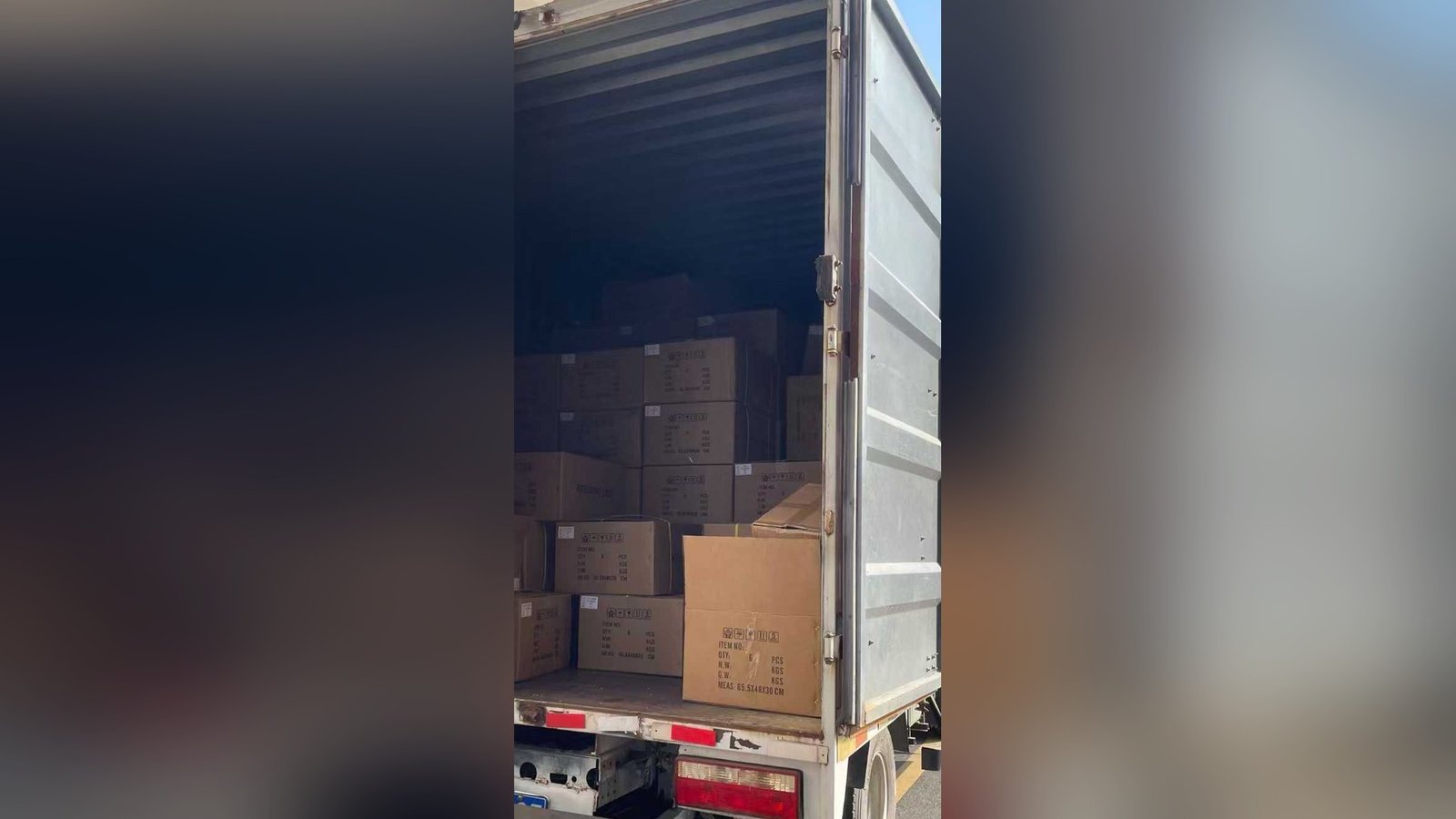
Palletizing and container loading
Once cartons leave the packing bench, the next decisions belong to the stack. Three rules cover most of it, and each carries a question for your supplier.
- Stack height and compression. Cartons carry weight best when stacked squarely in columns rather than interlocked, and board softens as humidity rises. Ask what stack height the supply is packed to, and keep lower layers matched to it — the bottom carton on a tall pallet is the one doing the work.
- Moisture discipline. Moisture is a packing problem, not a product problem. Carton board softens, labels lift and printed documents warp when a container crosses climate zones and sweats, so desiccants and moisture-barrier liners protect the paperwork as much as the hardware. If a shipment crosses several climates, ask how the load is protected.
- Mixed-SKU and multi-phase loads. A mixed pallet can save freight and cost receiving time, because the first carton the installer needs is often at the bottom. Keep phases and models on separate, clearly labeled pallets — and when an order is custom branded or packed to a client’s label specification, that packing check belongs in the QC conversation, as our notes on custom branded order QC describe.
Loading is the last chance to catch stack problems cheaply. Cartons that shift in transit arrive crushed at the bottom of the load; strapped, palletized loads arrive square. If you are comparing suppliers, ask whether the factory ships loose cartons or palletized units, and get the answer written into the packing list.
Receiving day: what the dock should check
The dock is where packing data meets physical reality. The check below takes minutes and protects the claim conversation that may follow. Confirm the specifics — especially claim windows — with your freight partner, because they vary by carrier and contract.
Dock-side checks for a carton shipment
- Count cartons against the packing list before you sign. Carton counts are quick to verify and match the freight documents; piece counts can wait until the goods are inside, under better light.
- Scan the outside of the load for crushed corners, water staining, oil marks and re-taped cartons. These are visible fingerprints of rough handling — photograph them before the pallet is moved.
- Photograph damage before opening anything. Photos of the sealed box, the label and the full pallet support a claim far better than photos taken after unpacking.
- Note shortages and visible damage on the delivery receipt. A clean signature next to a dented pallet is hard to undo later.
- Check for moisture — damp board, soft cartons, misted inner liners — and record it the same way as physical damage. Damp claims are slow claims; early documentation makes them hold.
- Confirm the claim window with your freight partner and put it somewhere your receiving team can see it. Claim processes reward fast documentation and punish late discovery.
- Store remaining cartons flat and off the floor. They hold their shape on pallets — and the last units of a project order reach their doors in that condition.
On new-build projects, this receiving discipline feeds straight into handover. The carton counts and model lists verified at the dock become the handover inventory, and units still in sealed cartons are the cleanest to allocate per floor or per apartment. Our notes on new-build handover locks cover the scheduling side of that work.
Building the quote on packing data
Put the pieces together and a bulk quote becomes checkable: carton count from pieces divided by pieces per carton; shipment weight from gross weight per carton multiplied by carton count; packing volume and pallet count from the packing list and loading plan. When a quote arrives without those inputs visible, the right response is a request for data, not a signature.
The comparison test: when two suppliers quote similar prices for the same quantity, compare their packing assumptions first. A quote built on 20 units per carton, a documented 18.4 kg box and a palletized load is not the same shipment as one built on thinner cartons, hand stacking or a hypothetical pack size. Packing data is the cheapest thing to ask for and the most expensive thing to leave out.
Planning a bulk order and want the packing data before you commit?
CaremLock documents unit weights, pieces per carton and gross carton weights for the DS deadbolt line, and our team can supply the packing details your forwarder needs. Share the destination and quantity, and the quote starts from documented packing data rather than assumptions.
Or review the product range and contact the team.