The words “fully automatic” and “semi-automatic” read like a feature comparison. They are closer to a design philosophy: how the bolt gets out of the way, and how much of that motion the person at the door performs.
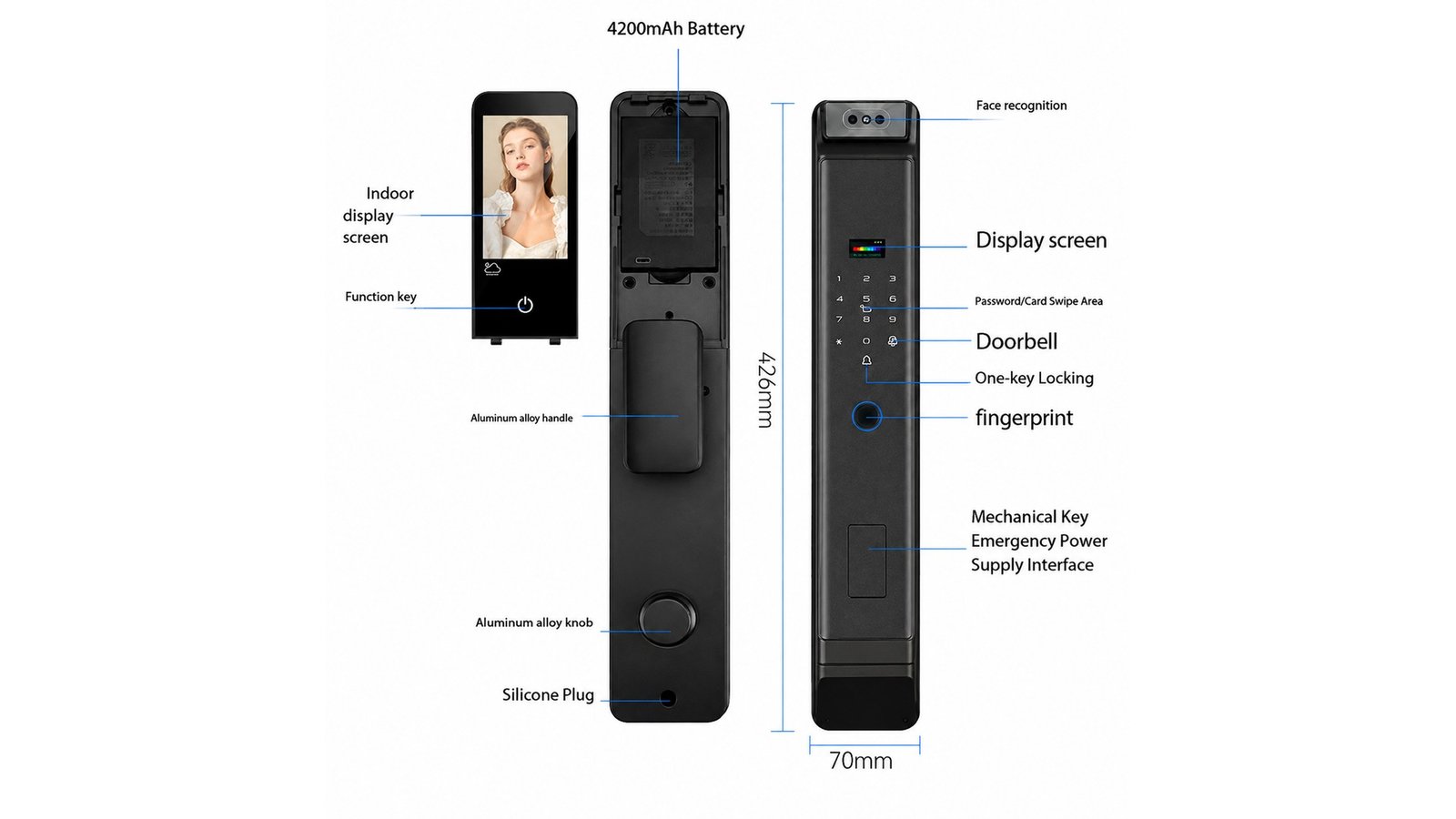
Both classes appear in our range — the DDL1 is a fully automatic lock, while the DDA2, DDA3 and DDZ17 sit in the semi-automatic class. Understanding what each class asks of its user makes the fully automatic vs semi automatic smart lock decision a question about the door and the people, not about a ranking that does not exist.
Two philosophies of one motion
A fully automatic lock completes the locking cycle itself. The user presents a credential — a face, a palm, a fingerprint, a code — and the motor handles the bolt; the door can be pushed open and the lock secures itself afterward. The design goal is to remove every motion except arrival.
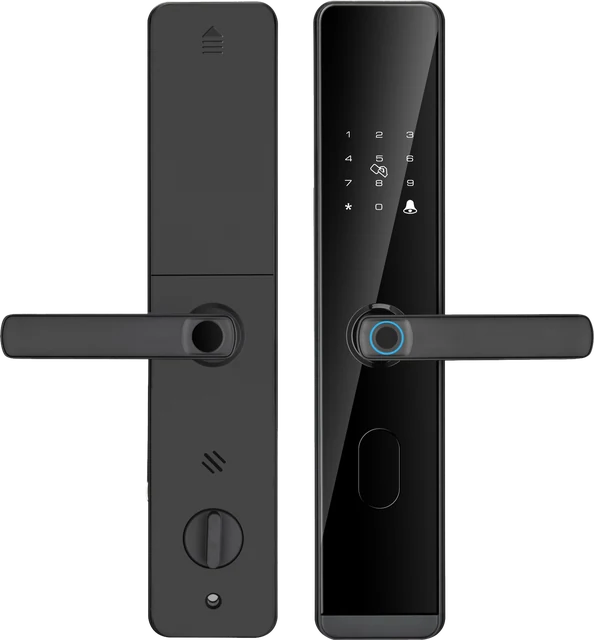
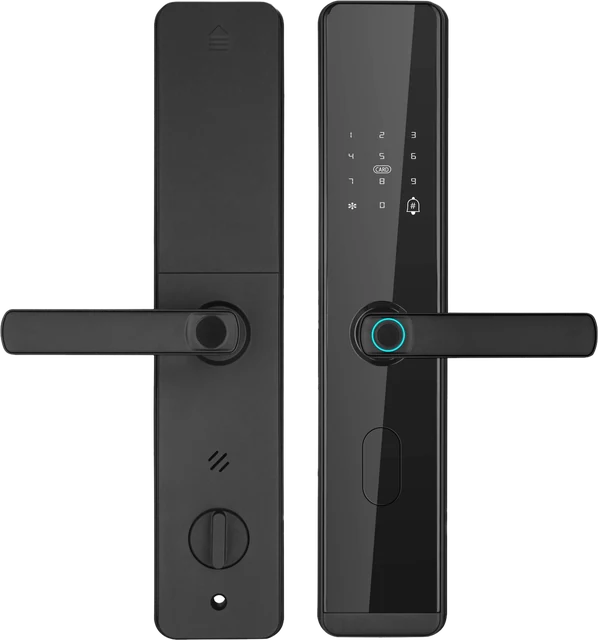
A semi-automatic lock splits the work differently. Electronics release the mechanism, and the user completes the motion by hand. The documented definition of “one-grip” on the DDA2 is exactly that: a grip-and-pull action, one hand, one movement. The lock does the deciding; the person does the pulling.
What each class asks of the user
- Fully automatic: one gesture, minimal strength, nothing to pull. The door meets people who arrive with full hands, tired arms or limited grip strength.
- Semi-automatic: a deliberate grip-and-pull. It asks a little more of the hand and returns a little more in feedback — you feel the bolt release, which many users find reassuring.
- Households with mixed abilities: the fully automatic class earns its place when the door is used by people who cannot spare a firm pull.
The question to ask is not which class is more advanced, but who uses the door a hundred times a day. For that person, the difference between “push” and “grip and pull” is not philosophical at all.
Where the door gets a vote
Mechanism classes flatter different doors. A heavy, well-aligned door with a gentle closer is kind to both. A door that has begun to sag — dragging on the frame, straining the latch — taxes any motor and any pull. Checking alignment before choosing a class is not optional homework; it is the difference between a mechanism that lasts and a support ticket in waiting.
If a door catches or needs a shoulder to close, fix the door first. The habits that keep entry smooth are the same across classes, and we collected the diagnostics in dealing with door sag before it reaches the lock.
Power, by design
The two classes concentrate power differently. The semi-automatic DDA2 documents two sets of 4×AA batteries with dual-power management and anti-reverse charging protection — a design that carries generous reserves for the smaller electrical job. The fully automatic DDL1 documents a 4200mAh lithium battery with Type-C fast charging and a working temperature range of −25℃ to 70℃ — capacity sized around the motor that does the work.
The practical lesson is the same on both sides: know how the lock is fed, know how it warns you, and keep the backup path — a mechanical key or a second entry method — somewhere deliberate. The morning the power runs out is not the morning to discover where the key is.
Matching class to place and people
- Family home: either class works; choose fully automatic where hands are often full or grip strength is limited, semi-automatic where a deliberate pull suits the routine.
- Apartment and project doors: the DDL1 is positioned for residential homes, apartments and project use, which is where its fully automatic entry pattern shows best.
- Hotel and room doors: the DDZ17 is a semi-automatic room-door model documented for residents, guests and serviced apartments, where temporary users outnumber permanent ones.
- Distributor catalogs: carrying both classes lets a range answer both stories — effort removed, or motion kept familiar — from the same semi-automatic range and fully automatic line.
For teams narrowing the semi-automatic side of the catalog, the selection logic is collected in how to choose a semi-automatic smart lock.
Decisions to settle before the order
Five questions that decide the class
- Who uses the door daily? Their hands, their strength, their patience.
- How often do they arrive carrying something? Bags, children, groceries, tools.
- What condition is the door in? Alignment and weight forgive less than catalogs suggest.
- What is the power routine? Charging cycles or replaceable batteries, matched to who will actually do it.
- Does the platform need to change? Fully automatic and semi-automatic models differ in their documented platforms, so class and platform are one decision.
Questions before choosing a class, asked by buyers
Is fully automatic always the better lock?
No. It is the class that asks the least at the door and concentrates complexity inside the mechanism. The semi-automatic class asks for a grip-and-pull and returns tactile certainty; the DDA2 answers that with documented dual-power management. Fit decides, not hierarchy.
Do semi-automatic locks open one-handed?
The DDA2 documents “one-grip” as grip-and-pull — one hand can complete it. A fully automatic lock reduces the ask further, to a push. Match the motion to the user, and let the rest of the specification follow.
Which class suits rental apartments?
Both appear in our range, and both appear in rental use. The DDL1 is positioned for homes, apartments and projects; the DDZ17 semi-automatic covers room doors in residential, hotel and serviced apartment settings. The deciding factors are the door, the platform and the turnover rhythm — the class follows from those answers.
Building a range around both mechanism classes?
CaremLock supplies documented fully automatic and semi-automatic ranges, each with its own entry pattern and platform options. Tell us which doors and users your market serves.
Or explore the semi-automatic range and contact the team.