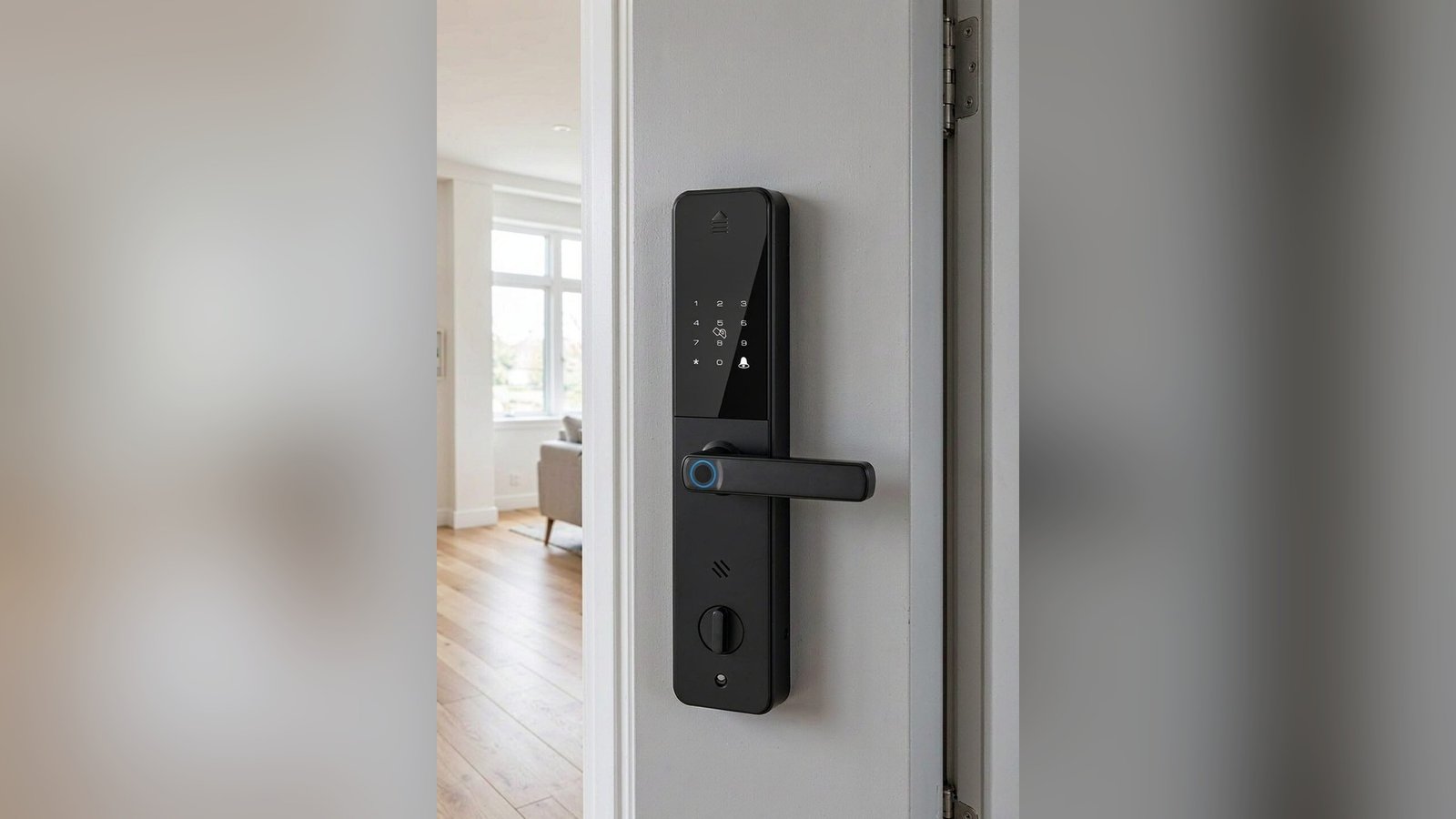
Sunday evening, and the smart lock you bought is sitting in its box on the kitchen table. The problem is the door: it belongs to someone else’s building, and the lease has opinions about it. This is the moment where most rental smart-lock stories go wrong — not because the technology fails, but because nobody settled the arrangement first.
There is no universal rulebook for renters and hardware. Renter smart lock rules are written in your own lease and in the conversation you have with your landlord, and both are easier to handle before anything is unscrewed. What follows is how to prepare, what to propose, and how to leave the door exactly as you found it.
Read the lease before you read the manual
Most residential leases regulate alterations, and a replaced lock counts as one in many agreements. Sometimes the clause is explicit; sometimes the topic is covered by language about fixtures, keys, or changes to the property. Because renter smart lock rules live in the agreement rather than in any universal standard, the starting point is the document itself — read for anything that touches doors, keys or hardware. If the lease says no alterations without consent, then consent is the project’s first deliverable — asked for in writing, and kept.
This is practical guidance, not legal advice, and agreements vary. Where the wording is genuinely unclear, the safe move is also the simplest one: ask the landlord directly, in writing, and describe what you are proposing.
What landlords actually worry about
Landlords rarely object to the idea of a smart lock in principle. They object to specific risks, and each one has a workable answer:
- “I won’t be able to enter the unit.” A mechanical key stays available on the deadbolt models, and access can be arranged on request. A landlord who knows how to get in stops objecting.
- “The door will be damaged.” This is why fit matters. Locks documented for the door’s thickness and preparation — 35 to 55 mm, standard door preparations — avoid the improvisation that scars doors.
- “I’ll be handed back a different door.” Restoration answers this: keep the original lock and hardware, and reinstall it at move-out.
- “Who is liable when it fails?” Agree in advance who services the device and who covers what. A short written exchange settles more than an argument later.
The reversibility checklist
What to confirm before choosing hardware for a rental door
- The lock fits the door as documented — thickness, preparation, and lock type — with no new holes required.
- The original lock, screws and hardware go into a labeled box the day the new lock is installed.
- Photographs of the original installation are taken from several angles before removal.
- The lock’s daily method does not depend on the landlord installing an app or learning a system.
- A mechanical key remains available as the backup layer for everyone who needs it.
- The installation is something you can reverse in an evening, with the same tools that removed it.
Point one is where a good model does the arguing for you. The DS05 deadbolt lock is documented for wood and metal doors from 35 to 55 mm thick, and its sibling DS01 covers standard and compatible door preparations — the kind of fit statement that turns “can I install this?” from a guess into a document. If the existing lock sits inside those limits, the conversation with a landlord starts from fit, not from hope. The wider logistics are covered in our guide to retrofitting an older door.
Getting agreement in writing
The proposal that works is short and specific. Write to the landlord with four things: what you want to install and why; the documented fit for the existing door; how and when the original hardware will be reinstalled; and how they will retain access in the meantime. Offer to share the user manual, and name the person responsible for support — you.
Two details make such messages land well. First, lead with reversibility rather than with features; the landlord is buying “no lasting change,” not fingerprint convenience. Second, keep everything in one thread, so that if the arrangement is ever questioned, the agreement is one search away rather than a memory of a phone call.
Points renters forget
- The building’s front door may not be yours to touch. If the property has a shared main entrance, that door belongs to the building’s access system, managed by the owner or the building. Your unit door is the realistic scope — and even there, the lease has the final word. We wrote more about this in access at shared building entrances.
- Batteries, not wiring. A battery-powered deadbolt needs no electrical work, which keeps the change reversible — the DS models run on 6 V from four AA batteries — while hardwired alternatives would drag an electrician into the conversation.
- Your roommates. If you share the lease, agree before the landlord conversation, not after. One proposal with everyone’s support is a different document from one tenant’s request.
- The exit plan. Decide on day one what happens when you move out: who removes the lock, who reinstalls the original, and where the box of original hardware has been kept.
Before buying any model, it is worth a short check that the lock suits the door’s actual preparation as well as its thickness. Our overview of smart lock door compatibility walks through what to measure and what to photograph, so the purchase does not arrive with surprises.

If the answer is no
Sometimes renter smart lock rules end in a no. Respect it, and put the energy somewhere useful. Some renters focus improvements on the parts of the home they can change — interior doors, lighting, a better entry mat and lamp — and return to the proposal at renewal with a track record of leaving the property better than they found it. What not to do is install the lock quietly and hope. An unapproved change turns a small, reasonable request into a lease problem, which is a bad trade for a door.
Move-out day: restore and document
Reinstall the original hardware, remove your credentials from the smart lock — not just the app on your phone — and return any keys you were issued. Photograph the restored installation and send the landlord a short confirmation with the date. Restoration is the promise that made the whole arrangement possible; it deserves to be finished properly, with evidence.
Rental door questions we hear
Can a landlord say no to a smart lock?
In most lease frameworks the door hardware is part of the property, so the landlord’s consent is the gate. That is why the strongest proposals arrive before purchase, with fit data and a restoration plan attached — the landlord is deciding about risk, and risk is what the proposal removes.
What if the building has a shared front entrance?
Shared entrances are controlled by the building, not by individual units, so the realistic project is the door of your own unit. Where the shared entrance is the concern, the topic for the building is still the same one this article describes: an access system with clear rules and clean removal of old credentials.
Does the landlord need a copy of the app or a code?
What the landlord needs is a reliable way in. Many arrangements provide a code of their own or keep the mechanical key as the access layer, and the specific method is worth writing into the agreement. Deciding that detail up front is what keeps a maintenance visit from becoming an emergency.
Managing rental properties or multi-family access?
CaremLock supplies deadbolt and room-door smart locks to distributors, installers and project buyers working with rental portfolios and apartment buildings. Tell us the door standards in your market — we will match the documented fit to the properties you manage.
Or explore the deadbolt range and contact the team.