Somebody arrives at the door, grips the handle and pulls. In two seconds the hand has made three judgments: is this door heavy or light, is this entrance cared for or neglected, and is walking in going to be pleasant or awkward. None of it is conscious. All of it is caused by a piece of hardware most design conversations skip.
The handle is the entrance’s handshake — the first physical contact between a visitor and a building. Treating door handle design as an entrance-strategy question means taking that handshake seriously: comfort, durability, clarity and finish, in that order, and then letting the design follow.
The mechanics of first contact
A door handle is a lever with a job. Its length, thickness and rotation decide how much force a hand must apply; its finish decides how it feels and how it survives weather; its mounting decides whether it stays rigid under daily use. Those three properties are independent, and getting one right while missing another produces the familiar catalogue of annoyances: a lever that flexes when pulled, a grip that is too narrow for gloved hands, a finish that looks elegant until the first winter.
Good handles share a trait that is easy to feel and hard to define: they communicate directly. Push, pull, rotate, hold — the hand works out the motion without instruction. That clarity comes from shape and resistance, and it is why the best hardware is designed by running hands over prototypes rather than by admiring renders.
Lever, knob, push-pull: what a hand can do
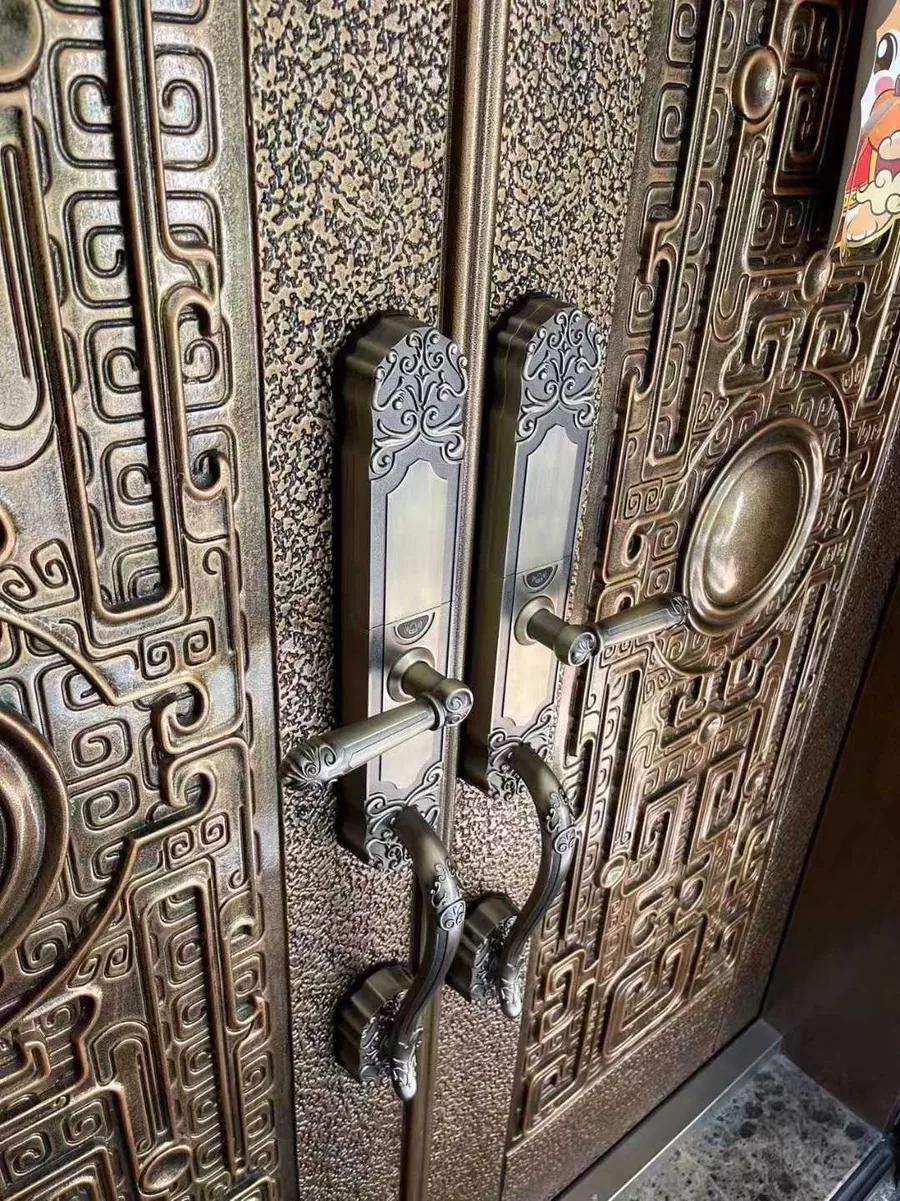
The older knob is a rotational puzzle that some hands cannot solve comfortably — particularly smaller hands, or hands weakened by age or arthritis. Levers solve it by converting a grip into a press, and they can be operated with an elbowful of groceries or a forearm when a hand is occupied. Push-pull hardware removes the mechanism from the hand’s labor entirely: a flat plate, a palm, and the door moves.
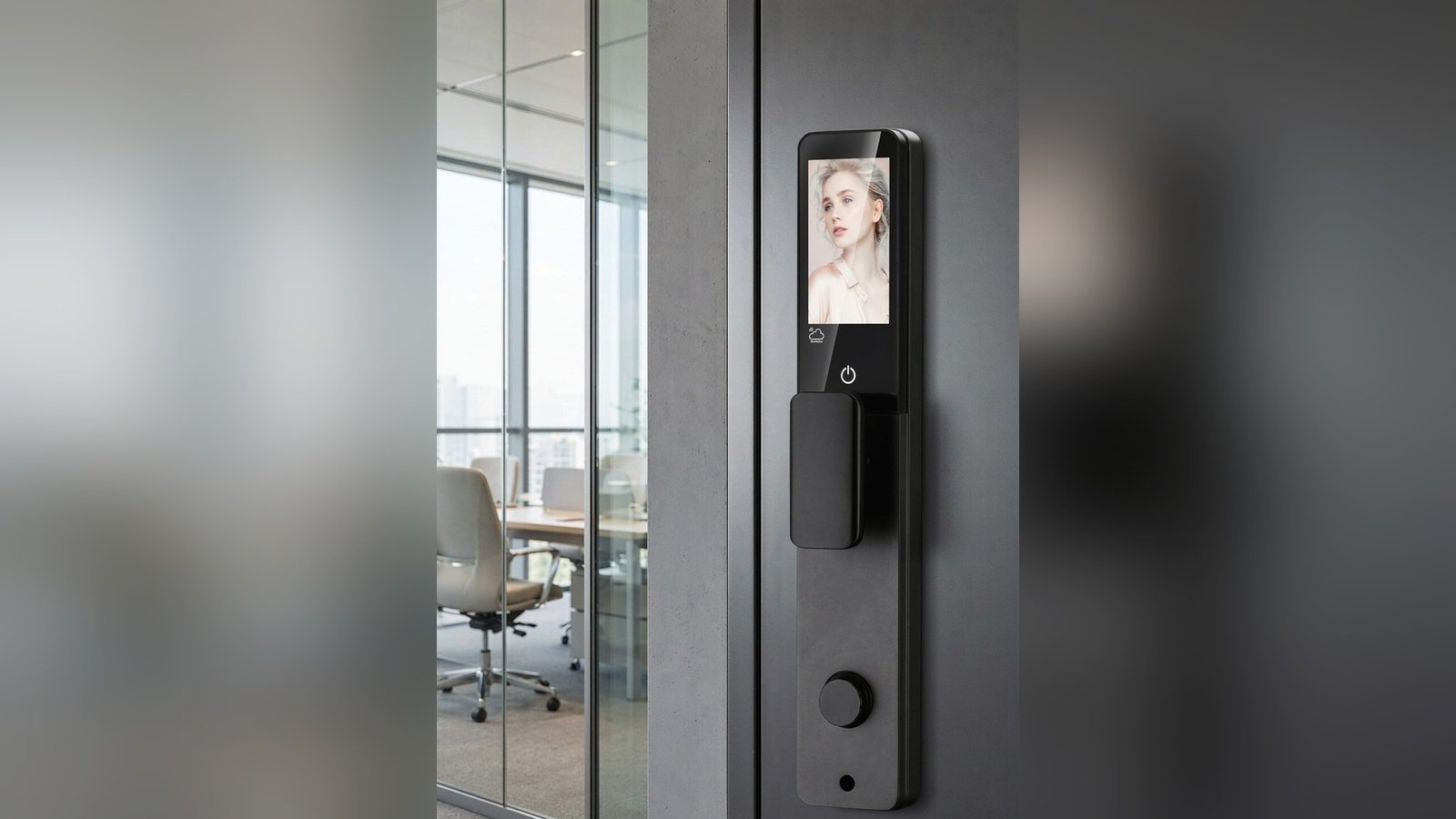
Semi-automatic one-grip models bring this logic to the smart lock world. The DDA2 uses a documented grip-and-pull motion — you take the handle, the lock reads your credential, and the door opens in the same movement, rather than the two-step sequence most electric locks require. The DDA3 sits in the same semi-automatic one-grip class, sharing the series’ design; its detailed specifications are available on request rather than published on the page. That family of designs is the clearest example of handle form and access method being decided together, rather than one being fitted around the other. We unpack their mechanics in how one-grip entry works.
Ergonomics for the hands that actually arrive
Design conversations tend to picture an average adult with empty hands. Real entrances receive something different: parents balancing children and bags, older neighbours who appreciate a generous grip, delivery couriers moving fast, and residents who are simply tired. Door handle design for entrances should be tested against that population, not the render.
A quick ergonomic checklist for handle choice
- Grip length: can four fingers wrap it comfortably, including a gloved hand in winter?
- Return clearance: does a pulling hand have room to finish the motion without knuckle contact with the door?
- Force: can the latch be released with a light press, and does it stay light as the mechanism ages?
- One-motion operability: can the door be opened in a single movement with a full hand?
- Repeatability: does the handle still feel tight and aligned after a year of daily use?
If you are choosing hardware for a household with several generations in it, the trade-offs are covered more fully in our guide to door handle types and the hands that use them, and the wider accessibility logic belongs with the entrance’s other decisions rather than apart from them, as we argue in designing an accessible entry.
Materials and finishes that age well
Entrance hardware lives outdoors. Sun, rain, salt air, sunscreen and hand oils are all part of its daily working conditions, and the finish is the part that takes the damage. Two qualities matter more than any trend: whether the surface is treated to resist corrosion, and whether its color is deep enough to hide the micro-scratches that daily use inevitably leaves.
Matte black has earned its place in contemporary entrance design partly for that second reason — the DDA2 pairs an aluminum alloy body with a matte black finish, a combination chosen for both look and wear resistance. Brushed and satin finishes do a similar job in their own idiom. Gloss, at an entrance, is the finish that shows the most and forgives the least. The broader palette and how to coordinate it with the rest of the door is the subject of our smart lock finish guide.

Where handle design fails
The failures cluster in four places. The first is scale: an undersized handle on a heavy solid door asks the hand for more force than the grip can deliver comfortably. The second is coordination: hardware from different families — a lock from one design language, a handle from another, in finishes that almost match — reads as assembled rather than designed, a point we explore in how entrance proportions work. The third is weather: an untreated handle pits and discolours within a season, and every fingerprint of it is visible. The fourth is interaction: a beautiful handle that fights the lock beside it, forcing a hand through an awkward sequence, is an excellent object and a poor entrance.
Each failure is avoidable at specification stage, and each is expensive to correct later. A handle is small enough that people expect cheap; it is also touched more often than anything else on the property. That mismatch between price perception and daily workload is why entrance handles deserve more thought than they usually get.
Matching handle to entry method
For connected entrances, the handle and the credential should be designed as one experience. A fingerprint reader placed where the thumb naturally lands, a keypad angled toward a reaching hand, a grip whose pull begins the unlock — these details decide whether the entrance feels like one gesture or a small procedure. That is the practical meaning of door handle design at an entrance: getting the two elements to agree on a single motion.
When they agree, nobody notices. Visitors simply arrive, grip, and are inside. That invisibility is the highest compliment entrance hardware can receive.
Common questions
Does a lever handle actually help older users?
Often, yes — a lever converts a grip into a downward press, which is easier for weaker hands than turning a round knob. Pair it with an access method that avoids fine dexterity as much as possible, and the door stops being a daily negotiation.
How do I keep three different hardware items visually consistent?
Choose one finish and one design language, then buy the lock, handle and accessories as a family rather than assembling them from different sources. If matching by family is not possible, keep the metal finish identical — a mismatch in colour is more noticeable than a mismatch in shape.
Is there a case for an old-fashioned knob?
In heritage settings where authenticity outweighs ergonomics, yes. But treat it as a conscious trade: you are choosing period correctness over the easier operation a lever or pull gives. For entrances that serve children or older residents, the lever usually wins the argument.
Choosing entrance hardware as one family?
CaremLock supplies smart locks and entrance hardware to distributors, installers and project buyers, with documented materials, finishes and handle mechanics. Tell us the doors you are working on — we will match the pieces into one coherent specification.
Or explore the semi-automatic smart lock range and contact the team.