Sunday, 9 p.m., and the house group chat is doing what it does: someone left the front door unlocked again, someone else cannot find the spare key, and a third message asks whether the person moving in on Friday should get “a copy” or “the code.” None of it is dramatic. All of it is the same unmanaged system, running on memory and goodwill.
A shared house asks something a family home rarely does: one door, several adults with different schedules, and no single person who holds the final say. This is about making shared house entry access fair, private and uneventful — in the best sense of that word.
Why one shared key turns into politics
The spare key on the hook starts as a convenience and becomes a quiet problem. It is everyone’s key, which means it is no one’s responsibility. It leaves with a departing roommate by accident. It gets copied for a partner, then for a partner’s friend, and the household’s working assumption becomes “probably two or three copies somewhere.” Meanwhile the handoff runs on one person remembering to be home when the next person arrives — an errand that never ends.
The deeper issue is that a key cannot express an arrangement. It cannot say “weekdays only,” it cannot be revoked when a roommate moves out, and it cannot be replaced without changing the lock. Whatever limits exist live in the relationship, not in the object.
One person, one credential
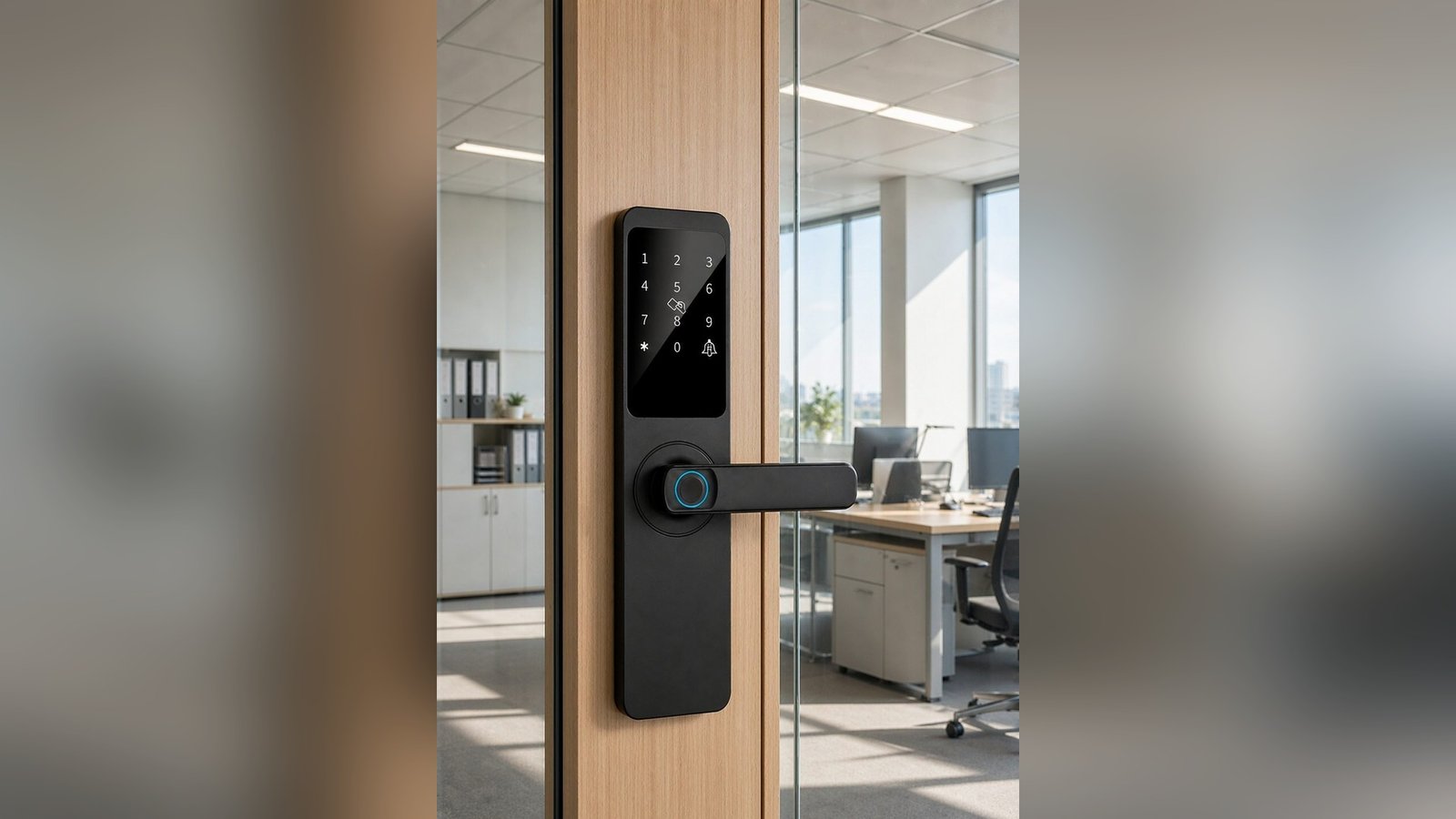
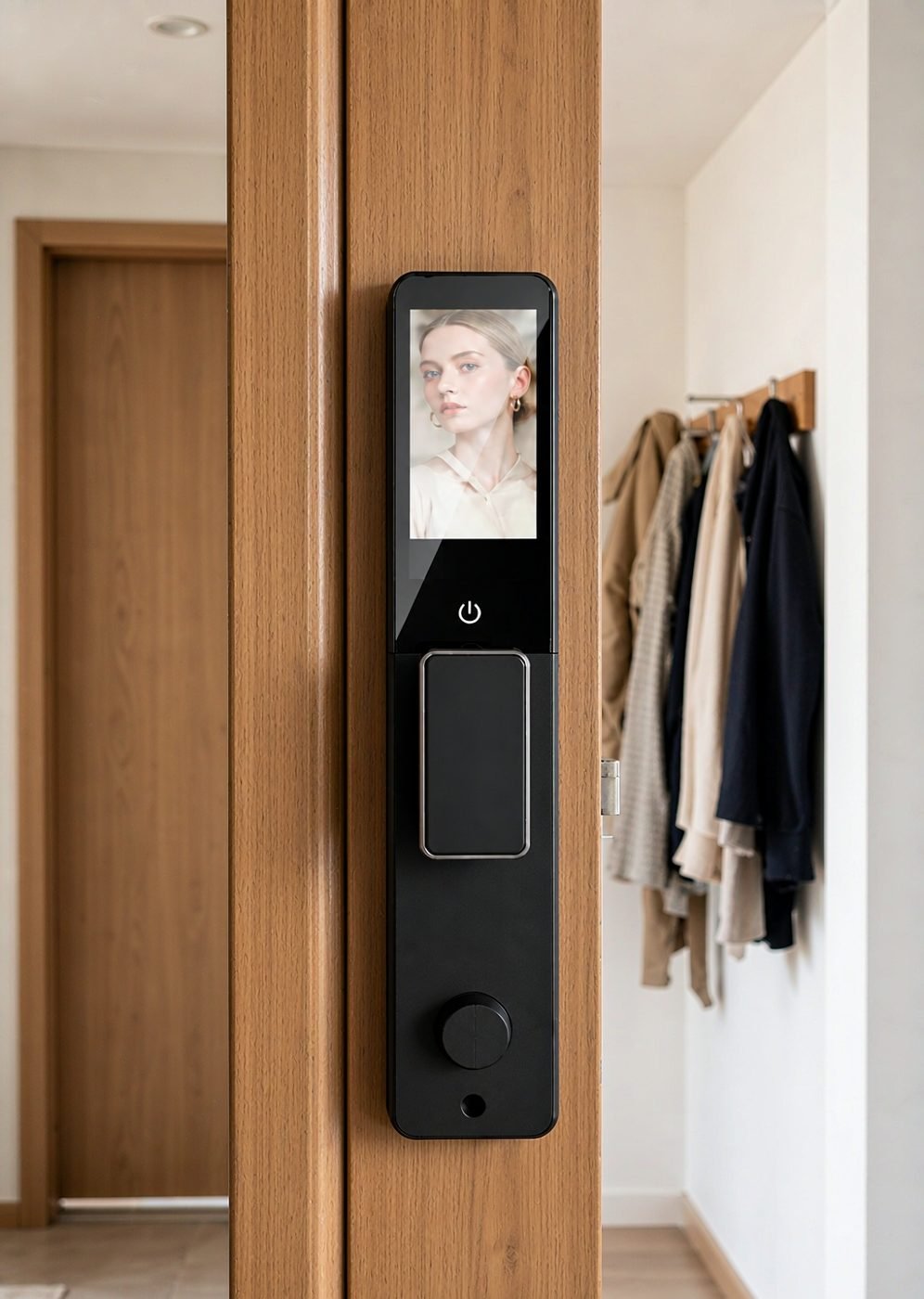
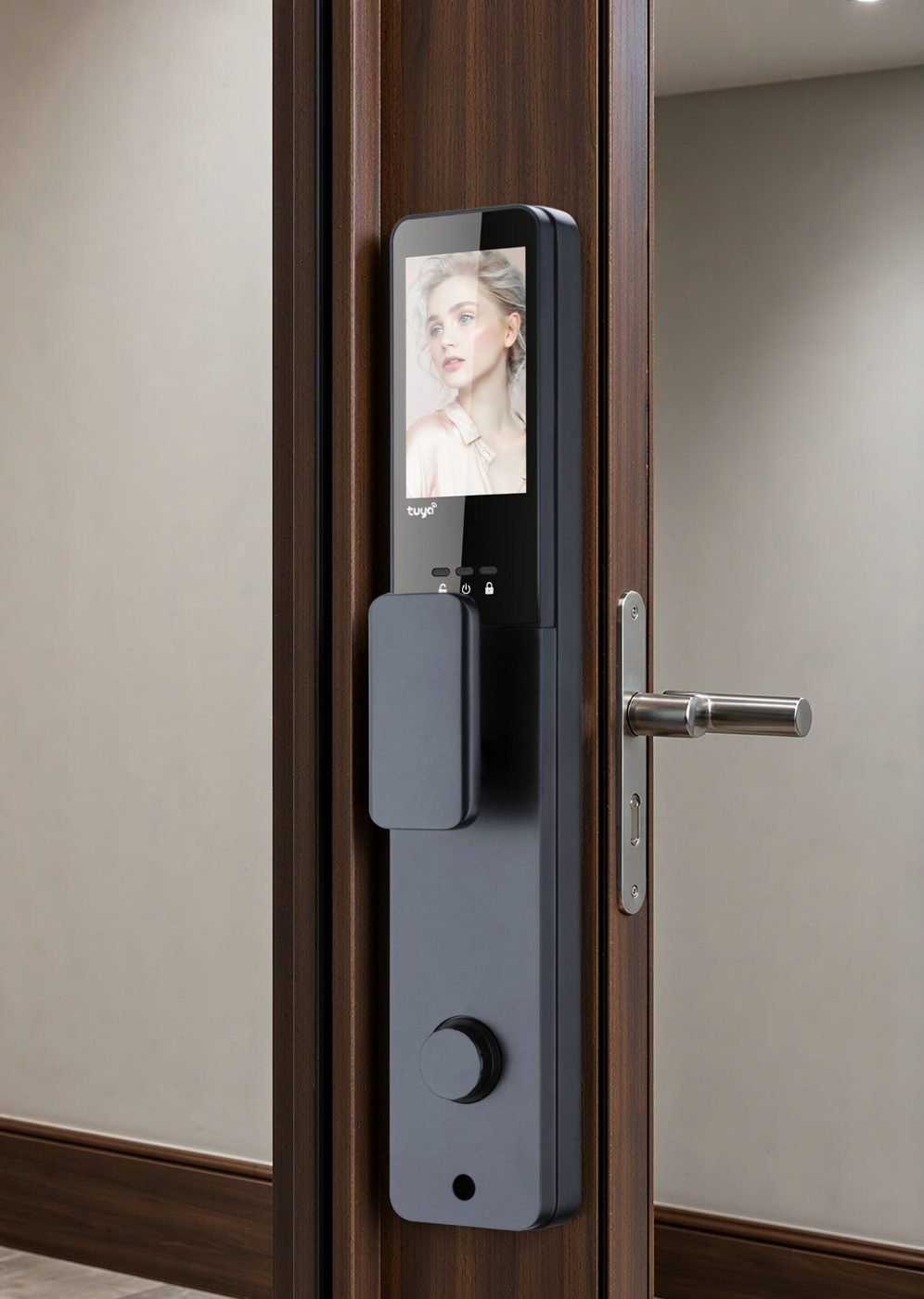
Designing shared house entry access around credentials instead of copies changes the arithmetic. Each adult gets their own fingerprint, code or IC card; access becomes a list the household manages rather than a metal object in circulation. Our deadbolt models, such as the DS05, document capacity for up to 100 fingerprints, 100 passwords and 100 IC cards — far beyond what any house share will use. The point of that headroom is simple: nobody ever has a reason to share a credential “just for now,” because sharing is what breaks the model.
Per-person credentials solve four recurring moments at once. Adding a new roommate is an evening task, not a locksmith appointment. Removing one at move-out takes seconds and does not touch anybody else’s access. A lost credential disappears from the list without changing the others. And a couple sharing a room can still hold separate credentials, so a break-up never requires rekeying the house.
The move-out moment: returning access to zero
Every shared house has a version of this story: someone moved out months ago, and somewhere a code still works. The fix is a ritual, performed the same way each time.
The move-out access routine
- Delete the departing person’s credential on the day the keys change hands — not a note to do it later.
- Update the register: one page listing each resident, their method and the date it was added, so the house always knows what the list contains.
- Test the remaining residents’ entry before the last box leaves, so a mistake surfaces while the person can still fix it.
- Account for the mechanical key: collect the copy or note where it lives, and decide whether the household keeps one emergency key at all.
- Handle the room separately. If the bedroom door has its own lock, its access ends on the same schedule as the front door.
Private rooms inside a shared house
Not every access question belongs to the front door. In houses where rooms are rented individually, the bedroom is its own boundary — and it deserves lighter, purpose-built hardware rather than a second front-door lock. This is where a model like the DDZ17 room-door lock fits: it is documented for residential rooms and serviced apartments, manages a 300-user capacity, supports temporary passwords and covers seven access methods. For a shared house, that combination answers the two questions that actually come up — how does a new tenant get in this week, and how does their access end cleanly when they leave.
A useful principle for interior doors: keep the front door’s method and the room door’s method distinct, so a roommate’s daily habit at the entrance never accidentally covers the private space. Purpose matters more than uniformity.
The house agreement worth writing down
Technology removes the key politics; a short written agreement removes the rest. Five lines cover most of it:
- One credential per person. No photos of codes, no borrowed fingerprints, no “temporary” copies.
- The door locks on the way out. Whoever leaves last checks it — a habit, not a surveillance exercise.
- Lost access is reported the same day. The credential is replaced that evening, and nobody debates blame.
- Move-out means access ends. Written into the room agreement, not left to memory.
- Guests are the guest’s host’s responsibility, with long stays discussed by the household rather than decided by one person.
If you want the wider version of this discipline — how access lists stay clean across rotating helpers and visitors — the guide to access for regular visitors is a natural next read.
Leases, landlords and reversible choices
In rented houses, one step precedes any hardware decision: read the lease and get the owner’s agreement in writing. Where approval is easy, choose reversible options — a smart lock that replaces the existing hardware on the same preparation, with the original lock stored in a labeled box. If the household moves on, the door returns to standard trim in an afternoon.
Landlords often warm to the idea for a practical reason: per-person credentials mean tenant turnover no longer requires rekeying the house. The article on matching entry hardware to property type covers that conversation from the owner’s side.
Common questions
Should roommates just share one code?
No, and not because of trust — because of mathematics. With documented capacity for 100 fingerprints, 100 passwords and 100 IC cards on our deadbolt models, there is no administrative reason to share. A shared code means every change affects everyone, and one leak forces a house-wide reset.
What about partners who stay over, or a cleaner?
Give them their own credential, even a temporary one. A partner’s access and a cleaner’s access are different arrangements with different end dates, and the lock’s user list is where that difference becomes real. The article on access management models lays out how households structure those tiers.
Does everyone need to use an app?
No. Fingerprints, codes and cards all work without a phone, which matters in a house where four people may run four different attitudes to apps. The household’s administrator can manage the list; everyone else simply enters.
Equipping shared and co-living properties?
CaremLock supplies deadbolt and room-door ranges built for multi-person access — distributors, installers and project buyers included. Tell us the property profile and we will outline the models and credential approach that fit.
Or explore the deadbolt range and contact the team.