Direct answer
This is a story about one guest, one small hotel, and one late night. Mara, a traveller with a delayed bus, reaches the Hotel Aurora at twenty past midnight. The front desk is closed, the lobby is dark, and the owner is asleep upstairs. In an older hotel, her night would have ended on the steps outside. In this story, it does not: the hotel sends her a temporary code, she opens the door herself, and the lock records her entry.
The story is fiction, and the hotel and the people in it are invented. The lesson is not. A hotel that can let a guest in after midnight, without night staff and without a key handover, keeps the booking that other hotels lose. For a distributor, the story is also a sales tool: one specific hotel, one specific lock, one clear difference, and one next step. Read the story first, then the last section, which turns it into a checklist.
The bus that arrived after midnight
Mara had planned to reach the coast by nine in the evening. She had booked a room at the Hotel Aurora, a small family hotel with twelve rooms above a quiet street, and she had told the owner she would arrive before dinner. Then the bus broke down forty kilometres outside the town, and the repair took three hours.
By the time the bus rolled into the town square, it was twenty past midnight. The square was empty, the cafés had closed their shutters, and the only light on the street came from the lamps outside the hotel. Mara stood at the door with her bag on her shoulder and her phone at four percent, and she read the small sign beside the bell: the front desk closed at ten, and the number to call was printed underneath.
She had been travelling for two days, and she had slept badly on the bus. She pressed the bell once, and nothing happened. She pressed it again, and a light came on above the door, and she heard nothing from inside. She looked at the sign again and dialled the number, and while the phone rang she thought about the bench in the square, which did not look like a good place to spend the night.
A dark lobby and a locked door
The Hotel Aurora had been in the same family for thirty years. Tomás, the owner, had fitted the rooms himself, one by one, and he knew every door in the building. His daughter Elena had grown up behind the front desk, and when she moved to a house across town, she had taken the bookings with her. She answered the phone at night, and Tomás slept upstairs, and the hotel ran on that arrangement for years.
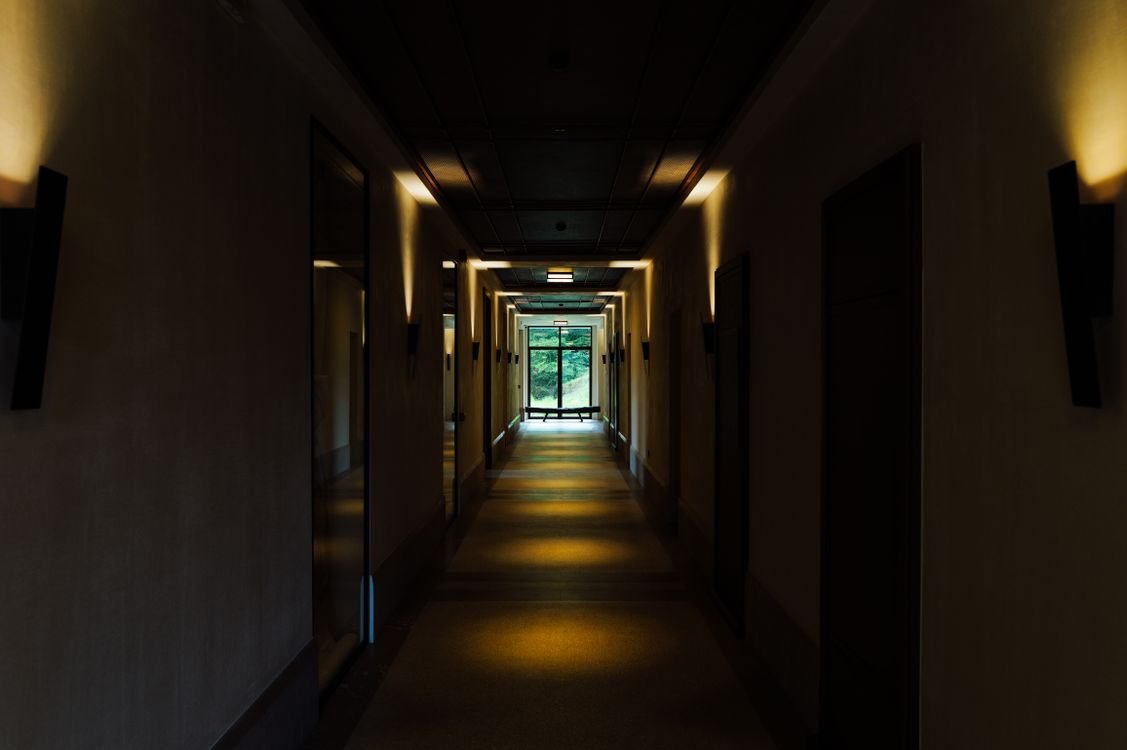
That night, the hotel had three rooms empty and nine rooms full, and the guests in the nine rooms were asleep. The lobby was dark except for the small lamp over the desk, and the corridor upstairs was lit only by the wall lights that stayed on all night. The front door was locked, as it was every night after ten, and the key to it hung on a hook behind the desk, where it had hung for thirty years.
Mara stood outside and watched the light above the door. At noon a locked door is a door. At midnight it is a decision: the hotel has decided, for the night, that no one else is coming in. She was about to sit down on the step and wait for morning when her phone buzzed in her hand.
The phone call that opened the door
Elena answered on the second ring. She was awake, reading in bed, with the booking list on the table beside her. She asked for the name on the booking, and Mara gave it, and Elena found it in two seconds: one room, one guest, one night, arriving today. Elena asked Mara to stand in front of the door, and then she looked at her phone.
The Hotel Aurora had changed its locks the previous spring, and the change had been Elena’s idea. Each room door now carried a smart lock, and the front door carried one too, and Elena managed them all from an app on her phone. She could see the front door on the video intercom, and there was Mara, standing under the lamp with her bag on her shoulder, looking tired and cold. Elena pressed the button to speak, and her voice came out of the small speaker beside the door, and Mara jumped a little, and then she laughed.
“I can see you,” Elena said. “Stay there. I am sending you a code.”
Elena created a temporary code for room seven, set it to work for this night only, and sent it to Mara’s phone. Mara typed the code into the keypad on the front door, and the lock opened with a soft click, and the lobby light came on as she stepped inside. She walked up the stairs and along the dim corridor, past the closed doors with their small lights, until she found room seven. She typed the same code into the lock on the room door, and it opened, and she put her bag down and sat on the edge of the bed, and for the first time since the bus broke down, she was inside somewhere, and the night was over.
Before she slept, her phone buzzed once more. It was a message from Elena: sleep well, the front desk opens at seven, and there is coffee in the lobby.
What the lock recorded
While Mara slept, the lock kept a short record of the night. It noted the time the front door opened with the temporary code, and the time the door of room seven opened with the same code, and nothing else. In the morning, Elena opened the app and saw two lines: a guest had entered at 00:24, and the same guest had entered room seven at 00:27. That was the whole story of the night, written in two lines.
The record matters because a hotel runs on trust, and trust runs on knowing what happened. If a guest says the room was entered in the night, the hotel can look at the record and answer. If a code is used after the guest has left, the hotel can see it and act. The temporary code had done its job and then stopped: it worked for that night, for that room, for that guest, and when the stay ended, Elena removed it, and the door would not open for it again.
The morning after
Mara came down at seven, and Tomás was behind the desk, and the lobby smelled of coffee. He asked her how she had slept, and she told him about the bus, and the bench in the square she had almost slept on, and the voice from the door. Tomás laughed, and he said the voice was his daughter, and that Elena had run the night desk from her house for two years now.
They finished the registration at the desk: her details, her signature, and a key card for the room, which she would not need, because the code still worked for her stay. Tomás showed her the breakfast room, and she said she would stay one more night, because the coast was worth a day, and because a hotel that lets you in at midnight earns a second night.
When she left the next morning, Elena removed the code for room seven, and the room was cleaned, and the next guest arrived in the afternoon and received a new code of their own. Nothing about the night remained except the two lines in the record, and the review Mara left on her way home, which said the hotel had opened its door when she needed it most.
What this story means for hotel distributors
A story is a sales tool when it is built the way a good first email is built: one specific hotel, one specific product, one clear difference, and one next step. The Hotel Aurora is the specific hotel: twelve rooms, a family team, a desk that closes at ten, and guests who arrive late. The DDL7 is the specific product: a lock with WiFi remote unlock, temporary codes, video intercom, a cat eye viewer, fingerprint and password, 2MP face recognition, 50 palm-vein users, an abnormal alarm, and a European-standard mortise, all managed from an app. The difference is the midnight check-in: this hotel lets a guest in after midnight with no night staff. The next step is a sample: fit one lock on one real hotel door, and run the late-arrival test.
Use the story with a hotel the way Elena used the lock: show the moment, not the catalogue. Tell the owner about the guest at midnight, and then ask what the owner’s hotel does at midnight now. Most small hotels have the same answer: nothing, because the desk is closed. That is the opening for the sample. Fit the lock on a real door, send a temporary code, open the door from the app, and try the offline test with the Wi-Fi off. Let the owner stand outside at night and type the code, and let the housekeeper try the staff routine. A hotel that has lived the story for one evening will understand the lock faster than a hotel that has only read about it.
Ask the supplier to confirm in writing, for the exact model, which unlock methods it offers, how temporary codes are created and removed, what the entry record shows, and how the lock behaves with no network. If a feature is not confirmed for that model, such as GPS, LTE, camera recording, or a tamper alarm, ask for written confirmation from the factory before you put it in a hotel proposal. Caremlock locks support Tuya and Matter, so ask which platform the hotel will use, and test the exact lock with the exact app the hotel will use.
Useful reading on this site: smart-locks-peru-hotels-guest-access and smart-locks-philippines-hotels-guest-access.
A short checklist you can use
- Story told with one hotel, one lock, one difference, and one next step
- Midnight moment named: the guest, the hour, and the closed desk
- DDL7 features used only where confirmed: WiFi remote unlock, temporary codes, video intercom, cat eye viewer, fingerprint, password, face recognition, palm vein, abnormal alarm
- Sample fitted on a real hotel door, not a showroom door
- Late-arrival test run: temporary code sent, door opened from the app, offline test with Wi-Fi off
- Entry record checked: the hotel can see who opened which room and when
- Staff routine tried: one fingerprint or password per person, removed when they leave
- Written confirmation from the supplier for the exact model before any feature goes in a proposal
Next step
Pick one small hotel with a desk that closes at night, tell the owner the story of the guest who arrived at midnight, and then fit a sample on a real door and run the late-arrival test. To request a sample, use the Smart Lock Quote Request form on caremlock.com or email sales@caremlock.com with your target model, the hotel size, and the door types in the trial.
FAQ
Is the Hotel Aurora a real hotel?
No. The hotel, the guest, and the family in this story are invented. The lock features are confirmed features of the DDL7, and the lesson is drawn from how small hotels work.
Can a guest really check in at midnight with a smart lock?
Yes, with a temporary code sent before arrival, or with WiFi remote unlock from the hotel app. Registration is completed in the morning.
What does the lock record?
The entry record shows when a door was opened and with which method. Ask the supplier to confirm what the record shows for the exact model.
Does the lock still open if the hotel Wi-Fi goes down?
The code, fingerprint, and password should still work, because they live in the lock itself. Remote unlock from the app will usually stop until the network returns.
How should a distributor use this story with a hotel?
Tell the story, ask what the hotel does at midnight now, and then offer a sample on a real door. The sample and the late-arrival test do the selling the story starts.