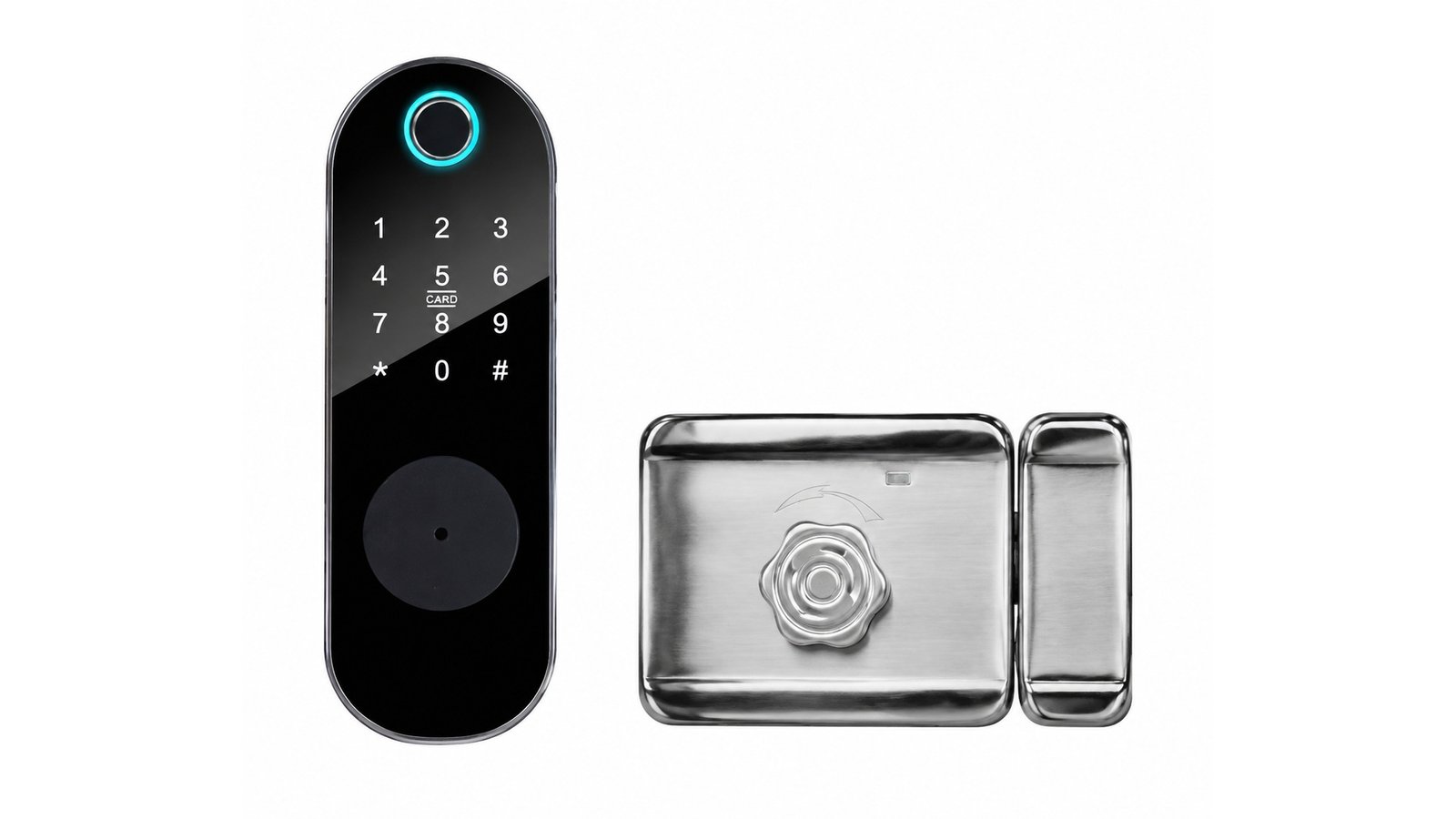
Ask ten new lock distributors what they stocked in their first order and you’ll hear versions of the same story: too much of one category, not enough of another, and one or two models still sitting on the shelf eighteen months later because the market that was supposed to want them never showed up.
A starter catalog is a forecast wearing a purchase order’s clothes. It doesn’t need to be complete; it needs to be shaped so that every unit has a plausible buyer, and every likely customer can find something. Here’s a practical way to build that first map.
Start from buildings, not from models
The most useful sorting principle for a new catalog is the one buyers themselves use: what kind of door is this lock for? Projects and households don’t start with feature lists; they start with a building, and the building narrows the choice almost immediately.
| Building / door | Lock family it needs | Why it can’t be substituted |
|---|---|---|
| Family home, timber door | Deadbolt smart lock | Standard residential preparation; everyday convenience is the selling point |
| Apartment / rental unit | Deadbolt or room-door lock | Retrofit fit and credential turnover as tenants change |
| Aluminum frame entrance | Aluminum door lock (mortise) | Lock body standard differs; a deadbolt won’t seat in the pocket |
| Framed glass door | Glass door lock | Locking happens through the frame — its own mounting logic |
| Hotel / serviced room | Room-door lock | High guest turnover, temporary credentials, room-level management |
Each row exists in our range as a documentable family — deadbolt (DS01/DS05), aluminum (LK0161), glass (A20), room-door (DDZ17) and fully automatic (DDL1) — which is exactly why a catalog organized by building type tends to outsell one organized by product generation.
The three-tier starter structure
For a first order, a shape that repeatedly works in practice is three tiers — a core, a specialist pair, and a hero:
Tier 1 — the core (volume)
- One or two deadbolt models. This is the residential bread and butter: the family home, the rental unit, the small office door. Keyless entry demand lands here first.
- Choose by documented fit range and credential capacity, not by feature count. A model that documents its door thickness range, its unlock methods and its capacities is easier to sell than one that is “advanced.”
Tier 2 — the specialists (margin)
- One aluminum door model. Every market with modern apartment construction has aluminum entrances, and the deadbolt family cannot serve them. This is the model that wins the enquiry your competitors have to decline.
- One glass door model. Smaller volume, but it’s the only answer for office fit-outs and storefronts — a request that otherwise walks away entirely. Our A20, for example, is documented specifically for framed glass doors.
Tier 3 — the hero (differentiation)
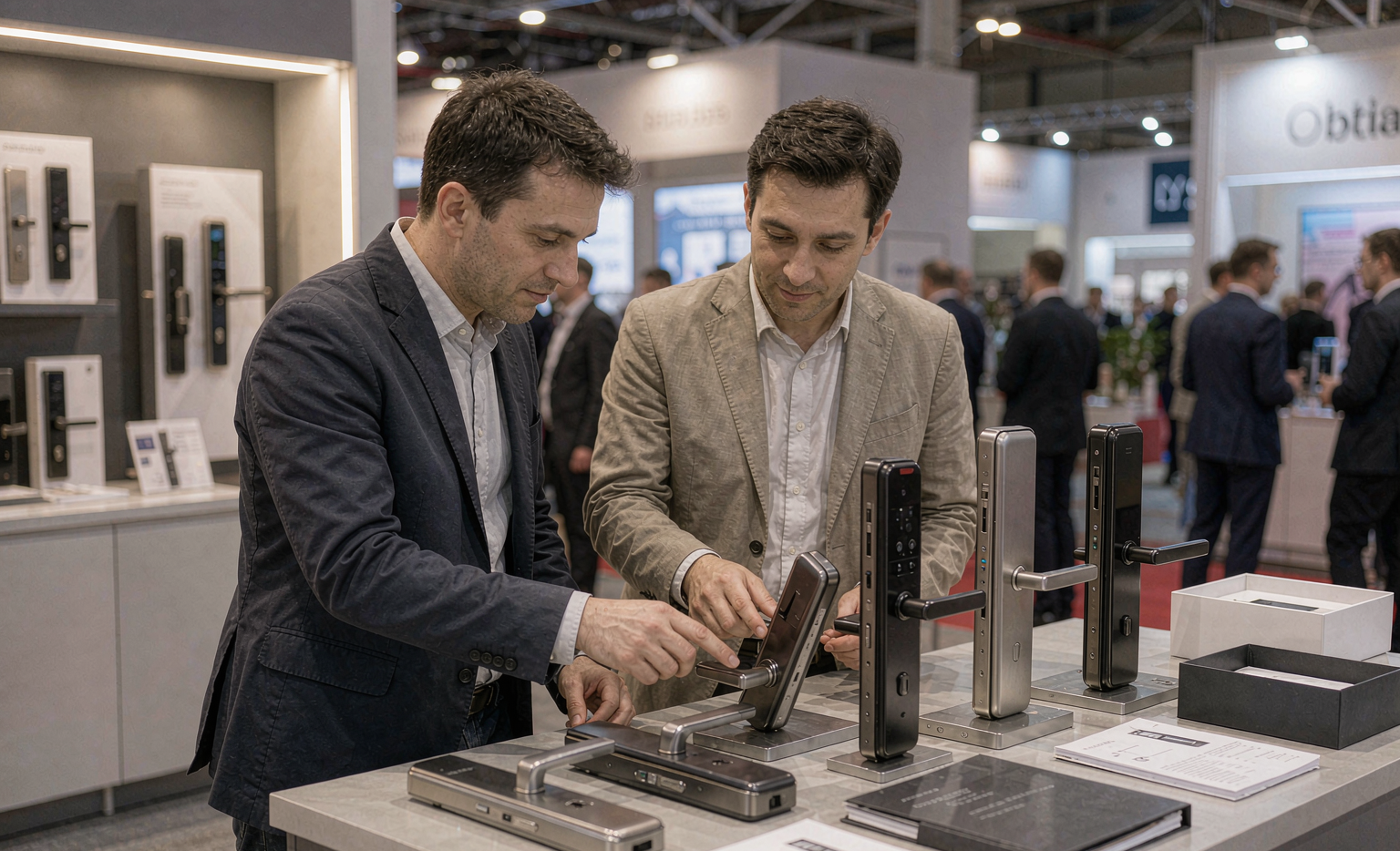
- One flagship model with the widest credential story — multi-method access, a screen or premium material story — for the projects and customers who compare on capability. This is also the model for showroom display and demonstrations.
- One workhorse alternative in the same category if your market has strong price sensitivity at both ends.

How many SKUs is too many
Every model in the catalog is a forecast, a shelf slot, a manual to learn, and a spare-part commitment. The common failure isn’t too few models — it’s three models doing the same job, which splits attention and stock without expanding reach.
A useful test before adding anything: which customer, standing at which door, would choose this model over the one already on the shelf? If the honest answer is “someone who wanted a slightly different color,” that’s an option, not a SKU. If the answer is “an aluminum entrance we currently can’t serve,” that’s a genuine gap — buy it.
Reading your own market for the mix
The proportions between tiers aren’t universal; they follow the buildings around you:
- Markets dominated by detached housing: weight the core tier heavily — deadbolt volume is the business, and specialists exist as service capability.
- Markets with heavy apartment construction: the aluminum tier moves up. Retrofit demand follows because these doors are being fitted with locks by the thousand.
- Hospitality markets: the room-door family becomes its own core — hotels and serviced apartments buy by floor, not by unit.
- Office and retail fit-outs: glass and aluminum specialists carry the enquiries; volume still comes from residential.
If you’re not sure yet which market you’re in, order the core first and let the first ten enquiries tell you what the second order should be. Distributors we’ve watched build catalogs well all seem to share one habit: they keep an enquiry log from day one — what customers asked for that they couldn’t serve becomes the next purchase order.
Documentation as a catalog feature
One more selection criterion that pays off later: pick models whose supplier documents what matters — door fit statements, credential capacities, battery type, available versions. A model with clean documentation sells faster at the counter, answers project questionnaires without a support ticket, and gives your team something to train on.
For our own range, that documentation is what the model pages are built on: documented capacities, stated fit ranges and available configurations, so a distributor can quote from facts. When you’re comparing any two starter catalogs, the one whose spec sheets answer real questions is the one that scales.
Common questions
What’s the minimum viable first order?
Four to six models covering the three tiers — for example two core deadbolts (different price points or door fits), one aluminum, one glass, one hero. That set can serve most residential enquiries plus the specialist ones, and it won’t leave three models competing for the same shelf.
Should the starter catalog include both fully automatic and semi-automatic locks?
If you can only carry one mechanism class initially, the call is about your buyers: fully automatic models (like our DDL1 class) suit premium residences and flagship display; semi-automatic families (DDA2/DDA3, DDZ17) cover everyday residential and room-door volume. Many distributors start with the semi-automatic workhorses and add a fully automatic hero once customer feedback points that way.
How do I price a starter catalog without overcommitting?
We don’t publish pricing in articles, and any supplier who quotes a market-wide price without your volumes, door mix and destination is guessing. What you should ask for instead: a model-by-model quotation against your projected annual take-rate — so the pricing conversation follows the catalog shape rather than leading it.
Building your first lock catalog?
Tell us your market, building mix and budget shape. CaremLock supplies documented ranges across deadbolt, aluminum, glass, room-door and fully automatic families — and we’ll help you map the starter set before you commit to stock.
Or start from the product range and contact the team.