Six companies share one floor. Each has its own staff, its own hours, its own idea of what a locked door means. But there’s only one way in — and someone has to run it. Shared office suites, co-working floors and serviced commercial spaces strip away the assumption that a building has one organization behind its entrance.
This article is about the access structure for those spaces: how to arrange credentials so each tenant manages its own people, the operator doesn’t become a full-time doorman, and the entrance still behaves like one coherent building.
Start with what’s actually shared
The first decision isn’t technical — it’s deciding which access is common and which is private:
The three access zones in a shared suite
- The common entrance. Everyone’s first door. Its credential list includes every tenant’s people plus building staff — the largest list, the most turnover, and the one whose management model decides everything else.
- Private suite doors. If each company has its own interior door, that lock belongs to the tenant’s list, not the operator’s. The operator should be able to grant administrative access to a suite without becoming its daily administrator.
- Shared facilities. Meeting rooms, kitchens, print rooms. These are the classic accessories — access that needs a policy before it needs a lock, because “who can book the meeting room” is an organizational question wearing a technical costume.
The common entrance is where nearly all the operational pain accumulates, because it’s the one place every departure, arrival and visitor policy meets. So the practical design sets the suite doors aside as the tenant’s business, and concentrates structure on the front.
Two structural models for the common entrance
Suites run one of two ways, and the choice determines the credential strategy:
- Operator-managed. The building operator holds the access list and issues credentials to tenants, removing them when leases end. Clean and centrally controllable — and it means the operator’s team does the routine credential admin for everyone. This model suits smaller tenants and serviced offices where the operator already provides front-desk and reception services.
- Tenant-administered. Each company holds an administrative credential for the common entrance’s management layer — its own people are its own list. The operator keeps override and facilities access. This model suits larger tenants who don’t want to submit a help ticket every time an employee joins.
Both are legitimate; what fails is the hybrid nobody chose: the operator with a master credential, tenants informally sharing it, and a front door whose actual access list exists only in people’s memories. Whichever model a building picks, the essential discipline is the same one households use — every person on their own credential — with the building as the scale at which that discipline pays off most.
Where shared-suite access goes wrong
- The shared front-door code. It leaks within weeks, and when it finally changes, it changes for everyone at once — including the tenant who did nothing wrong. The cost of one shared code is paid by every tenant’s access governance, and per-person credentials cost the same hardware money.
- The ghost freelancer. Hot-deskers come and go; the tenancy list is never as tidy as the business directory. The one-minute-per-person removal habit — the same one our visitor access guide describes for households — is what keeps the entrance list honest.
- The facilities exception that becomes permanent. A cleaner who came for one weekend, a contractor whose job ended, the delivery courier route — all legitimate reasons that quietly become standing credentials. The fix is the same everywhere: an expiry, planned at creation.
- The overnight gap. Suites often close the front desk at night but the building keeps working — that starts having access requirements the daytime model didn’t anticipate. Deciding the night story deliberately (who can enter after hours, with what credential, and whether the alarm or building security needs to know) prevents the improvised solutions people otherwise invent.
What the hardware needs to provide
The specification list for shared entrances
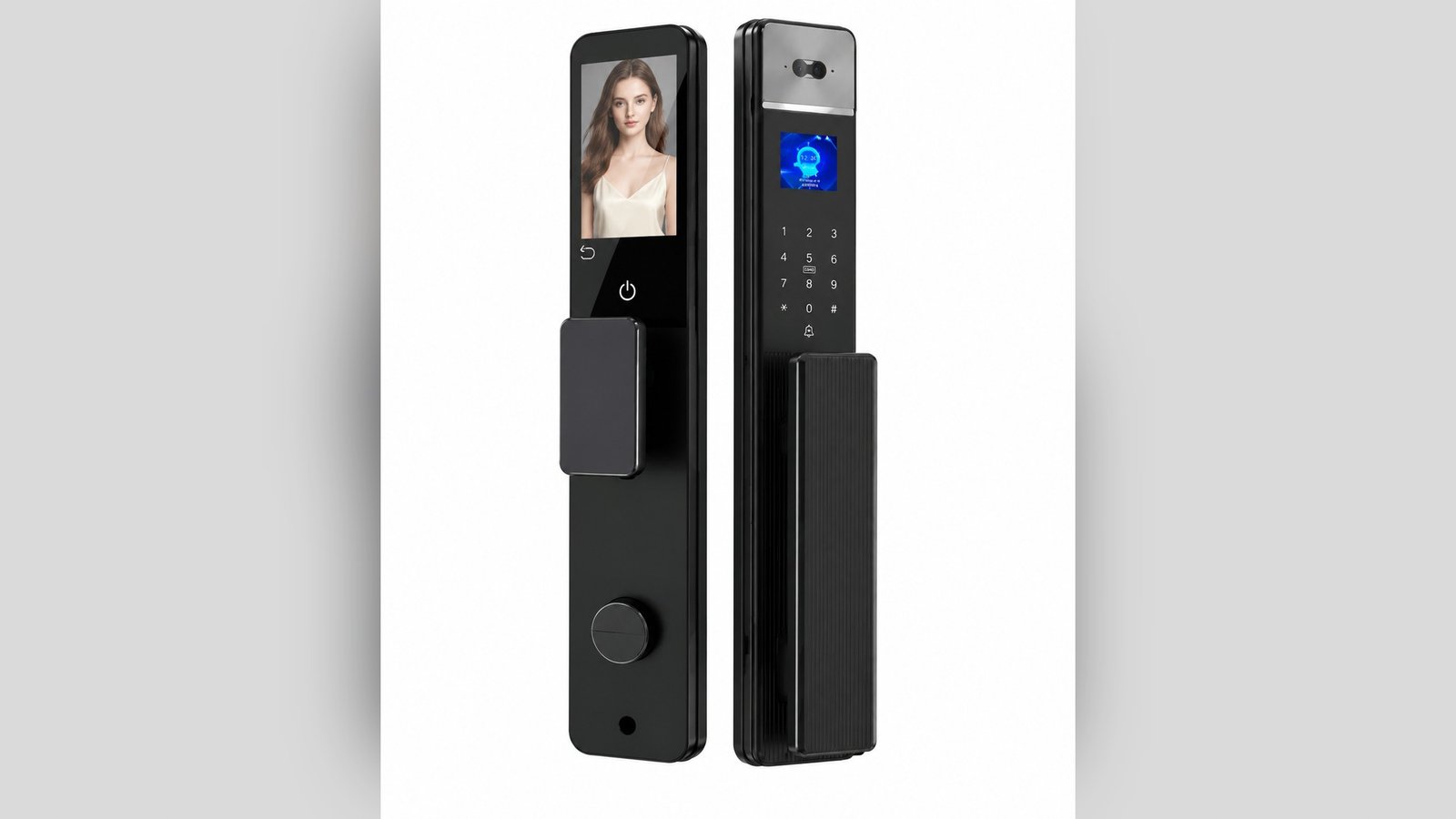
- Capacity for a real user list. Count the whole building: tenants’ staff, operators’ staff, facilities, regular visitors. Our deadbolt models document room for 100 fingerprints, 100 passwords and 100 IC cards; the figure to check against your building is the total population that will ever hold a credential — because the alternative is sharing, the failure mode above.
- Per-user management. The administration layer has to support adding and removing individuals, which is the difference between running a building and refereeing one.
- Temporary credentials. Contractors, cleaners and visitors all benefit from access that expires by itself — a documented capability on our DDZ17 room-door model with its temporary password support.
- Door-type fit. Shared entrances are unusually likely to be glass or aluminum — and glass entrances need their own hardware family (our A20 is documented for framed glass doors). The largest list in the building frequently also sits on the least standard door.
The lease-document sentence: one line in the tenant onboarding pack — “building entry access is issued per person; your team’s joiners and leavers are handled within 24 hours; there are no shared codes.” That sentence converts the building’s access model from an argument into a service, and it’s what tenants actually want from an operator.
The multi-tenant variant: co-working and hybrid floors
Full co-working spaces push the shared-entrance model further: the “tenant” may be an individual with a hot desk, and the access list changes by the week. The relevant hardware facts don’t change — capacity, per-user management, temporary access — but the process does. Successful co-working operations run credential issuance like a booking system: tied to a membership, expiring with it, renewable automatically. The lock’s job is only to honor a list someone else maintains; the maintenance discipline belongs to the operator’s business system, and the honest hardware requirement is a management layer that integrates with how that business already runs.
Common questions
Should tenants get the master credential for the common door?
Generally no — and the reason is maintenance, not trust. A master credential means every tenant can add or remove anyone, which makes the building’s access list impossible to reconstruct when questions arise. Tenant-administered access works better when it’s scoped: each tenant manages its own people’s credentials, and the operator retains override, not the tenants.
How do visitors and deliveries fit a shared entrance?
The shared version of the household problem: a courier needs in, a client is expected, and there’s no single household to call. The common solutions are a staffed reception (where the operator’s credential handles it), an intercom system tied to a temporary credential, or scheduled access windows. Whichever fits the building, the rule is the same: the visitor gets access to the entrance, not a copy of the tenant-level credential.
What about fire and emergency egress requirements?
Shared commercial premises are governed by local code, and egress requirements vary by jurisdiction: the practical step is confirming — in writing, per building — how the chosen lock’s egress behavior complies. This is the same principle as our rental operations guide: compliance is a per-property verification, not a claim any supplier should make on your behalf.
Running a shared suite or co-working floor?
Tell us the building’s door types and how many credential holders you anticipate. CaremLock supplies documented ranges across deadbolt, aluminum, glass and room-door families — with the capacity and management facts that multi-tenant entrances need.
Or review the solutions overview and contact the team.