Retail design spends most of its money on the front of the house. Windows, lighting, shelving and the path a customer walks through all get drawn and redrawn, because that is what decides whether someone comes in and what they buy. The back of the house gets none of that attention, yet the back door is where the store’s day actually starts and ends. The first person in unlocks it. The last person out locks it. And everything the shelves will ever sell has come through it first, in a carton.
That makes back-of-house doors an operations question before they are ever a hardware question. Access has a rhythm — opening, deliveries, shift changes, cashing up, closing — and when nobody designs that rhythm on purpose, the gaps get covered by shared codes, propped doors and phone calls to whoever might still have a key. This piece looks at the rhythm the way a store operator or a project buyer would, and at where documented lock features actually help: credential capacity, per-person access, and a fallback for the morning the power is out.
The daily rhythm
Most stores run the same sequence, and it is worth writing it down before choosing any hardware. It is the shape of retail back door access in most small and mid-size units: an opener — usually a manager or a nominated keyholder — arrives before the sales floor is lit, disarms the alarm and lets in the early shift. The store trades through the day. Deliveries arrive at the back: stock, fixtures, cleaning supplies, sometimes a cash collection. In the evening the sequence reverses. Tills are counted and cashed up, staff leave in ones and twos, and the last person out walks the closing checklist, sets the alarm and locks the back door behind them.
Each step has a different risk profile. The opener needs speed and certainty at the same moment every morning. A delivery needs a door that can be opened for someone who is not staff, for a window that is short and defined, and then closed again. Cash-up and close need an end of day that leaves no ambiguity about who was last on site and what they still hold. Most stores run this entire sequence off one shared code or a key in a drawer, which is simple — until a staff member leaves and nobody can say with confidence what access they still have.
The front door has cushions the back door does not: a visible position, staff nearby, and habit. There is a body of practice for parcel deliveries at the front door that keeps those handovers short and witnessed. The back door needs the same deliberate design, just without an audience watching it happen.
Design the rhythm, not just the door. Nearly every access incident in a retail unit traces back to a mismatch between what the operating rhythm needs and what the door was set up to allow. Write the daily sequence down first; the lock specification should be an answer to it, not a starting point.
Shift change is a credential event
Retail staffing turns over constantly. Part-timers, students, seasonal hires, and managers drafted from another branch to cover a holiday all pass through the back door within a normal month. Every one of those arrivals and departures is a credential event, whether or not anyone treats it as one. If access runs on a single shared code, each change quietly widens the group that knows it, and the code becomes a fact everyone knows rather than a decision anyone made. Per-person credentials change that: a member of staff is added, and later removed, as an individual.
On documented capacity, the arithmetic is generous for a normal store team. CaremLock’s DS-series deadbolts are documented with capacity for 100 fingerprints, 100 passwords and 100 cards, and include a mechanical key override. The DDL1 records capacity up to 297 users with 3 admin positions, and the DDZ17 room-door model is documented to support 300 users and temporary passwords — a pattern that suits staff covering from another branch, whose access should expire on its own rather than wait for someone to remember it. For a typical store, these numbers leave room for everyone who legitimately passes through the door, with margin.
The operational gain is not the count; it is the clean removal. A leaver with a personal credential is an administrative action — remove the fingerprint or card, note the date — rather than a decision to re-issue a code to the entire team. That single difference is the reason operators with several sites stop treating the back door as a shared secret and start treating it as a small access system with an owner.
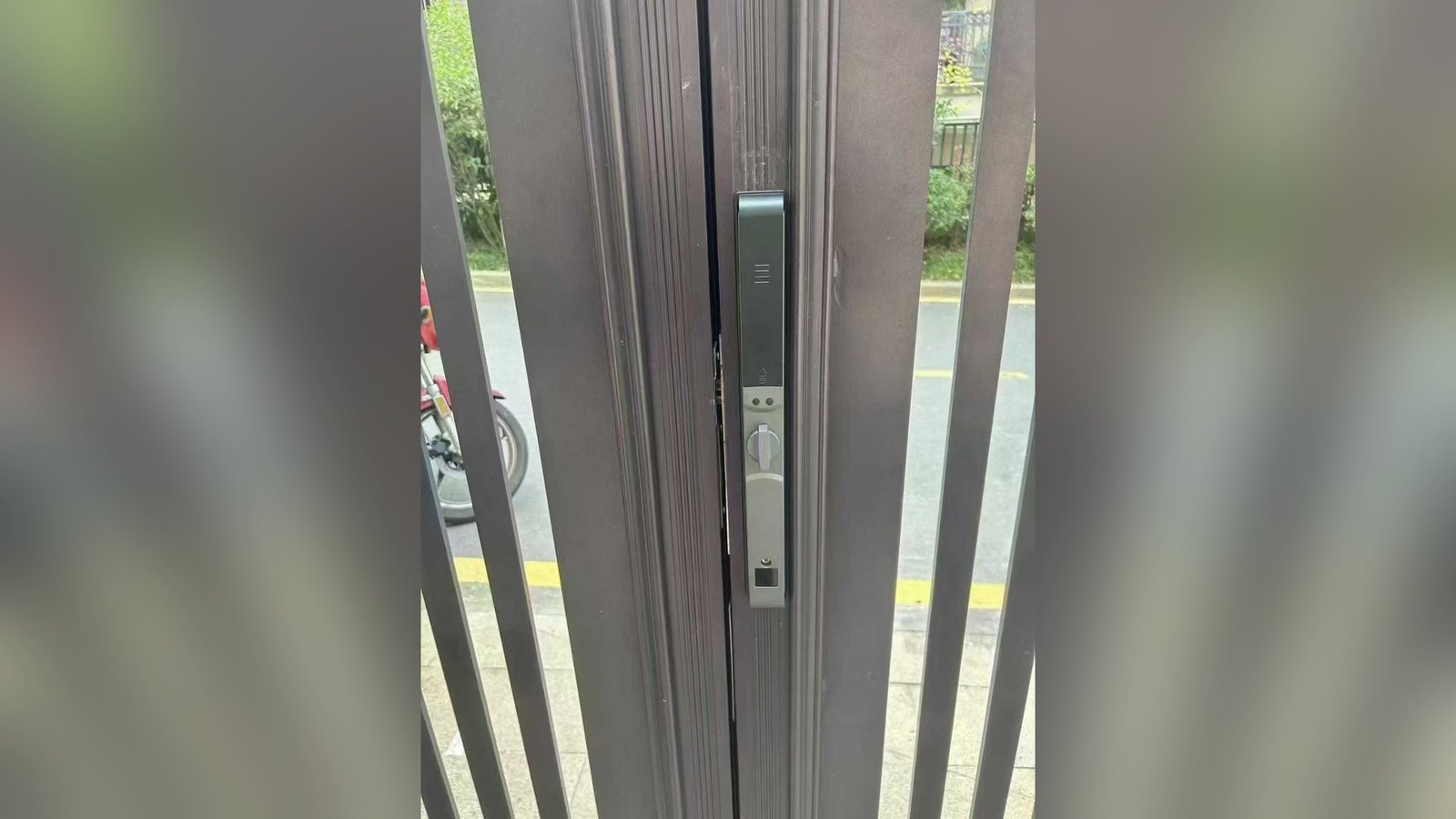
When power or network fails
Openings are unforgiving about time. A power interruption at 6:40 a.m. is not an inconvenience; it is a store that cannot open while staff wait outside and the day’s trade is delayed. Back doors rarely get the contingency thinking that front entrances do, perhaps because nobody rehearses the failure at the hour it would happen. The useful question is simple: if the usual opening method is unavailable, what is the documented alternative, and does the person opening at dawn know it cold?
On the DS deadbolt line, the alternative is documented: those models include a mechanical key override. That turns a power problem into a procedure rather than an improvisation — provided the key exists, its storage is known, and more than one person knows where it lives. The wider planning questions, from the entry sequence during an outage to how the alarm interacts with a manual opening, are covered in our notes on entry planning for a power outage.
The failure plan belongs in the same document as the opening checklist, and the person who opens the store should be able to reach the fallback without a phone call.
Designing the back door
None of this requires a complicated system. It requires back door access to be designed the way other routine operations already are — much like the open-and-close ritual that office teams document so that Monday morning does not depend on one person’s memory. For a retail back door, five decisions cover most of it.
Five decisions for the back door
- Who opens. Name the opener role and a backup, and the hour the door should be unlocked. If the opener holds a personal credential, a change of opener is a two-minute admin task instead of a re-issue.
- Who closes. One accountable last-out, a written closing sequence, and a rule that the alarm is set only after the back door is confirmed locked.
- How deliveries get in. A defined delivery window, a named person who admits the driver, and a door that is locked again the moment the bay is clear.
- Where the register lives. A single list of who holds which credential — fingerprint, password or card — with the date each was issued and, more importantly, the date each was removed.
- What happens when the usual method fails. Who holds the override key and where it is stored, confirmed by a manager before staff are sent home.
Specifying access for a door the public never sees?
Back-of-house access has to work at 6 a.m. on the first attempt, every day. Send CaremLock the door list and the operating rhythm the store has to run, and our team will confirm what the documentation states for each model — credential capacity, admin structure and key override — before anything is quoted.
Or review the product range and contact the team.