
Thursday, 6:20 in the evening. The door opens, and the day arrives all at once: shoes, a laptop bag, two parcels the neighbor signed for, a school bag, a coat that is slightly wet. Within thirty seconds, all of it has to land somewhere — and the first three feet inside the door decide whether it lands in order or becomes the heap that greets the household every morning.
This is the entry organization drop zone problem: not a décor question, but a logistics question about the first ninety seconds of being home. Design those three steps with the same seriousness as a kitchen layout, and the rest of the house stays easier. Ignore them, and every flat surface within ten feet becomes a temporary shelf that never gets cleared.
Why the door area fails by default
An entry area doesn’t fail because people are messy. It fails because it was never asked to do a job. Most homes have an entrance that handles the door itself — a knob, a mat, maybe a light — and nothing that handles the objects arriving with the people.
Three forces push back against any tidy-looking entry. Traffic volume: the average household crosses its main entrance many times a day, and each crossing carries something. Time compression: arrivals happen in bursts, in the same three-minute window each evening. And gravity of habit: unassigned objects go wherever the hand releases them, and after two weeks that spot is treated as the official home for everything.
The three questions the drop zone has to answer
Before buying a single hook or basket, define what the area is for by answering three questions with the whole household:
- What arrives every day? Shoes, coats, bags, keys, phones, mail, returns, sports gear. Daily items need the closest and most mindless spots.
- What arrives occasionally? Parcels, guests’ coats, tools borrowed from a neighbor. These need a defined place that doesn’t compete with daily items, or they’ll colonize the same space.
- What must leave again immediately? The returns waiting for tomorrow’s errand, the neighbor’s tool, the library books. Anything with a next trip deserves an “outbound” zone small enough to force attention.
The answers vary by household — a family with two school-age children has a different inbound mix than a couple working from home — but the exercise itself is universal. That is the whole craft of entry organization drop zone planning: assign the space before the objects assign themselves.
Designing the first three steps, literally
Walk in your own door and count three paces. The zone those paces cover is the drop zone, and it should be organized in layers by how quickly each layer is reached:
The layered drop zone
- Step one — the landing surface. A bench, a low shelf or even a sturdy stool at arm’s reach of the door: this is where bags go in the first motion. Height matters more than style; if setting a bag down requires a bend, it won’t happen.
- Step two — the vertical layer. Hooks at adult shoulder height for coats and everyday bags, plus lower hooks a child can actually reach. Unused lower hooks are the most common reason children’s items end up on the floor.
- Step three — the floor. A defined, bounded shoe area — a tray or a marked strip of wall — for the pairs actually worn this week. Bounded is the operative word; an unbounded pile spreads until it meets something it fears.
Then add the two things every drop zone forgets: a small tray for keys and wallets near the door, and a single outbound basket for everything that must leave the house again. One tray and one basket are enough. A drop zone with six organizers reads as furniture; one with two reads as a system.
Where the door hardware fits in
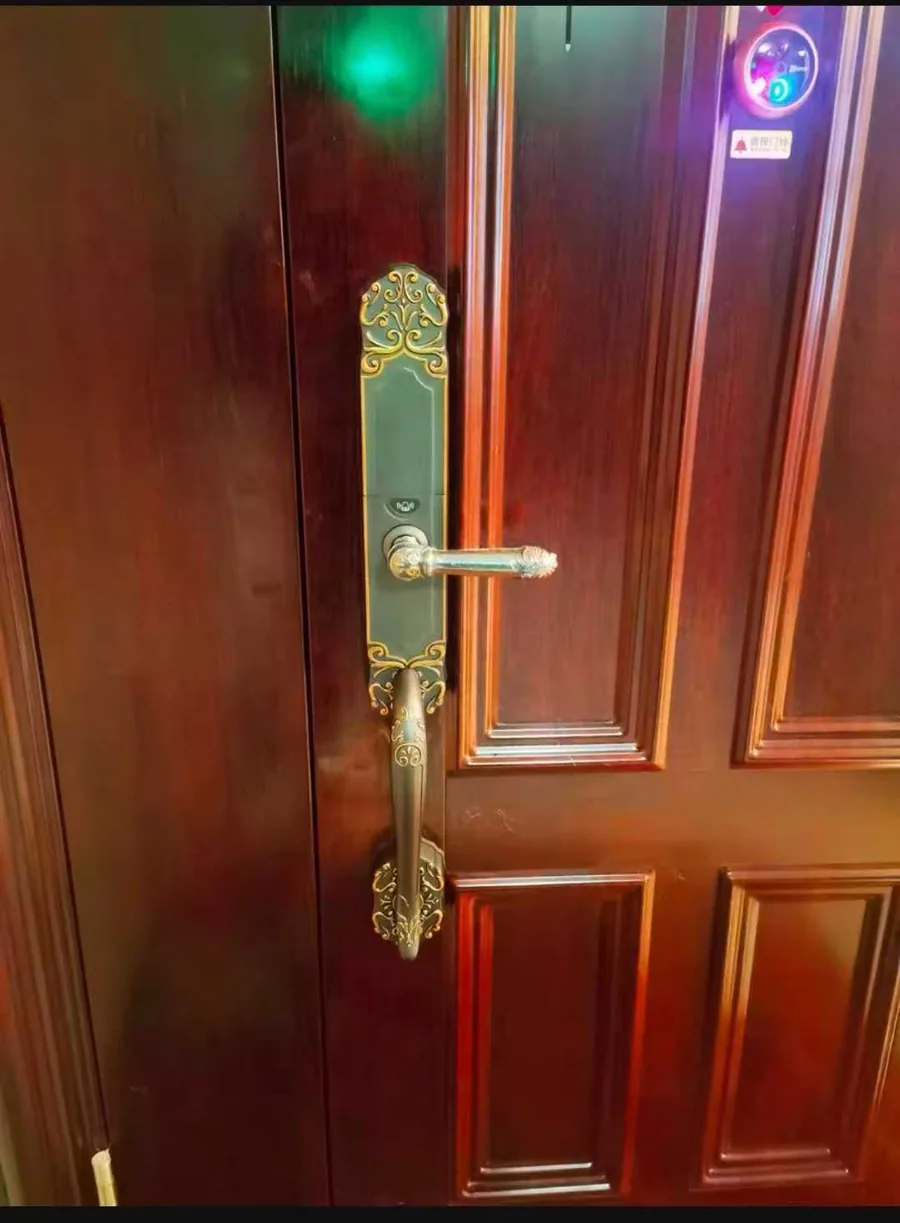
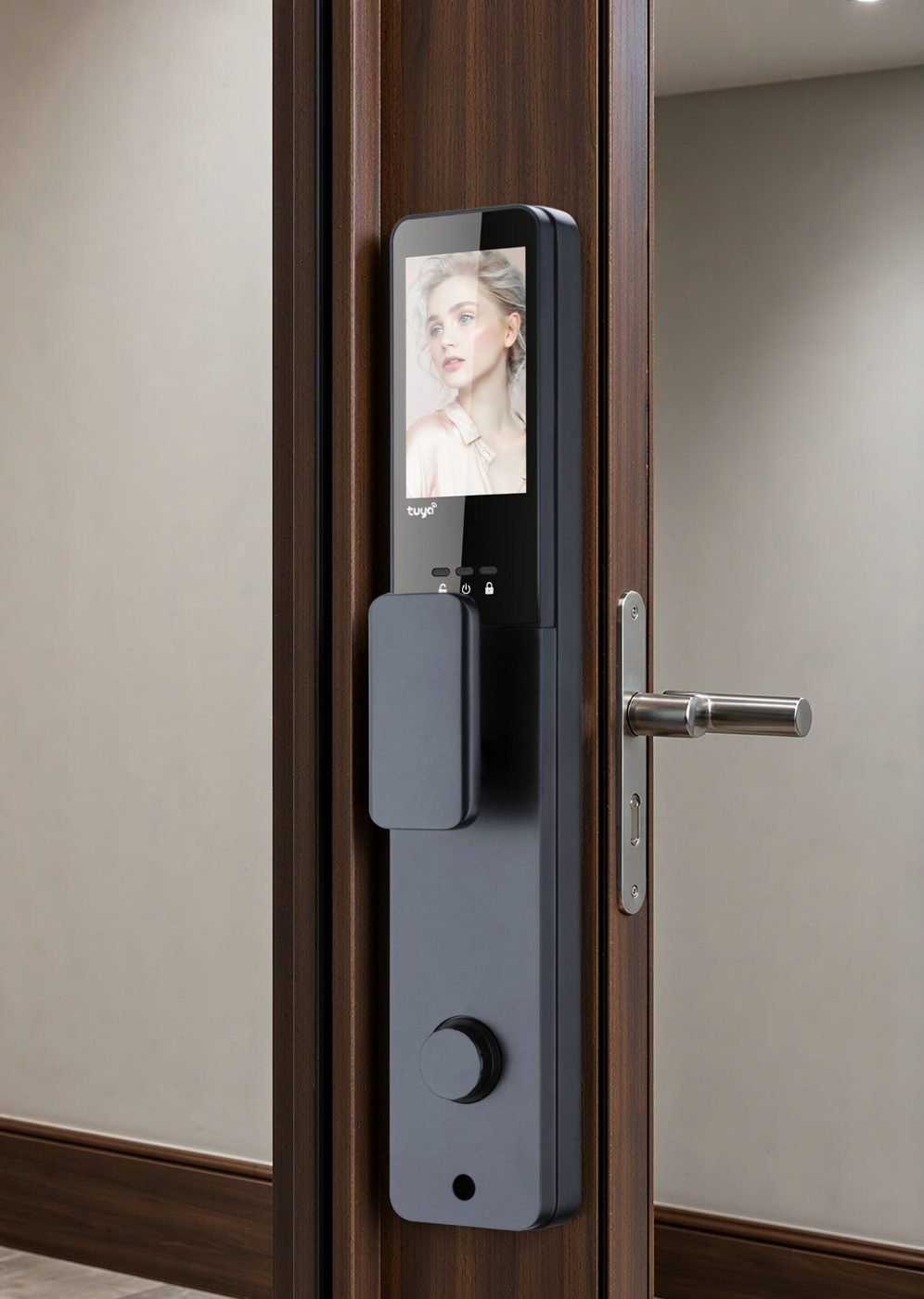
The entry hardware is the first element of the drop zone, because the way a door opens and closes determines what hands are free when people arrive. A lock that can be opened one-handed — a fingerprint or a short code on a reader mounted at the natural height — leaves the other hand holding whatever the day brought in.
Our deadbolt models document four access methods for that reason: fingerprint, password, IC card and mechanical key on both DS01 and DS05. The one-handed methods are the ones the drop zone story cares about, because the alternative is a person setting down bags on the step to fish for keys — which is exactly how bags get forgotten outside. There’s a fuller treatment of this in entry with full hands.
Two smaller hardware habits make arrivals smoother. First, the door should close completely on its own momentum or an easy push — a door that needs a second shove is a door that stays ajar on busy evenings. Second, the lock’s feedback should be perceptible: a spoken prompt, a light, the sound of the bolt. Our deadbolts document voice prompts in four languages, and any of them tells the arriving person the door is done with them so they can turn to the bags. The evening routine around all this is covered in the morning exit routine, which is the mirror image of the same problem.
Keeping it alive after week two
Drop zones don’t fail from bad design; they decay from missing maintenance. Three habits keep the system running after the novelty is gone:
- The evening reset. Two minutes, once a day, usually while the kettle boils: shoes paired and in bounds, bags on hooks, outbound basket checked for tomorrow.
- The weekly sweep. Once a week, the outbound basket either empties or its contents get returned to the household’s attention. An outbound basket that never empties is a storage box with better branding.
- The seasonal cull. Twice a year, ask what no longer belongs near the door — the coat nobody wore all winter, the bag that stopped being used. The entry area serves the current household, not the historical one.
Three habits in total — and they are what separate an entry organization drop zone that still works in month six from a tidy setup that lasted a fortnight.
The rule that does the most work: nothing enters the house more than three steps if it doesn’t have an assigned spot within three steps of the door. This single constraint kills most clutter before it forms, and it costs nothing to adopt.
Questions households ask about entries
What if there’s genuinely no space?
Tiny entries still have three usable planes: the door itself (hooks that fit behind it), the wall beside it (a slim vertical rack), and above (a shelf or high hooks for occasional items). The constraint is usually the floor, and the floor is the layer you can afford to underuse if the vertical layers carry the daily load.
How do parcels fit into this?
Parcels are a two-stage object: they arrive at the door and wait to be opened. Give them one designated spot that is out of the walking path but inside the drop zone — a lidded basket or the end of the bench. Couriers never put parcels in a neat place, so the system needs a landing spot for the messy arrival, not a perfect shelf. For households that receive often, the receiving rhythm is worth its own routine; we keep a version in the daily entry ritual.
Does the smart lock change anything about entry organization?
It changes the first ten seconds. No key search at the door means the arrival starts with two free hands, which means the bag lands on the bench instead of the step. From there, the rest of the drop zone works the same way it always did — position, assignment, and two maintenance minutes a day. If you want the deadbolt detail, the deadbolt range overview covers both models and their documented door fit.
Building entries that work from the first step in?
CaremLock supplies deadbolt and room-door ranges to distributors, installers and project buyers serving family housing. Tell us the entrance profile — we will outline the models whose access methods support fast, hands-free arrivals.
Or explore the deadbolt smart lock range and contact the team.