Most conversations about kids home alone door skills begin and end with the code. The code is the easy part — a child can memorize six digits in a single sitting. The judgment that makes those digits safe to use takes a season to build.
That order — routine first, tool second — is the point of this article. What follows is a skills-first sequence for handing a child real responsibility at the front door: what to teach, in what order, how to rehearse it inside a normal week, and what the lock itself should quietly handle so a child’s attention can stay on decisions rather than hardware.
Why the code is the last lesson, not the first
A lock is a tool. A door is a decision point. When a child walks up to an empty house, the lock handles one small moment of the afternoon — the second the bolt releases. Everything around that moment is judgment: noticing the door looks right, closing it fully, knowing what to do about a knock, staying calm when the code doesn’t take on the first try.
If the only thing a child has practiced is typing the code, then every one of those moments is happening for the first time on a day when nobody is nearby. The fix is not a longer lecture before the first solo afternoon. It is a sequence: build the routine, rehearse the unexpected, and only then hand over the credential.
Skill one: arriving to an empty house
The arrival routine is the foundation, and it should be boring. Teach it as a fixed sequence with a clear finish: approach the door, unlock, step inside, close the door fully rather than letting it swing, confirm the bolt is engaged, drop the bag in one agreed spot, and send the check-in message from the same place every time. Boring is the goal — a routine that never changes is one a child can run while tired, distracted or carrying too much.
Rehearse it with the child leading. You wait outside; they do the whole sequence alone while you watch. Three clean repetitions on a calm afternoon are worth more than thirty minutes of explanation, and the repetitions should happen before any solo day, not on one.
Skill two: the people on the other side of the door
This is the skill families skip, and it is the one that matters most. The rule to teach first is simple and absolute: the door stays closed. A child alone at home does not open it for a delivery, a canvasser, a neighbor or anyone claiming to have been sent by a parent. Conversations happen through the closed door, from a phone, or not at all.
The second half of the skill is what to say. A short script — “I can’t open the door right now, please leave it outside” — needs rehearsal the same way the code does, because the moment itself is startling. Practice it with an adult playing a courier at the door, in a calm voice, twice. In the wider checklist of kids home alone door skills, this one is worth more rehearsal time than the code itself. The goal is a child who sounds bored rather than frightened; confidence and safety look identical from the other side of the door.
Skill three: the day the technology doesn’t cooperate
Codes get mistyped. Fingers are damp from the walk home. A battery warning appears in the final weeks before a change. None of these are emergencies, but they feel like emergencies if they have never happened before. Walk through each scenario once, slowly, on a quiet morning: type the code incorrectly on purpose and recover; wipe a finger and try again; find the battery indicator together.
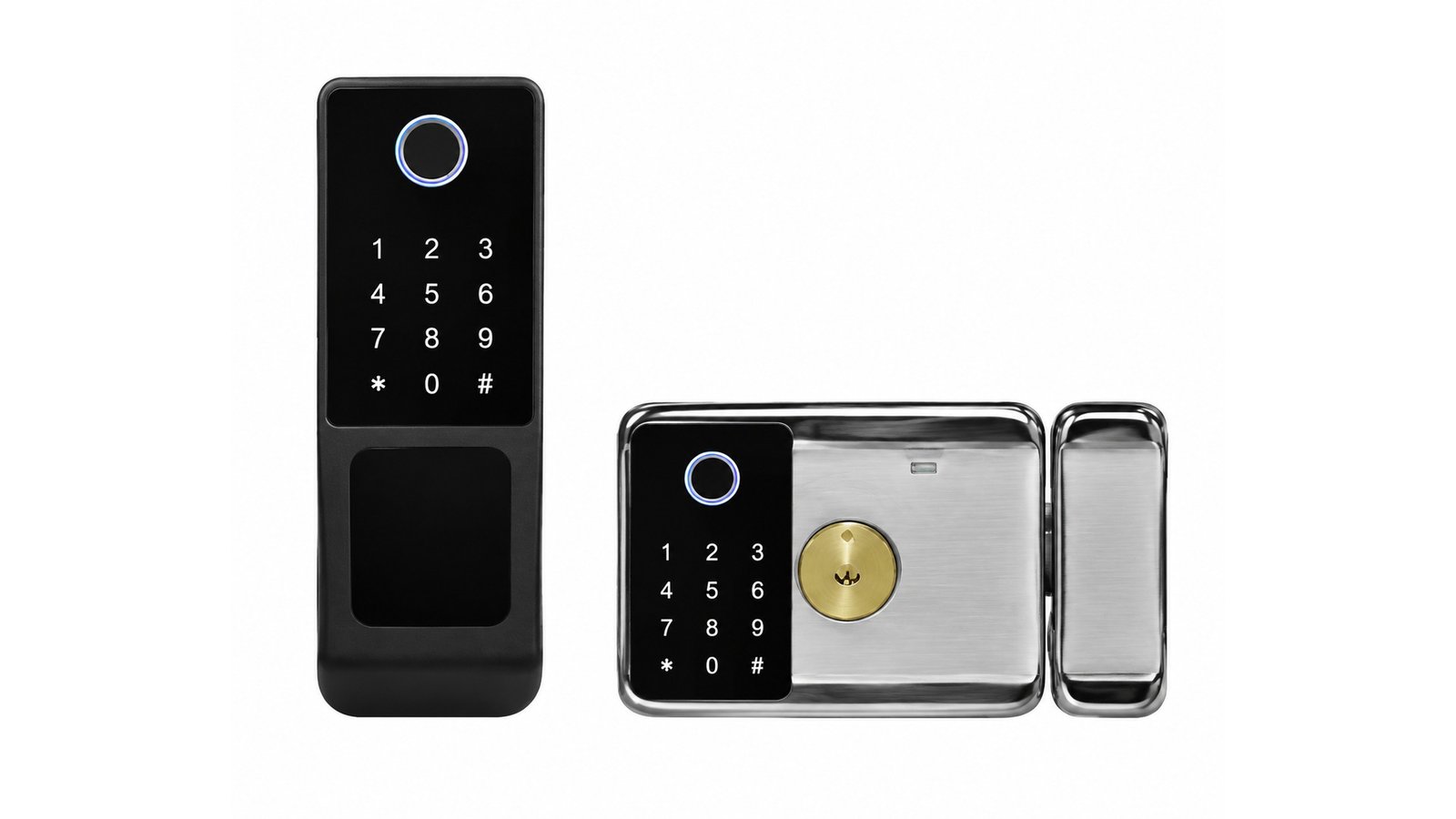
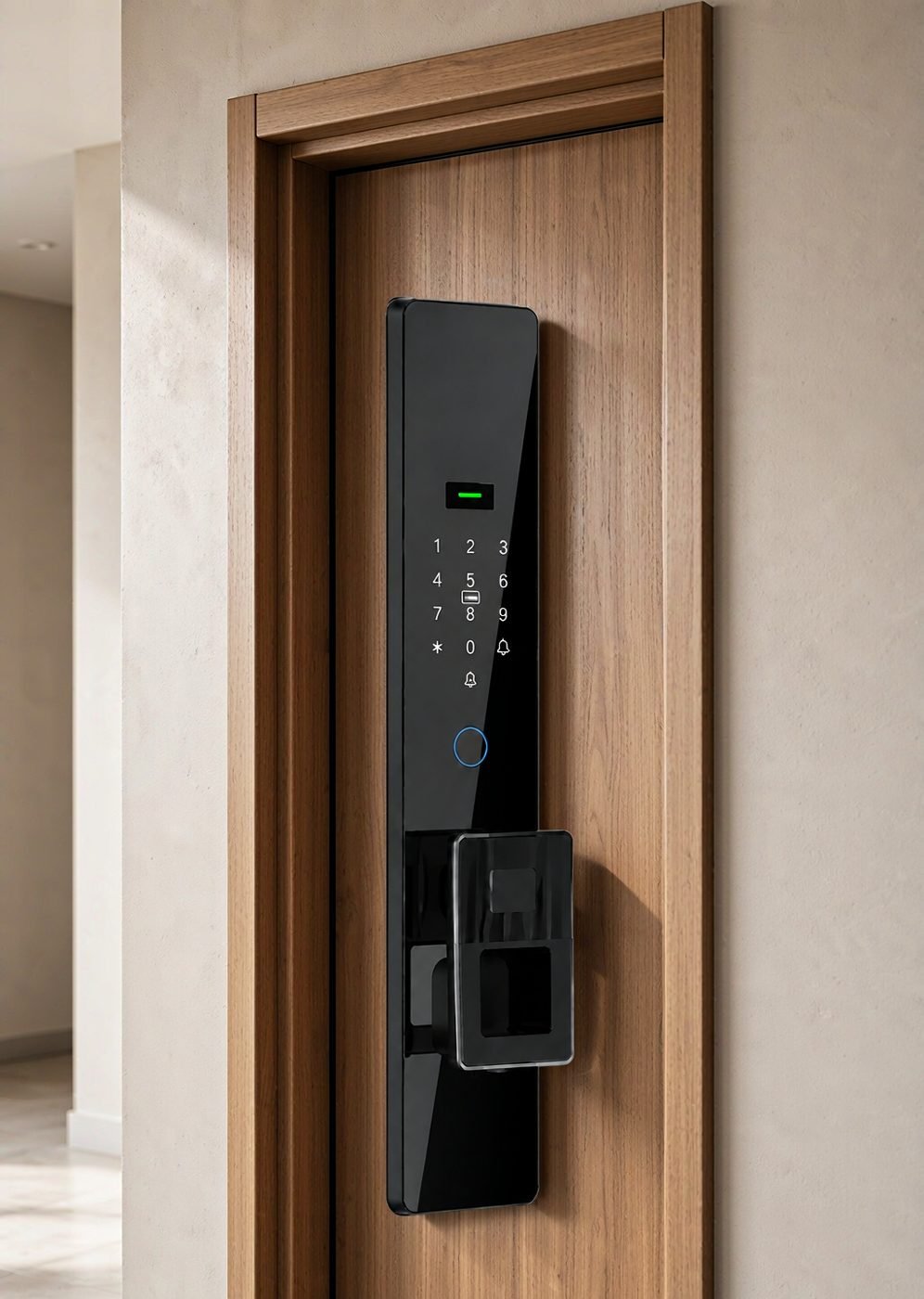
Then teach the floor beneath all of it. Our deadbolt models — DS01 and DS05 — document four ways in: fingerprint, password, IC card and a mechanical key. Power is documented as 6 V from four AA batteries. The mechanical key is the layer that works when everything else is having a bad day, and a child doesn’t need to carry it — but they should know it exists and who to call before it is needed. We keep the fuller routine in what happens when the battery runs low.
A rehearsal plan that fits a normal week
The five-day handover
- Day one: full walkthrough at the door — adult narrating, child repeating each step back.
- Day two: the child unlocks and enters while the adult waits in the driveway. Arrival only, no audience.
- Day three: the child arrives to a house where a parent is already home, to prove the routine does not change just because someone is inside.
- Day four: a staged knock. An adult plays a delivery driver; the child runs the closed-door script without opening.
- Day five: the failure drill — one wrong code, one damp finger, one conversation about the mechanical key. Finish by agreeing the check-in call.
Then comes the first solo afternoon: ideally a short one, on a day when the check-in call is scheduled rather than improvised. The purpose of the week is not to make a child nervous. It is to make the first solo arrival roughly the sixth time they have done it, rather than the first.
What the hardware should handle in the background
While the child is learning judgment, the lock should be carrying the logistics. On DS01 and DS05, each person gets their own credential, with documented capacity for up to 100 fingerprints, 100 passwords and 100 IC cards. That matters in a household with more than one child: nobody shares a code “just for now,” and when an arrangement changes — a friend moves away, a sitter stops coming — a single credential is removed without touching anyone else’s.
Two hardware details are worth checking against your own door before ordering: both models fit doors from 35 to 55 mm thick, with DS01 covering wood, metal and plastic doors and DS05 covering wood and metal. Spoken prompts are documented in four languages, which also helps in households where a grandparent or sitter speaks a different first language. For the wider view, our guide to kids and the home-alone door and the piece on three generations sharing one entrance both go deeper.
Common questions
At what age should a child get their own code?
There is no universal number, and we would be suspicious of anyone who offers one. Readiness shows up as behavior, and most kids home alone door skills can be observed directly: the child can run the arrival routine without reminders, handles a knock without opening the door, and knows what to do when a code fails. Families reach that point at different ages with different children, and practice is the only test that means anything.
Code, fingerprint or card for the child?
A fingerprint suits daily use because there is nothing to carry and nothing to lend — it can’t be left at school or whispered to a friend. Codes make sense for temporary arrangements, such as a week when a grandparent stays over. Many families set the child up on a fingerprint and keep one code as a backup that the parents manage.
What if the child tells a friend the code?
Treat it as a training moment rather than a crisis. Remove that code from the lock’s user list and issue a new one; with per-person capacity documented at 100 credentials, replacing one costs nothing in hardware terms. Then revisit the rule, because the real lesson is that a credential is personal in the way a key was — just easier to change.
Planning door access for family homes?
CaremLock supplies deadbolt and room-door ranges to distributors, installers and project buyers working with family housing. Tell us the household profile — we will point to the models and credential approach that fit, with documentation for the details.
Or explore the deadbolt smart lock range and contact the team.