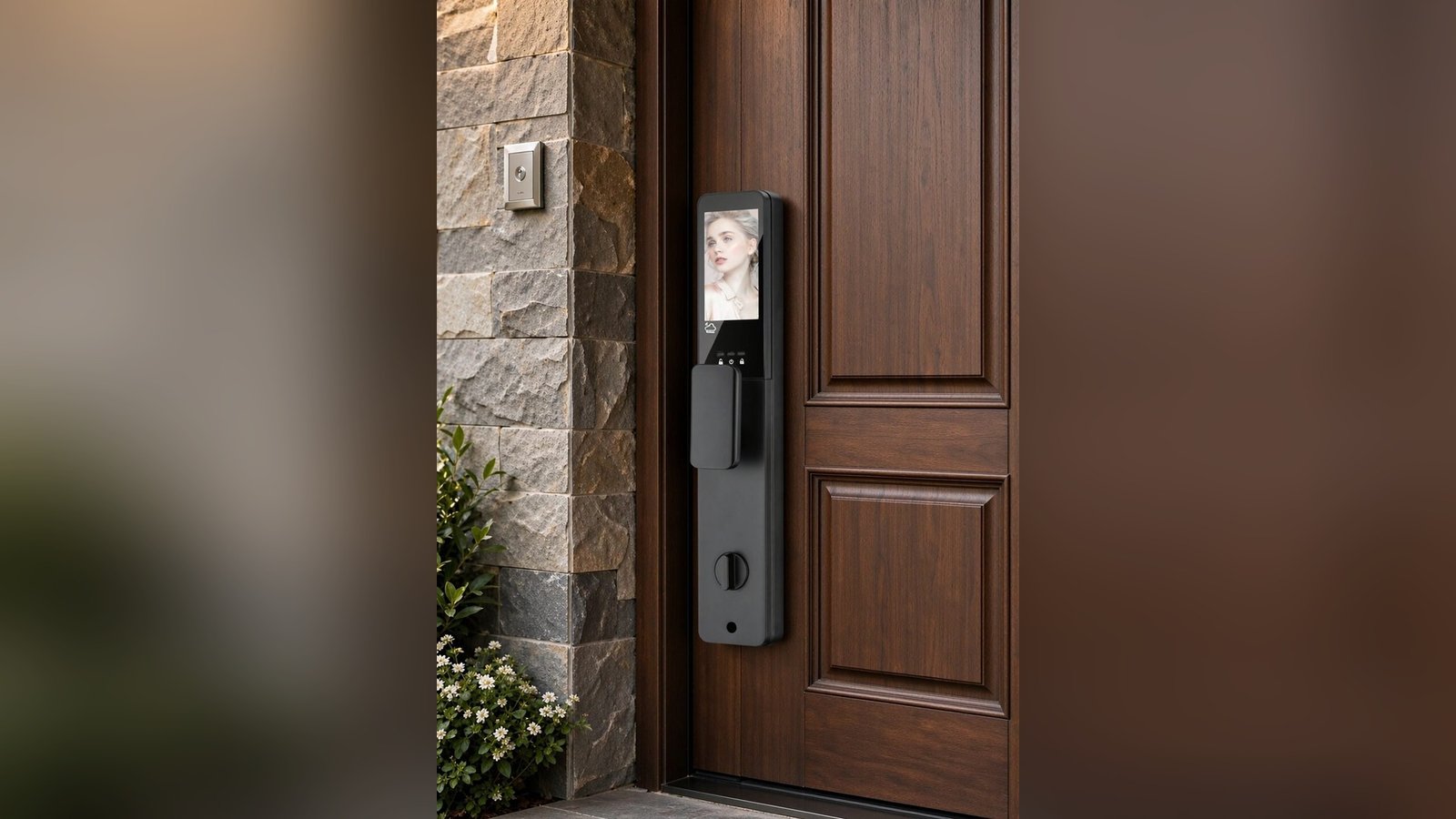
A shared front door code starts as a decision between two people. A year later it has a life of its own: a note inside a kitchen drawer, a line in a group chat nobody administers, a digit string still remembered by someone who moved out in spring. None of that happens through carelessness.
Codes drift one reasonable exception at a time. The households that keep their access tidy over years are rarely the ones with the most advanced hardware — they are the ones with a few small family door code security habits that survive contact with real life.
How a shared code drifts
The drift follows a predictable pattern. A code is set for the household. Then a friend house-sits for a weekend and learns it. Then a cleaner is told “same as last time.” Then someone writes it on the door frame because a relative keeps forgetting it. Every step is helpful in the moment. The sum is an access list that exists nowhere except across several people’s memories.
The written note by the door is the classic tell, and it is worth reading correctly. It is not proof of a careless household; it is proof that the household carries more codes than it can hold in mind. A better hiding place would not fix that. Fewer, better-kept codes will.
- One code for everyone. When the whole household uses the same digit string, one person’s change of circumstance cannot be handled alone — you either disrupt everybody or accept the drift.
- The permanent guest code. A code created for a two-week visit quietly becomes a five-year arrangement.
- Rotations that never happen. Codes get created; they rarely get retired. A house-sitter’s code that still works eighteen months later is the normal case, not the exception.
- Announcement at the door. Codes spoken aloud at the doorstep — in front of a delivery driver, a contractor, another visitor — travel much further than intended.
Three habits that keep codes honest
Three habits do most of the work of family door code security, and none of them requires new hardware.
The habits that hold up over years
- One person, one code. Where the lock supports multiple passwords — DS01 and DS05 document capacity for 100 passwords — nobody needs to share a code to get in. Each person’s code can be changed or deleted alone.
- A date attached to every code. The date it was issued is the fact you will want later. A code with a date can be reviewed; a code without one becomes permanent by default.
- One written register. A single page — name, role, credential type, date added, and a note for removal — kept with household documents. It turns “who still has access?” from a memory test into a lookup.
The register sounds bureaucratic for a home until the first surprise: a former roommate who still knows the code, or a contractor whose project quietly ended. The register does not add work. It moves five minutes of work to the start, where it is cheap, instead of leaving it to a Saturday evening when it is expensive.
Setting the household standard
Households usually leave the details to habit. It pays to decide them once, on purpose: who holds the code that manages the other codes, how many digits to use, and what happens when someone who knows the code leaves the household. These are decisions. Making them explicitly is what separates a system from a drift.
A few defaults work well. Avoid birth years, house numbers and repeated digits, because those are the things a curious visitor can guess. Keep the managing code with one or two adults rather than the whole household. And change codes at events — a move-out, a lost phone, a change of staff — rather than only by the calendar.
Where temporary codes fit
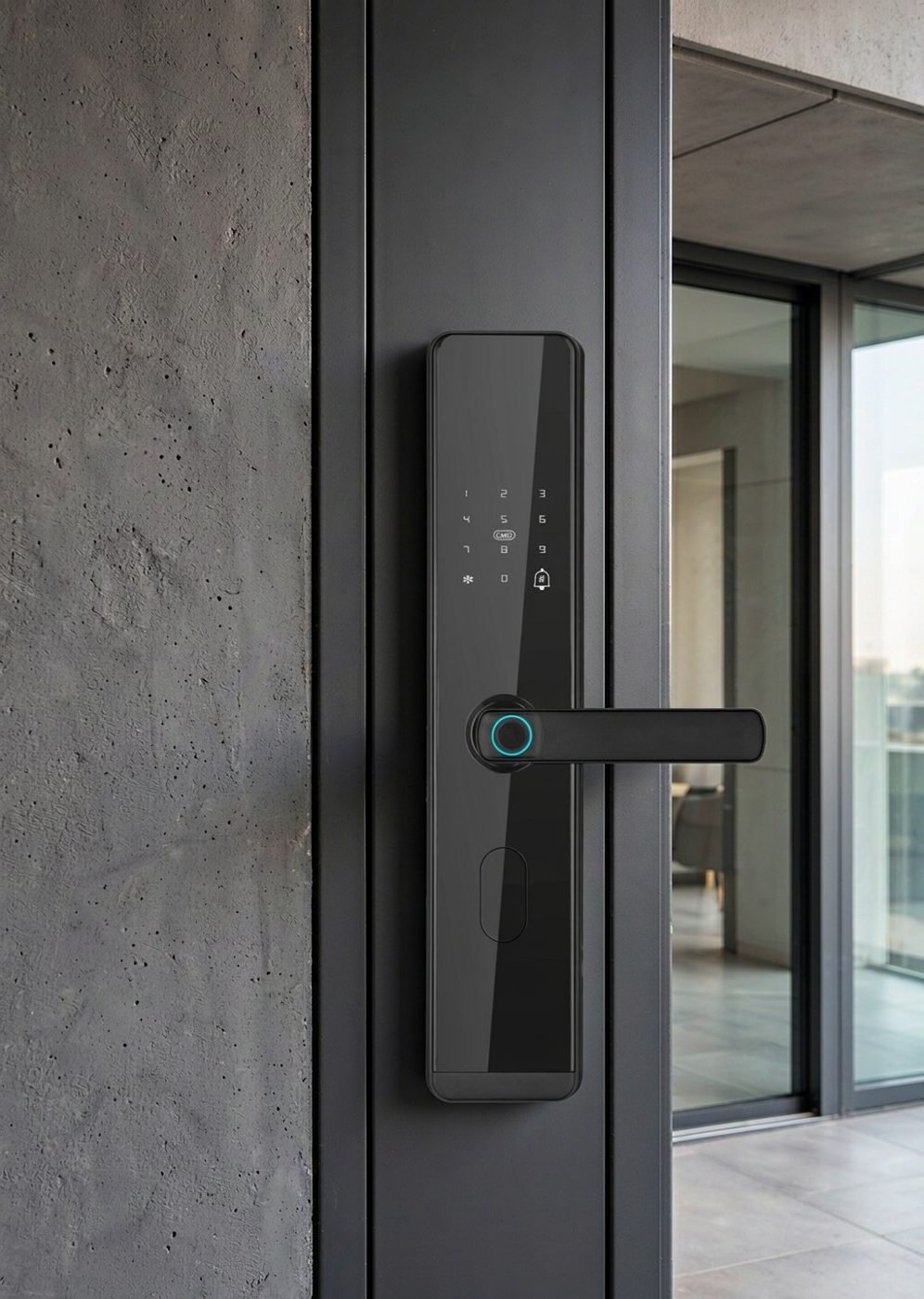
Not every person who needs in should hold a permanent code. Guests, cleaners, contractors and pet sitters fit a different pattern: access that begins and ends with the arrangement. Where the lock’s platform supports it, a temporary password does exactly this job.
One model in our range documents that behavior directly. The DDZ17 room door smart lock lists temporary password support alongside a documented 300-user capacity and seven access methods, positioned for residential rooms, hotel rooms and serviced apartments. The same thinking scales down to a household: the person who visits twice a year does not need a permanent entry on the list.

When the household changes
Every change of people is a change of access. Someone moves out; a phone with the management app is replaced; a cleaning agency rotates its staff; the neighbor’s teenager stops pet-sitting. Each is a small event with a code attached, and each is handled best the same week, not eventually.
Rotation itself is quick when the register exists. Decide the new code away from the door, update it one person at a time, test it with the person who will actually use it, and write the date down. Ten minutes per change keeps the list honest — and it stops the quiet accumulation that makes households consider replacing perfectly good hardware for the wrong reason.
Teaching the habit, not just the code
A code handed to a child is often the first access credential they manage, and it is worth marking the occasion: this code is yours, it is not for friends, and if a friend needs in, they ring the bell while you are home. That conversation is the whole lesson, and we covered its fuller shape in a guide to helping kids manage entry on their own.
The same care applies to shared living. Roommates and long-term guests each need their own credential, for their own sake and everyone else’s: a household access list built on personal codes stays manageable, while one built on a shared secret cannot be edited when life changes. Households built around shared access between roommates have their own rhythm; it is worth designing deliberately rather than by drift.
Common questions
How often should a household door code be changed?
Event-driven changes matter more than calendar changes. Move-outs, lost phones, staff rotations and the end of a renovation are the moments when a code’s history actually changes. A household that rotates codes on those events, and reviews the register once a year, is ahead of one that changes codes monthly but never checks who holds them.
Is it unsafe to write a door code down?
Writing a code down is fine when the location is deliberate. A register kept with household documents is safer than a note beside the keypad, because it is not visible from the doorstep and because it records who holds what. The risk is not the act of writing; it is a written code that outlives the arrangement it was written for.
Can a guest have access without sharing the family code?
Yes, and it is the better default. Where the lock supports multiple passwords — DS01 and DS05 document 100 — a guest gets a code of their own that is deleted when the stay ends. For longer arrangements, a model that documents temporary passwords, such as the DDZ17, matches the pattern exactly.
Supplying households that manage access for years?
CaremLock builds deadbolt and room-door ranges with documented credential capacity and temporary-password support — the hardware side of the habits above. Tell us your market and the access patterns your buyers manage.
Or explore the deadbolt smart lock range and contact the team.