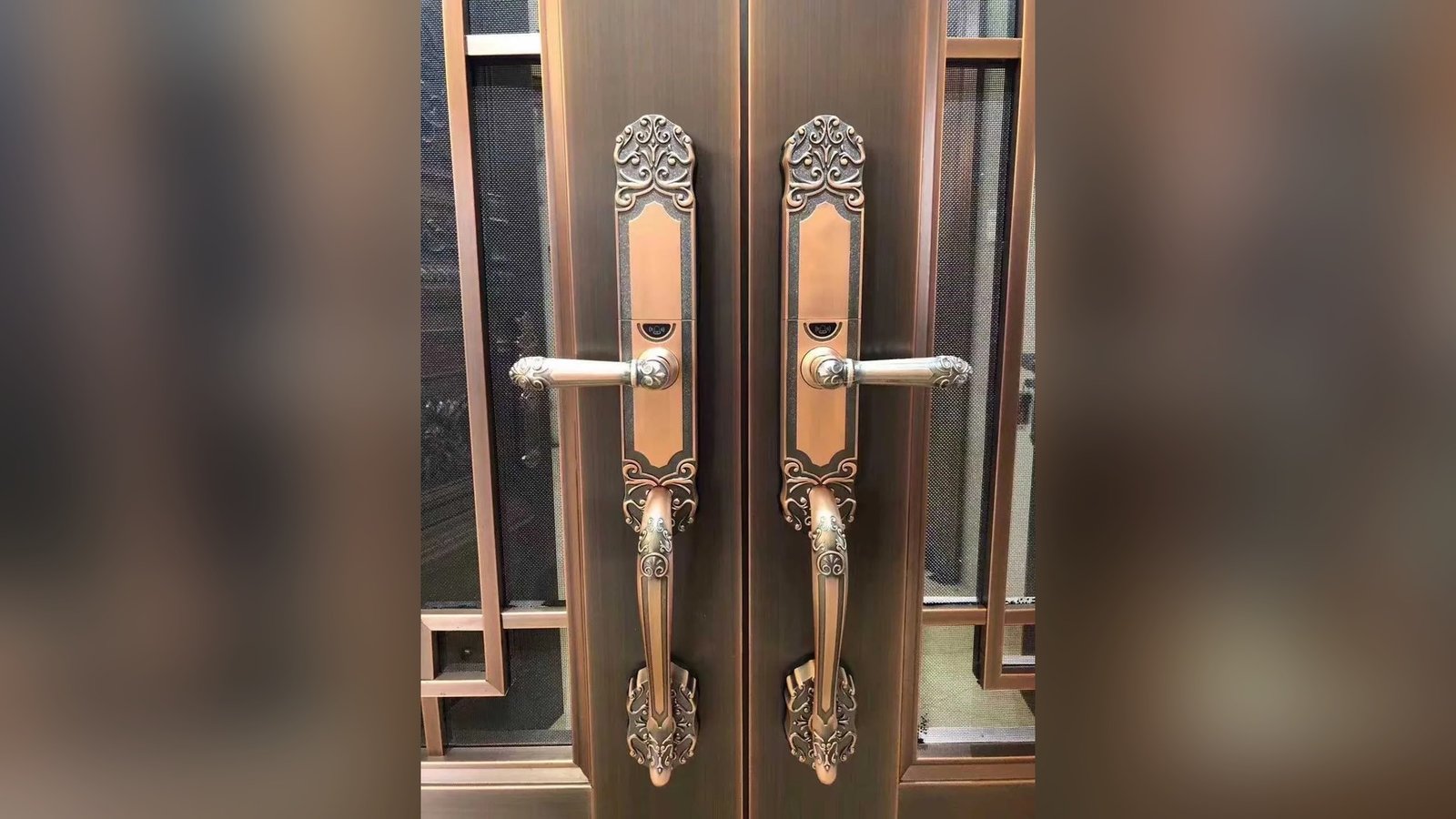
The last afternoon of a long installation week. The tools are packed, the final door closes cleanly, and someone says the sentence that ends every good job: “That went well.” Whether that sentence ever becomes usable proof depends on the next ten minutes — and in most companies, those ten minutes are spent driving away.
Installers and distributors sit on a library of smart lock project case studies they never collected. Not because the work wasn’t good, but because documentation happens after the work ends, when everyone is tired. This is a lightweight method to capture it anyway, with consent, and without a word of overclaiming.
Why proof beats another product photo
Buyers at every level trust a real job more than a catalog render. A homeowner wants to know the lock has lived on a door like theirs. A facility manager wants evidence that the hardware meets doors with the same constraints. A distributor’s own sales team wants to show, not claim. A documented installation answers the first question a project buyer actually has — has this been done on doors like mine? — and it answers with something no brochure can imitate: specificity.
The counterintuitive part is that average jobs work better as proof than showcase jobs. A clean installation on an ordinary apartment door is something a buyer can picture themselves doing; a specialty deployment is something they admire from a distance. The library should reflect the fleet, not the flagship.
The five-part skeleton of a case study
Every useful case study answers five questions in order, and none of them require marketing language:
- What was the property? Home, apartment building, office, hotel — enough context for a buyer to recognize their own situation.
- What was the door, and what was the constraint? Door type, thickness, preparation, and anything unusual: an old frame, a narrow stile, an outdoor entry.
- What was installed? Model, method of access, and how many doors. Facts from the job, not a feature list.
- What did the installation ask for? Time, tools, adjustments, surprises — the practical texture that makes the story credible.
- What can be verified? Only what the job itself shows. Fit confirmed, function confirmed, client satisfied — with no invented numbers attached.
Consent comes before the camera
A case study is published material, so permission is the first step, not the paperwork that follows the photos. For a family home, ask the owner. For a building, ask the manager or the party responsible for the property. For a rented unit, remember that the tenant may not be able to consent on the owner’s behalf — check who actually controls what gets published.
Decide in advance what may appear: no faces, no house numbers, no family names, no building names without written approval. A signed message or email is enough; the point is that a specific person, on a specific date, agreed to the specific material. Keep that note with the case study file, because permission asked verbally has a way of becoming ambiguous two years later.
Photographing a door like a professional
An eight-shot list that takes five minutes
- The closed door, straight on, in daylight — the establishing shot.
- The hardware, close, with the lock in a clean state.
- The interior side of the door, showing how the whole assembly reads.
- The door edge or frame detail that proves the fit — preparation, mortise, stile.
- A wider context shot that shows the property type without identifying it.
- One detail of what made this job interesting, or hard, or clean.
- Before and after, if a lock was replaced — same angle, same distance.
- The carton or model label, for your own records, even if it never gets published.
Same angles across jobs are what turn a pile of photos into a library. Future-you, assembling a distributor presentation at short notice, will be grateful that every job has the same eight frames.

Writing it without overclaiming
The discipline is simple: describe the job, not the universe. “Installed on twelve apartment doors with 40 mm metal frames; the original preparation was reused; the property manager tested access for the cleaning team” is a case study. “Transformed the building’s security” is a slogan wearing a case study’s clothes, and buyers can smell it.
Where a capability matters — a battery type, a capacity, a door thickness range — quote it from the model’s documentation rather than from memory, because a case study is exactly where a misremembered figure becomes a commitment. If the job illustrates a documented capability, say so and link the source. If it illustrates nothing beyond “it worked”, that is still worth recording, honestly and briefly. The same discipline applies on the supply side; our own quality checks are documented in the quality inspection checklist we ask partners to expect.
A workflow that survives busy weeks
The reason most installation proof never gets collected is that it is treated as a project. Treat it as a habit instead. Capture photos the same day, while the details are fresh. Use a fixed note template — property, door, model, constraint, one line on how it went. File the folder within the week. Then publish at a steady rhythm rather than in one heroic burst, because a library grows by accumulation and dies by backlog.
The five-minute rule: if capturing a job takes longer than five minutes on the day, the process is too heavy to survive. Two minutes of photos, three minutes of notes, one folder with a consistent name — that is the whole system.
Packaging case studies for your market
Once a handful of jobs are documented, smart lock project case studies start working in several directions. Distributors can turn installers’ photos and notes into market-facing one-pagers: property type, door, model, result, permission line, and a link to the relevant product page — for hospitality jobs, for instance, the DDZ17 room-door model is the natural anchor. Installers can use their own case studies in quotes to win work with the same kind of building. And manufacturers’ projects pages, like our projects section, exist to show how that documented work is presented.
The supply side of this equation matters too: a distributor assembling twenty case studies benefits from knowing precisely what support and documentation to expect from the manufacturer at each stage, which is the subject of our notes on installer support expectations.
Questions installers ask about smart lock project case studies
What if the client doesn’t want photographs taken?
Respect it, and offer alternatives: interior-only shots, a description of the work without identifying details, or a written case study with no images at all. Permission is not a negotiation, and a case study built on an image the client regrets is a liability rather than an asset.
Can I use the manufacturer’s product photos in my case study?
Product photos serve their own purpose — illustrating the model — but they do not replace job photos, because the proof lives in the installation. A strong case study pairs two or three job photos with one clean product image and the documented facts from the model page.
How long should a case study be?
One page is plenty: the five questions from the skeleton, four to six photographs, and the permission line. Length is not the asset; consistency is. Twenty short, specific case studies outsell one exhaustive write-up every time.
Building a documented portfolio of installations?
CaremLock works with installers and distributors to keep the supply side of that portfolio clear — model documentation, product imagery and reference projects for distributors, integrators and project buyers. Tell us what you are documenting, and we will share what is available to support it.
Or explore the documented projects and contact the team.