A lock range crosses a border long before a single carton does. The first crossing happens in the questions a distributor asks — voltage, language, door norms, documents — and the answers decide whether the launch is a plan or a scramble. A smart lock new market launch is not a shipping event. It is a list of questions answered early, on purpose.
The questions below are the ones a smart lock new market launch tends to collect, roughly in the order they matter. None of them are exotic. All of them are cheaper to ask before the order than after the container.
Start with voltage, because daily life runs on it
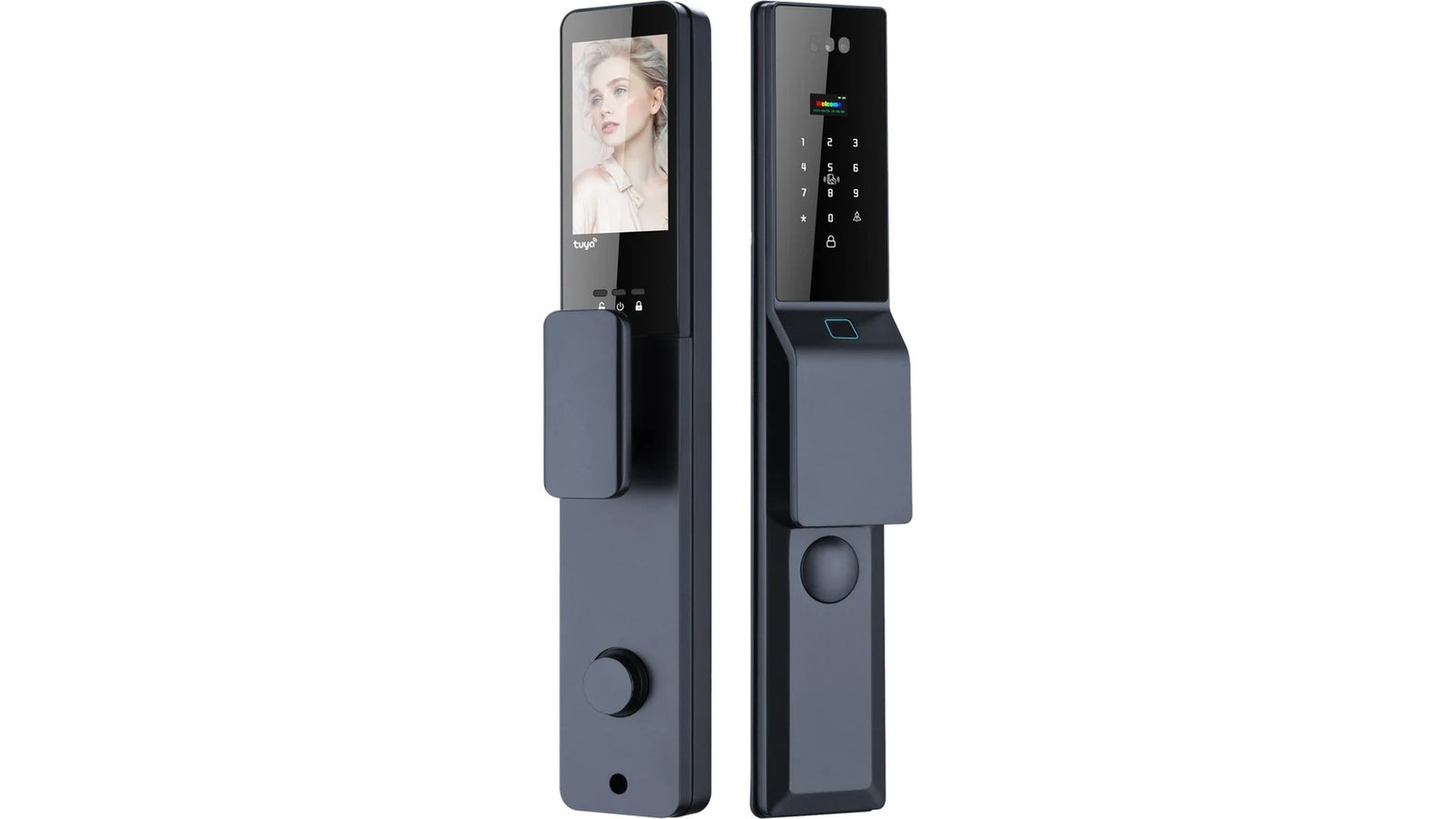
Power looks like a detail of the product. In a new market it is a detail of the household. Our deadbolt models (DS01 and DS05) run on 6 V from four AA alkaline batteries — a standard that is sold in every market, which keeps the day-one experience simple. The DDL1 uses a 4200 mAh lithium battery with Type-C fast charging, matching markets where USB-C charging is the default habit. The A20 glass-door lock documents two options: a 12V23A battery or a 5V power bank.
The question to settle early is not only what the device accepts but what the market can buy, how the end user expects to charge it, and what happens at the end of the first battery life. A range whose power story matches local habits needs fewer explanations at the shelf.
Language is a specification, not a translation task
What does the lock say to the person using it? The deadbolt models document voice prompts in Chinese, English, Spanish and Portuguese. The A20 glass-door model documents a 9-language interface. Language also lives in places people forget to check until a customer complains: the printed manual, the app, the packaging, and the support path when something goes wrong.
Mapping the market’s languages to those layers is a small exercise with a large payoff. A prompt in a language the user speaks turns a confusing moment into an obvious one — especially for the visitors, cleaners and caregivers who meet the lock without any training.
Doors differ, and so do the fits
Exporting a lock means exporting its assumptions about doors. North American entries tend to arrive with standard preparations that the DS01 is documented to fit; the deadbolt line covers door thickness from 35 to 55 mm, with lock tongue options of 60 and 70 mm, and DS01 also covers plastic and metal doors alongside wood, while DS05 is documented for wood and metal. Where the market builds doors from aluminum frames, the LK0161 waterproof aluminum-door lock is positioned for narrow-profile entrances with a standard 3585 mortise.
Before the first order, it is worth walking the local door landscape: what the common thicknesses are, how the doors are prepared at the factory, and which entry types — villa, apartment, office — the range will meet first. A range that fits the doors of the market sells itself; a range that nearly fits generates returns.
Documentation is the second product
Installers, project buyers and after-sales teams judge a range by what travels with it, which is why a smart lock new market launch should treat documentation as a deliverable in its own right. CaremLock provides product documentation through the Download Center, and installation drawings live in the product documentation for the models that use them. For a launch, the useful question is which documents the market needs to see before it will trust the product: installation instructions, packing data, model specifications, and the material a distributor can hand to a system integrator.
The earlier those documents are reviewed against local expectations, the fewer surprises appear during the first installation week. This is the same discipline we described in our guide to the questions worth asking a smart lock supplier — documentation is one of the few areas where thoroughness costs nothing later.
The launch list: questions to settle early
A new-market question list, in roughly the right order
- Which door types and thicknesses dominate the target market, and which models in the range fit them as documented?
- What power does the market expect — standard AA batteries, rechargeable lithium, or another supply entirely?
- Which languages must the prompts, app and manual cover?
- Which documents does a buyer need before ordering, and in what form?
- Who handles installation, and what training or drawings will they expect?
- What does after-sales look like: who holds spare parts, and who answers the first phone call?
- Which support hours and channels will serve installers in each time zone after launch?
- What will be on the carton — private label, distributor marks, or manufacturer branding on approved orders?
- How will a sample unit be evaluated before the first full order?
Support hours are the question most often postponed, and the one that shapes daily reality first. When an installer writes in with a fitting problem from six time zones away, the launch plan needs a named responder — the manufacturer’s export desk, the importer’s technical team, or a joint arrangement written into the agreement before the first shipment. Distributors who settle it early find that the answer organizes their whole calendar; those who leave it to launch week find out how it works one urgent message at a time.
What we can share before an order
CaremLock is a B2B smart lock manufacturer working with distributors, importers, installers, integrators and private-label buyers, with manufacturing, assembly and product testing inside the supply process. Logo customization is available on approved orders, and delivery is global. What that means at launch time is simple: the range can be presented under the buyer’s brand where the agreement calls for it, and the documentation trail is available to support the first evaluation.
For ranges that are still growing, the sequence we recommend — a focused core, specialists for particular doors, and one flagship — is set out in expanding a lock catalog over time. The first market is not the last decision; it is the start of a portfolio.

Market-entry questions we are asked most
When should local compliance questions come up?
Early, and with the importer’s roadmap in mind, because local requirements are usually the importer’s process while the product documentation is ours to provide. Raising the topic at evaluation stage lets document preparation follow the same timeline as the commercial discussion instead of blocking it.
Which model should lead a new market?
Match the lead model to the doors the market actually builds. Standard prepared entries point to the deadbolt line; aluminum frames with narrow profiles point to the LK0161; glass entrances point to the A20. Leading with the model that fits the majority of doors shortens every conversation that follows.
Can a range be sampled before launch?
Yes — and a structured sample evaluation before the first full order is the habit we recommend to every new market partner. The point of the sample is not to admire the product; it is to test fit, installation, documentation and the unboxing experience on the doors of the market.
Preparing a lock range for a new market?
CaremLock supports distributors, importers and private-label buyers through the questions on this page and beyond. Tell us the market and the doors it builds — we will map the range, documentation and branding options to the launch.
Or explore the deadbolt range and contact the team.