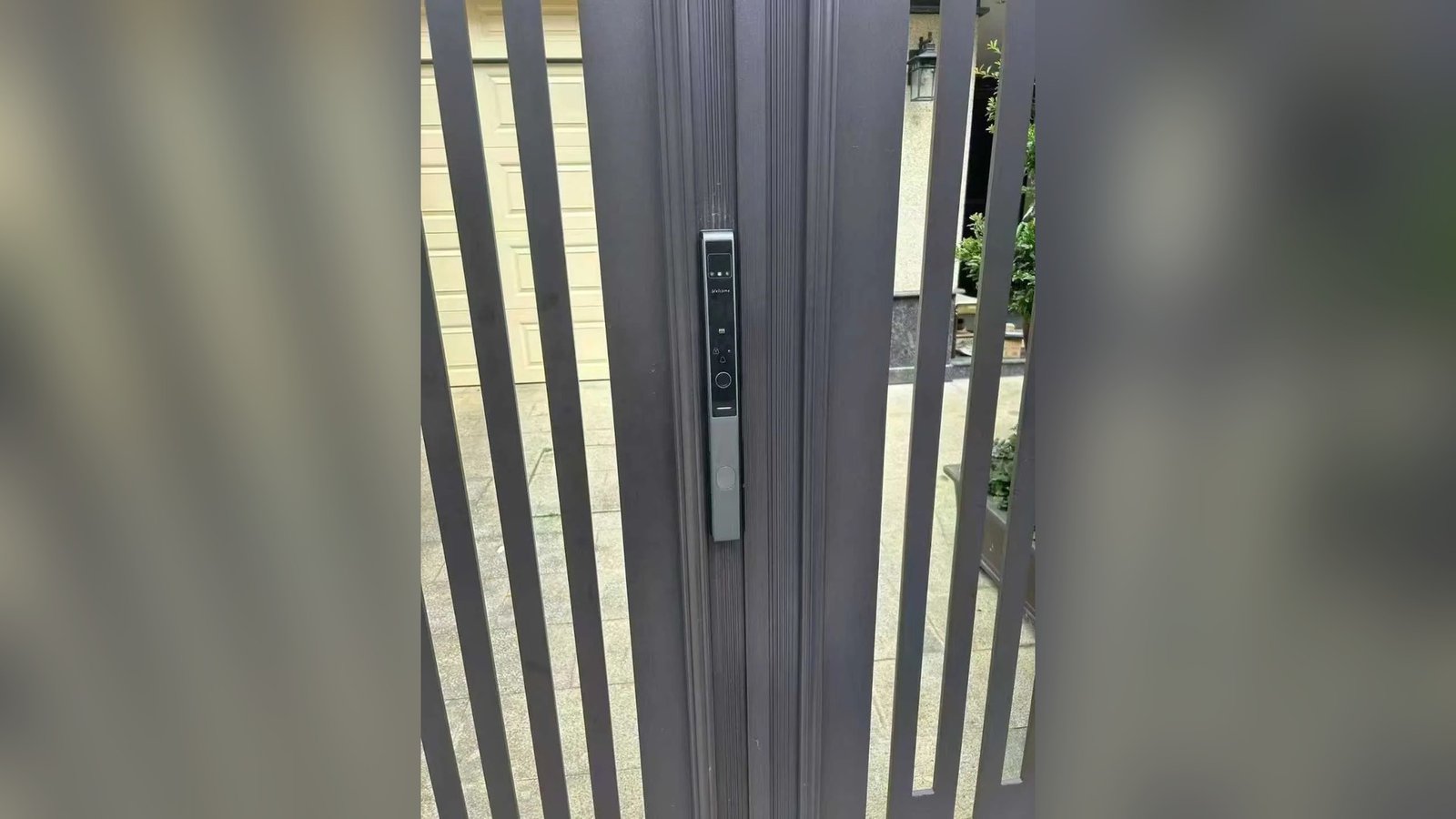
A glass door is a lighting decision long before it is a hardware decision. It changes how much daylight reaches the hallway, how much of the hallway reaches the street, and what every visitor understands about the building before touching anything. Then, usually late in the process, someone asks the practical question: where does the lock go?
That is the tension at the heart of glass entry door design. The same pane that makes an entrance feel open removes the surface a traditional lock expects. Everything else — hardware, privacy, light — follows from resolving it well, rather than treating the glass as a wood door that happens to be transparent.
What a glazed entrance changes
Three effects arrive together with any glass entrance. Light: a glazed door borrows daylight for the interior and pushes the building’s presence outward, which is why glass suits lobbies, storefronts and modern homes. Visibility: people can see in, and people inside can see who is arriving — a security benefit and a privacy cost in the same pane. And presence: a lit lobby behind clear glass reads as an invitation, which is a design statement whether or not anyone intended it.
None of those effects are questions about locks. All of them change what the lock has to respect — because the hardware now lives on a surface that is part of the composition rather than a support structure hidden in a door slab.
Why you can’t treat glass like a wooden door
Tempered glass is not a material you can cut, bore or chisel after it is made; the strength comes from the tempering process, and a hole added later removes the very property that makes the pane safe. That single fact rules out the classic installation route for most locks, which expect a door edge with a mortise cut into it. Frameless glass doors offer no stile to mount against at all. Framed glass doors do have a stile — a narrow one — and that is where the modern glass-door lock belongs: mounted on the frame, not the pane.
The narrow stile also resets expectations. There is less face to work with, so the hardware has to be designed for the frame from the beginning. This is the practical dividing line in the category, and it is worth checking every model against it before a specification is written. We went through the deployment questions in more depth in the A20 deployment story.
The A20 on the glass-door question
Our A20 glass door smart lock was built for framed glass doors and the app-connected way many commercial buildings already operate. Its documented methods are fingerprint, password and card — enough variety that a receptionist, a cleaner and a visitor can each be given something they can actually use. The interface is documented with 9 languages, which suits buildings where staff and tenants do not share one first language.
Power is documented as a 12V23A battery or a 5V power bank, so the lock can run without threading new wiring through a framed glass system. The A20 is offered for OEM/ODM work, which matters to distributors, security resellers and glass-door project specifiers who need the hardware to carry their own brand. Its documented applications cover office glass partitions and meeting rooms, commercial buildings and glass-entry lobbies, retail storefronts, and modern residential and hospitality glass doors.

Privacy is a hardware-adjacent decision
How much glass is too much glass is a question for the architect and the client — but it lands on hardware in an unexpected way. At night, an interior lit like a stage and a street in darkness turns a clear entrance into a display case; the fix is usually a design one, from frosted bands at eye level to film, planting or lighting strategy. What hardware contributes is restraint: a lock and handle that do not add visual noise to a surface already carrying a lot of information.
There is also an operational privacy question for glass offices. If the door is glazed, the access method is partly visible; a card reader or a fingerprint reader beside the frame draws less attention than a keypad conversation. Where visible access matters, the softer methods are worth considering early. Our article on glass-door lock technology walks through how these systems fit together.
Light, glare and readers at a glazed entry
Glazed entrances concentrate light in ways that can surprise sensor equipment. Low sun can flood a reader’s surface at exactly the hour people arrive; reflected light from a bright lobby can wash out a screen. The remedies are usually architectural — an awning, a recess, a canopy, or simply choosing which side of the frame the reader lives on — but they are much easier to apply during design than after the glass is installed.
The useful habit is to visit the entrance at the times of day that matter: morning arrival, noon, and the evening hour when the interior is bright and the street is dark. Where the reader will sit, and what it will be looking at in each of those conditions, is a design decision rather than a product feature.
Keeping the visual idea intact
Details that keep glazed entrances coherent
- Choose finishes that connect with the frame and handle rather than compete with them.
- Keep the hardware’s footprint modest relative to the stile; glass leaves little room for bulky shapes.
- Decide the reader’s position as part of the frame’s rhythm, not as an afterthought.
- Hide or route power deliberately — a documented power option makes this possible without cutting glass.
- Rehearse the four-second moment: visitor arrives, reads the door, finds the reader, is admitted.
- Coordinate the entrance with the interior lighting plan, so the door looks right lit from both sides.

A specifier’s short list for glazed entries
Before any glass-door lock is specified, five questions are worth answering in writing. Is the door framed or frameless — and if frameless, does a lock exist for that condition at all? What is the stile width, and what is the documented mounting envelope? What power is available, and does the model accept it without new wiring? Who manages access, and how many people need credentials? And what does the model’s documentation say about where the product is intended to live?
None of that is exotic; it is the routine homework of glass entry door design. Those answers are available from documentation, not from showroom impressions — and for a glass entrance, where the cost of a mistake is measured in replaced panes, that order of operations is the whole game. For a wider view of the category, the glass-door smart lock range overview sets out how the hardware families map to different glazed applications.
Questions about glass entries
Can a smart lock be fitted to any glass door?
No, and the distinction matters more than any feature list. Framed glass doors with a serviceable stile are the natural home for locks like the A20. Frameless doors, and glass panels with minimal framing, need hardware designed specifically for that condition — so the first question in glass entry door design is always what the door is, not what the lock can do.
Does the A20 require mains wiring?
Its documented power options are a 12V23A battery or a 5V power bank, which lets a project avoid cutting glass or opening walls for power. Where a convenient supply exists, it can be used; where it does not, the lock still runs. That flexibility is one reason the model suits retrofit projects in occupied buildings.
Can glass-door locks carry a distributor’s brand?
The A20 is offered for OEM and ODM work, and CaremLock provides logo customization on approved orders across the range. For distributors and security resellers serving glass-door projects, that means the hardware can meet the specification without breaking the identity of the brand selling it.
Outfitting a glazed entrance or a glass-door project?
CaremLock supplies glass-door smart locks for distributors, integrators and project specifiers, with OEM/ODM options and documentation. Tell us the frame type, the power available and who needs access — we will map the A20’s documented capabilities to the entrance.
Or explore the glass-door smart lock range and contact the team.