
A door lock lives in the smallest and harshest climate on the property. It sits where the afternoon sun is strongest, where the pre-dawn air is coldest, and where rain arrives sideways — and it is expected to work identically in all of it. Few components on a building have a more exposed job description.
A smart lock working temperature is the range a manufacturer documents for its electronics and mechanism. It reads like a footnote, but for buyers in cold regions, hot lobbies and coastal projects it quietly decides which model fits. Here is what such a range actually promises, where it stops, and when it is the wrong question to be asking first.
What a documented range does and does not promise
A temperature range is a boundary, not a comfort rating. When a model documents operation from −25°C to 70°C, that figure describes the envelope its designers considered for the electronics, display and mechanism together. It says the lock is specified to keep working across that span — not that every behavior is identical at both ends of it.
Battery life, for instance, rarely behaves symmetrically. Cold slows the chemistry inside ordinary cells, while heat accelerates self-discharge. The range tells you the lock should still operate; it does not tell you the battery will deliver the same number of cycles in a −20°C January and a warm hallway. Buyers who understand that distinction ask better questions and get fewer winter surprises.
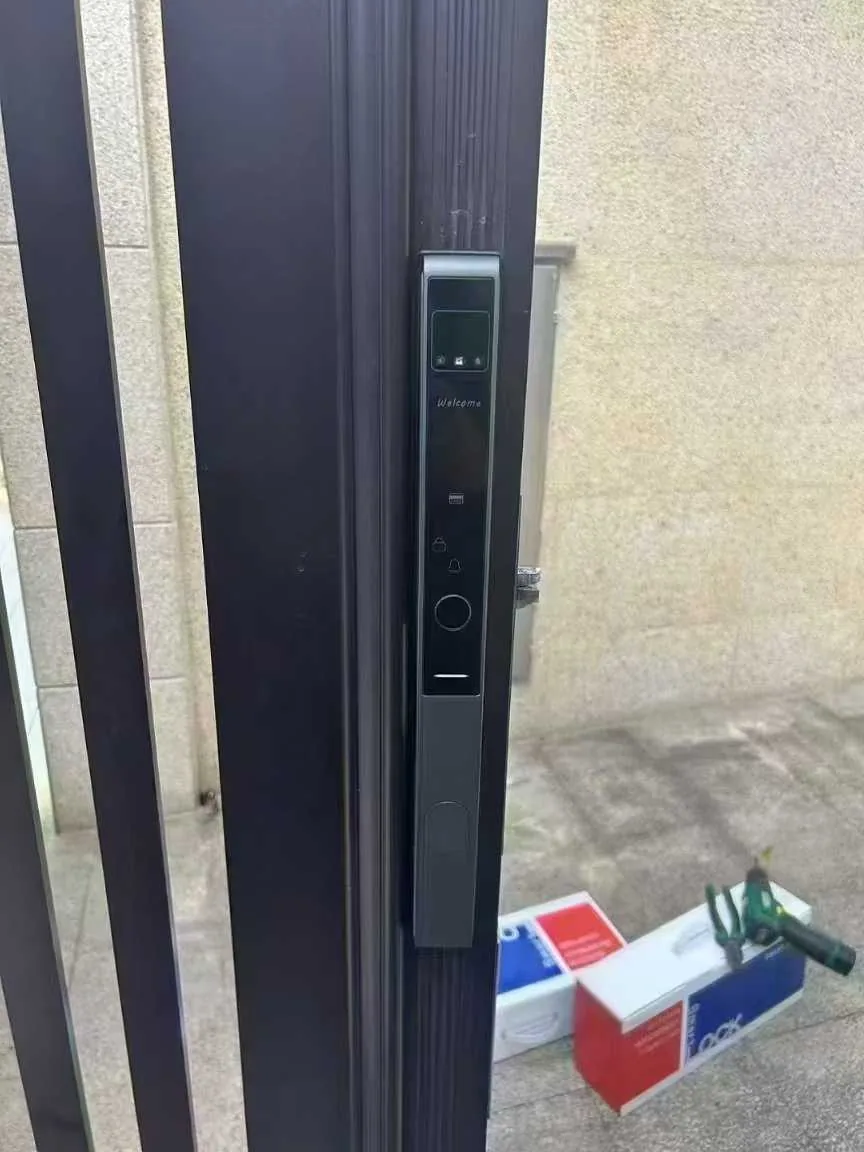
Cold: batteries and mechanisms
Winter works on two parts of any lock. The first is power: ordinary alkaline cells lose voltage as they cool, which is why a lock that reports a healthy battery in autumn can behave sluggishly in a cold snap. Lithium chemistries handle low temperatures better, and models built around a rechargeable lithium pack — the DDL1 documents a 4200mAh lithium battery — start from a better position in cold markets. The second is the mechanism itself: lubricants stiffen, tolerances tighten, and a door that has swelled with moisture presses harder against its strike.
Human hands change too. Cold, dry fingers read poorly on fingerprint sensors, and gloves block the method entirely. That is why the mechanical key layer matters most in exactly the climates where electronics are stressed — a backup that ignores the weather. Spare batteries stored indoors, and a key that can actually be reached, are the two habits that carry a lock through a cold season. The fuller maintenance picture, including what fails first in exposure, is in our notes on how entrance materials age.
Heat: sun, glass and lobbies
Heat is the underrated half of the problem, because it often arrives without direct sunlight. A dark lock face in full afternoon sun runs hotter than the air around it; a glass lobby acts as a greenhouse; a south-facing aluminum door can stay warm long after sunset. The 70°C upper limit in a documented range is not a decorative number — it is the ceiling that a poorly shaded installation can genuinely approach.
Coastal projects add salt to the equation, and metal finishes answer salt differently according to how they are treated — a materials conversation rather than a temperature one. What heat contributes is acceleration: every chemical and surface process runs faster on a warm door, which is why the documented upper limit deserves attention in lobbies and sun-facing entrances even when the local climate is otherwise mild.
For specifiers, this turns a temperature range into a placement decision. Where a door gets hours of direct sun, shading, mounting position and facade material all belong in the same conversation as the model choice. Heat also interacts with water: a lock that swings between hot days and cool nights experiences condensation cycles regardless of how much rain it sees, which is why water exposure and temperature exposure should be specified together, as we outline in questions about waterproofing at the door.
What −25°C to 70°C tells a project buyer
The DDL1 carries the widest documented smart lock working temperature envelope in our range: −25°C to 70°C, printed alongside its camera, screen and battery data. That range suits the model to residential and project doors in cold-winter and hot-summer markets alike — the kind of door where ordinary consumer hardware starts to look optimistic.
Other doors need a different emphasis. An aluminum-frame entrance where a waterproof lock body is required, for example, is the positioning of the LK0161, and its unpublished values — including thermal details beyond the page — are available on request rather than guessed at. Matching the model to the exposure beats stretching a number beyond its job.

Specifying for climate at the order stage
Climate belongs in the first conversation with a supplier, not the last. Four questions do most of the work: where will the lock be mounted, and how many hours of direct sun or frost does that spot see; what are the site’s winter and summer extremes; will the door face rain driven sideways; and what is the door made of, since metal, glass and wood conduct heat differently. The answers point to a model and an installation detail, in that order.
Buyers can also ask to see the documentation trail: which temperatures were considered, and what the range covers. Any supplier should be able to state what their range describes. If the answer is vague, the number on the sheet is decoration.
When temperature is the wrong question
Temperature gets blamed for problems that belong elsewhere. A door that will not close in winter may have swollen or dropped on its hinges; a fingerprint that fails in a cold snap may be a finger problem, not a sensor problem; a lock that dies quickly in a coastal town may be fighting humidity rather than heat. Diagnosing the environment honestly — before choosing a model — is what separates a specification from a guess.
Nor is the widest documented smart lock working temperature automatically the best purchase. A hallway lock behind a heated lobby door does not need an outdoor envelope; paying for one is fine but not necessary. The goal is fit: a documented range that covers the site with margin, installed with attention to what the range does not cover.
Common questions
My lock is rated to −25°C. Can it go on a metal gate in full summer sun?
Check the mounting conditions, not just the air temperature. Sun-exposed metal can run hotter than the surrounding air, and the documented range speaks to the operating environment the lock experiences. A shaded mounting position, or a model chosen with margin, is the safer answer for exposed metal. The LK0161 page, for instance, lists a waterproof body for aluminum doors, with further environmental values available on request.
Why does the battery fade faster in winter?
Cold slows the chemical reactions inside ordinary batteries and lowers their voltage, so a cell that is nearly done in autumn can look finished in a frost. The remedies are simple: keep spares indoors, replace on the first low-battery warning rather than the second, and remember the mechanical key exists precisely for mornings when chemistry loses.
Does a wider temperature range mean a better lock?
No — it means a broader documented boundary. A lock with a modest range, mounted under shelter, can outperform a wider-ranged model installed badly in the open. Read the range as one line in the specification, then ask what else the site demands: water, sun, traffic, and the door itself.
Specifying locks for demanding climates?
CaremLock supplies documented smart lock ranges to distributors, installers and project buyers — including models with published operating temperatures and water-resistant lock bodies. Tell us the climate and the door, and we will share the data that fits.
Or explore the DDL1 fully automatic smart lock and contact the team.